
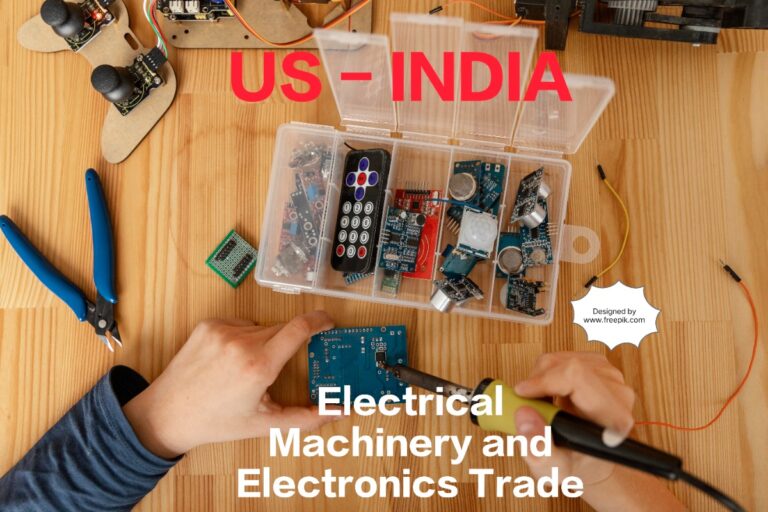
Let us see about US-INDIA Electrical Machinery and Electronics Trade below in detailed.
Imagine two big friends teaming up to build cool gadgets and machines that light up homes and power factories. That’s the US and India in the world of electrical machinery and electronics. This partnership grows fast. In this, we dive into why it matters, how it works, and what exciting things lie ahead.
What Exactly Do We Mean by Electrical Machinery and Electronics?
Electrical machinery includes things like motors, generators, and transformers. Electronics cover smartphones, computers, chips, and circuit boards. Both countries trade these items a lot. For example, India sends wires and parts to the US, while the US shares high-tech chips.
This trade hits billions of dollars each year. Moreover, it creates jobs and sparks innovation. However, challenges like high costs slow it down sometimes. Let’s explore the trade numbers next.
The Booming Trade Numbers Between US and India
Trade in this sector explodes recently. In 2025 alone, India exported over $10 billion worth of electrical machinery to the US. Meanwhile, the US sent back about $15 billion in electronics. These figures jump 20% from the year before.
Furthermore, key products drive this growth:
- From India to US: Power cables, electric motors, and LED lights top the list. Factories in Gujarat and Tamil Nadu make these quickly and cheaply.
- From US to India: Semiconductors, laptops, and medical devices lead. Companies like Apple and Intel ship tons every month.
Additionally, events like the US-India iCET (Initiative on Critical and Emerging Technology) boost these numbers. Leaders meet, sign deals, and open doors. As a result, trade flows smoother. But why does this happen now? Let’s see the drivers.
Key Drivers Fueling This Partnership
Several forces push the US and India closer. First, both nations want to cut reliance on China. India steps up as a safe maker of electronics. The US loves this because it gets reliable supplies.
Second, government policies help a ton. India’s PLI scheme gives money to companies that build factories here. For instance, Foxconn sets up plants in India for iPhones. Similarly, the US offers tax breaks under the CHIPS Act.
Third, young talent shines. India trains millions of engineers yearly. They design chips and assemble machines. Meanwhile, US firms bring advanced designs.
Here are the top drivers in points:
- Rising demand for electric vehicles (EVs) needs batteries and motors from both sides.
- 5G rollout creates huge need for telecom gear.
- Green energy push demands solar inverters and wind turbine parts.
However, not everything runs perfectly. Tariffs and rules sometimes create hurdles. Still, the positives outweigh them. Now, let’s spotlight some success stories.
Spotlight on Major Companies and Deals
Big players lead the charge. Take Apple—it shifts iPhone production to India. Factories in Chennai now make 14% of global iPhones. This move saves costs and pleases US buyers.
Then, there’s Qualcomm. This US chip giant partners with Indian firms like Tata to make semiconductors. Their deal in 2025 promises 1 million chips yearly.
Additionally, GE and Siemens join hands. They build transformers for India’s power grid using US tech and Indian labor.
Check out these standout examples:
- Dixon Technologies: An Indian company assembles TVs and ACs for US brands like Samsung. Exports double in two years.
- Texas Instruments: Opens a design center in Bangalore. Engineers there create power management chips for US EVs.
- Reliance and Google: Team up for Jio phones with US software. Millions of units sell fast.
These stories show real action. Furthermore, startups jump in too. Indian drone makers supply parts to US firms for defense tech. As we see progress, let’s examine challenges next.
Challenges That Hold Back Growth
No partnership lacks bumps. First, supply chain issues hit hard. For example, rare earth metals for electronics come mostly from China. India and US scramble to find alternatives.
Second, skill gaps exist. India has workers, but advanced chip-making needs top training. The US faces labor shortages too.
Third, regulations differ. US safety standards clash with Indian ones sometimes. This delays shipments.
However, solutions emerge:
- Joint training programs build skills.
- New mines in India extract key minerals.
- Trade pacts like the one eyed for 2026 simplify rules.
Despite these, optimism rules. Leaders talk fixes at every summit. Now, let’s peek into the future.
Future Trends and Opportunities Ahead
The road looks bright. By 2030, this trade could triple. Electric everything—cars, homes, factories—drives it. India aims to make 50% of its electronics locally.
Moreover, AI and IoT boom. Smart devices need tiny sensors and powerful chips. US designs them; India builds at scale.
Additionally, defense ties strengthen. India buys US radar systems, and both co-develop drone electronics.
Exciting opportunities include:
- Battery tech for EVs: Tata and Tesla explore joint plants.
- Semiconductor hubs: New fabs in Gujarat with US funding.
- Renewable energy gear: Solar panels and wind machines for global export.
Meanwhile, startups innovate. An Indian firm invents cheap EV chargers using US patents. Everyone wins.
Why This Matters for Everyday People
This partnership touches your life. Cheaper smartphones mean more people connect. Reliable power grids light villages in India and cities in the US.
Jobs multiply too. Over 5 million new roles in India alone from electronics factories. In the US, design and sales jobs grow.
Furthermore, it fights climate change. Efficient motors cut energy waste. Green tech from this duo powers a cleaner world.
However, consumers must stay aware. Buy local where possible to support growth.
Wrapping Up the Power Play
US-India electrical machinery and electronics trade thrives on trust, tech, and teamwork. From booming exports to joint factories, both nations charge ahead. Challenges exist, but solutions follow fast.
As we move to 2026 and beyond, expect more deals, more jobs, and more gadgets. This partnership powers progress for all. What do you think—will India become the world’s electronics hub? Share your views below!



Overall, it is clear, informative, and easy to read. Very good presentation.
👍