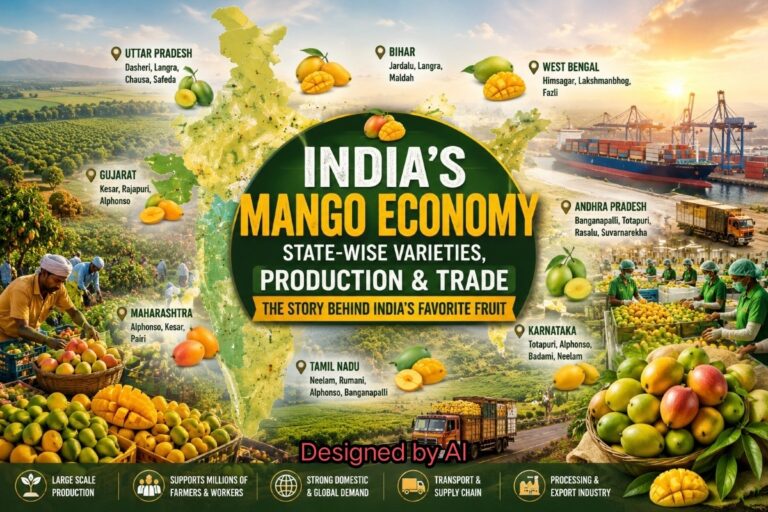
Let us see about India’s Mango Economy below in detailed.
Mango is not just a fruit in India. For many people, it is part of childhood memories, summer traditions, roadside markets, and seasonal business activity. Every year, as temperatures rise, mango season slowly takes over markets across the country.
From small village orchards to crowded wholesale yards, mangoes create a large chain of economic activity. Farmers, transport workers, traders, exporters, packaging units, cold storage operators, and fruit sellers all become part of this seasonal economy.
India is one of the world’s largest mango producers, and different states contribute in different ways. Some states are known for massive production, while others are famous for premium export varieties or processing industries.
What makes India’s mango industry even more interesting is its diversity. Almost every major mango-growing state has its own famous variety, local growing traditions, and market system.
Why Mangoes Matter to India’s Economy
Mango farming supports a large agricultural economy in India.
The industry connects:
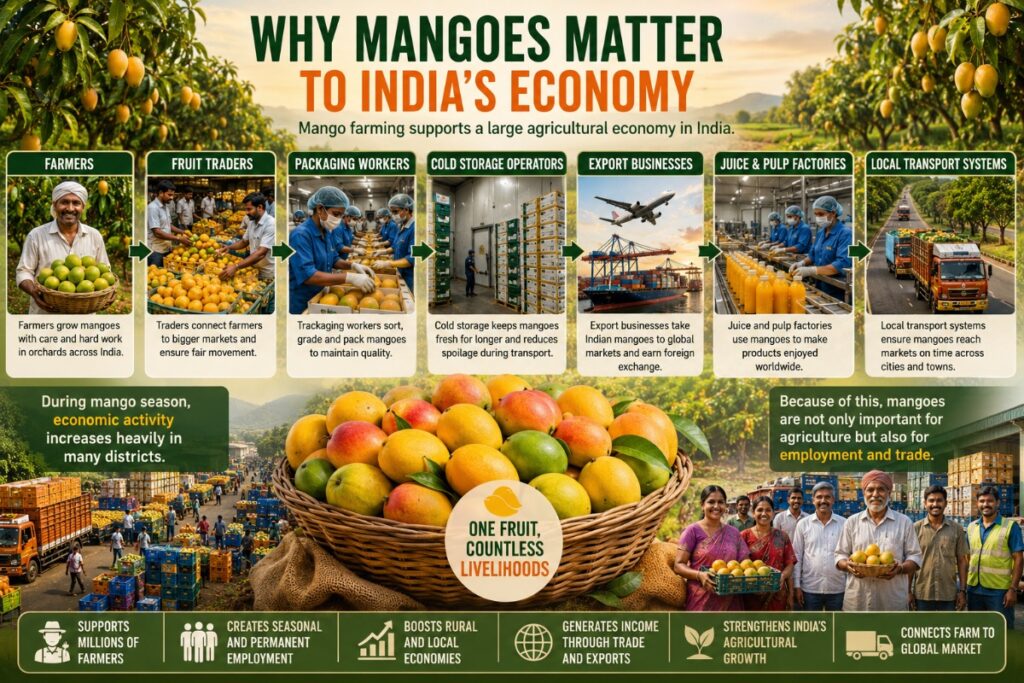
- Farmers
- Fruit traders
- Packaging workers
- Cold storage operators
- Export businesses
- Juice and pulp factories
- Local transport systems
During mango season, economic activity increases heavily in many districts.
Because of this, mangoes are not only important for agriculture but also for employment and trade.
India’s Position in Global Mango Production
India is among the largest mango-producing countries in the world.
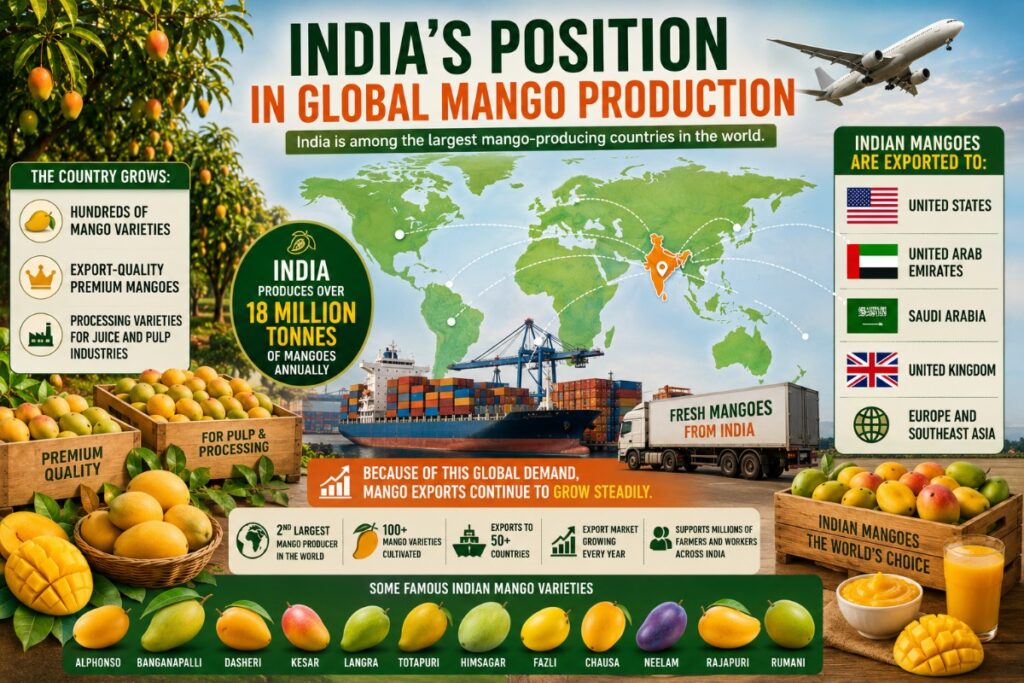
The country grows:
- Hundreds of mango varieties
- Export-quality premium mangoes
- Processing varieties for juice and pulp industries
Indian mangoes are exported to:
- United States
- United Arab Emirates
- Saudi Arabia
- United Kingdom
- Europe and Southeast Asia
Because of this global demand, mango exports continue to grow steadily.
Major Mango-Producing States in India
Different states dominate different parts of the mango economy.
Some focus on:
- High production
- Premium quality
- Export markets
- Pulp processing industries
Let’s look state by state.
Uttar Pradesh
India’s Largest Mango Producer
Uttar Pradesh is one of India’s top mango-producing states.
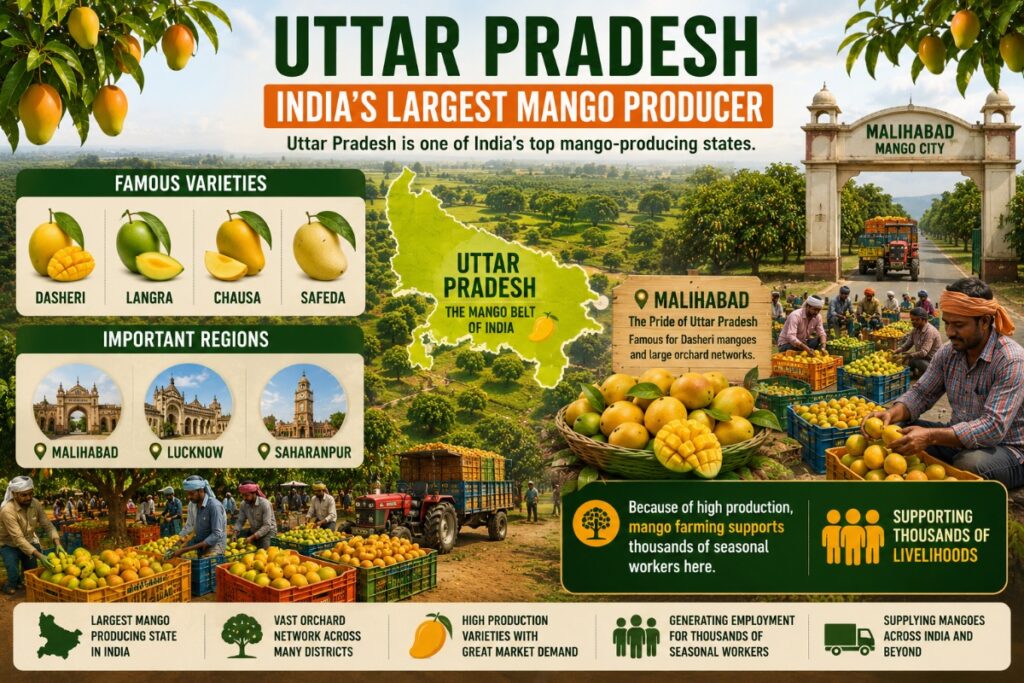
Famous varieties:
- Dasheri
- Langra
- Chausa
- Safeda
Important regions:
- Malihabad
- Lucknow
- Saharanpur
Malihabad is especially famous for Dasheri mangoes and large orchard networks.
Because of high production, mango farming supports thousands of seasonal workers here.
Andhra Pradesh
Strong in Exports and Processing
Andhra Pradesh has one of India’s biggest commercial mango economies.
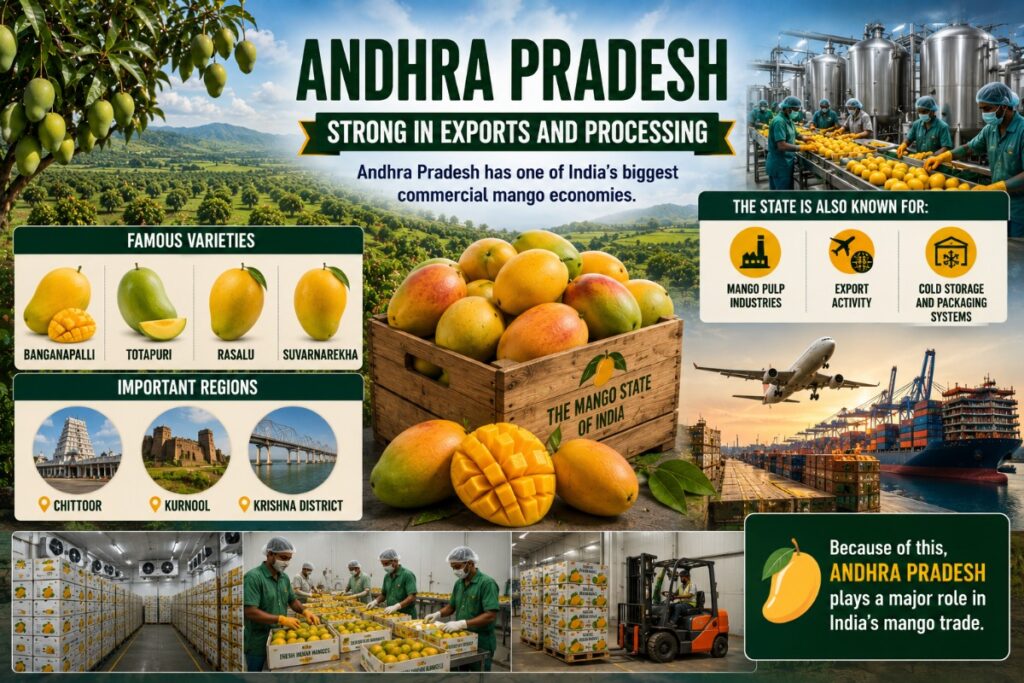
Famous varieties:
- Banganapalli
- Totapuri
- Rasalu
- Suvarnarekha
Important regions:
- Chittoor
- Kurnool
- Krishna district
The state is also known for:
- Mango pulp industries
- Export activity
- Cold storage and packaging systems
Because of this, Andhra plays a major role in India’s mango trade.
Maharashtra
Home of Premium Alphonso Mangoes
Maharashtra is globally famous for Alphonso mangoes.
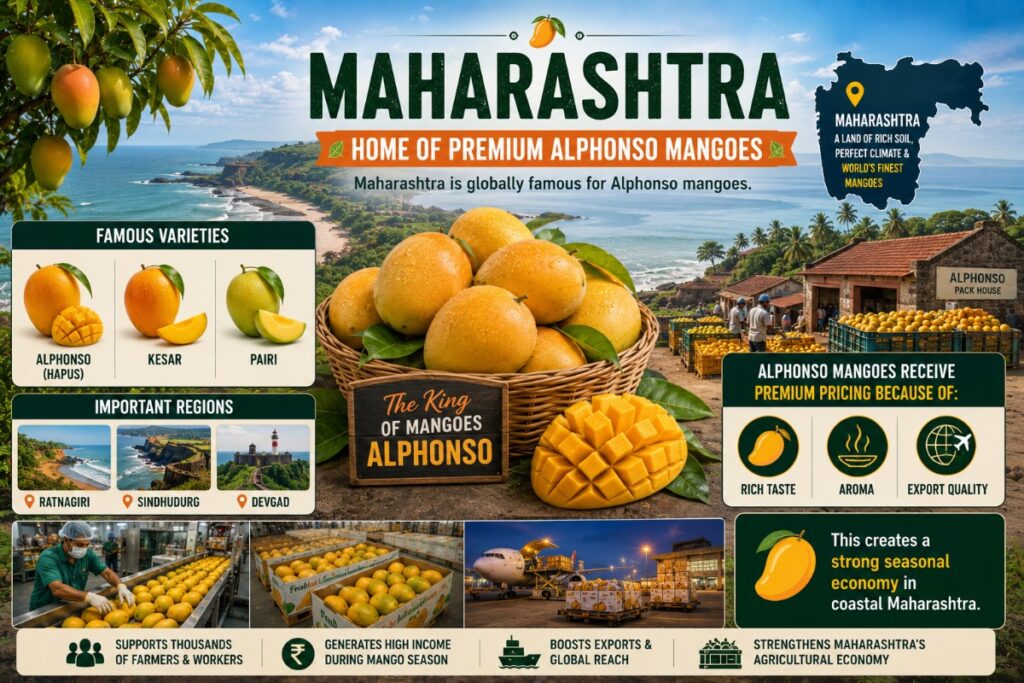
Famous varieties:
- Alphonso (Hapus)
- Kesar
- Pairi
Important regions:
- Ratnagiri
- Sindhudurg
- Devgad
Alphonso mangoes receive premium pricing because of:
- Rich taste
- Aroma
- Export quality
This creates a strong seasonal economy in coastal Maharashtra.
Karnataka
Large Commercial Mango Farming State
Karnataka is another major mango-producing state.
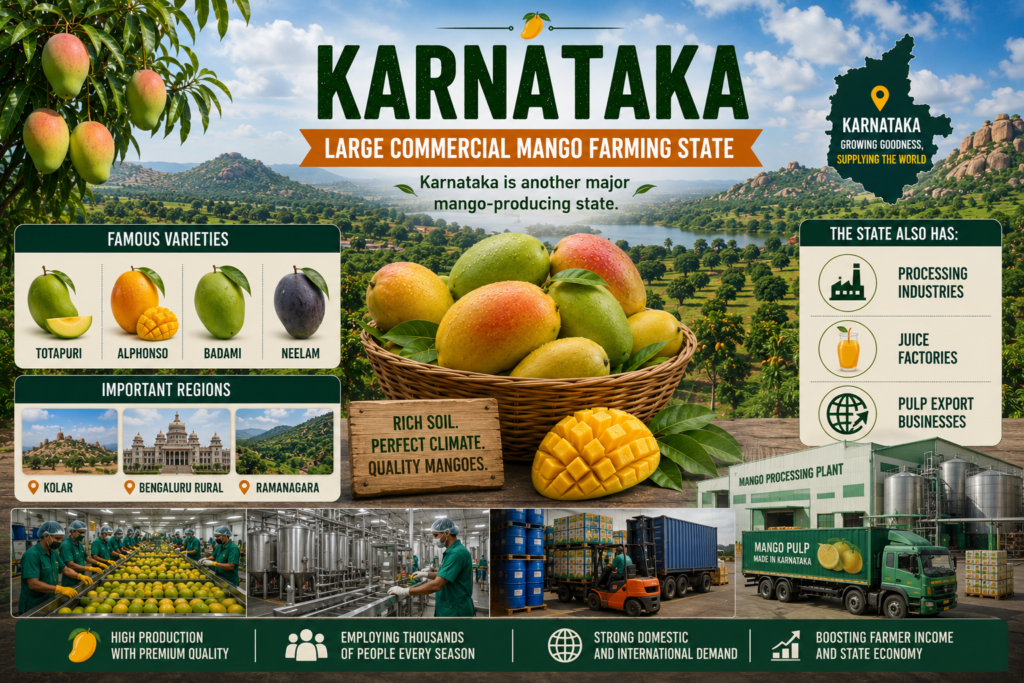
Famous varieties:
- Totapuri
- Alphonso
- Badami
- Neelam
Important regions:
- Kolar
- Bengaluru Rural
- Ramanagara
The state also has:
- Processing industries
- Juice factories
- Pulp export businesses
Gujarat
Famous for Kesar Mangoes
Gujarat has built a strong reputation around Kesar mangoes.
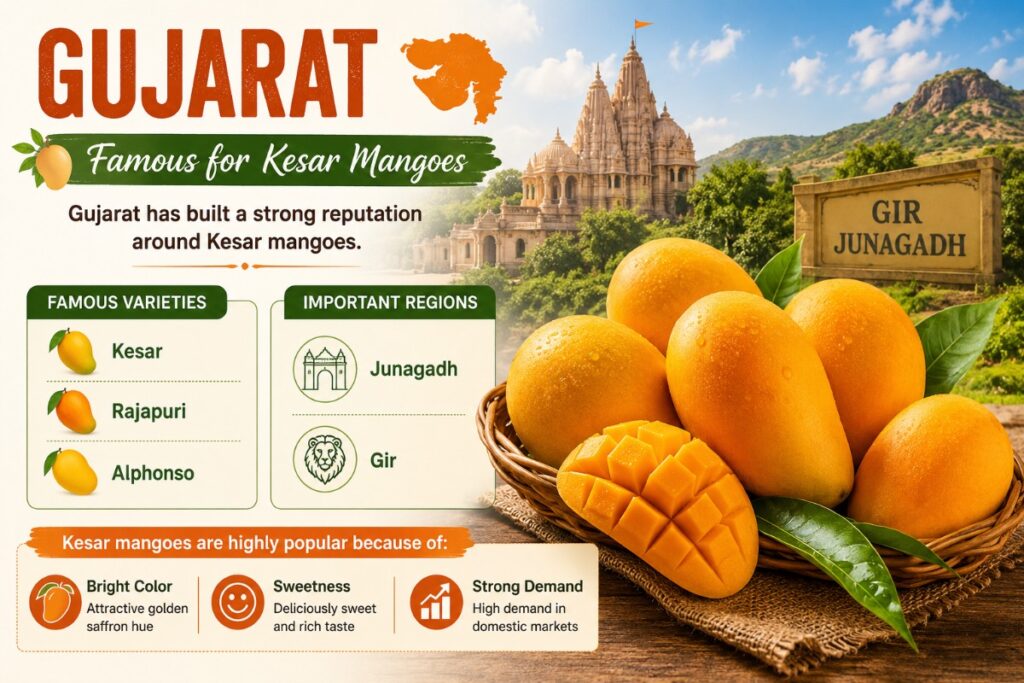
Famous varieties:
- Kesar
- Rajapuri
- Alphonso
Important regions:
- Junagadh
- Gir
Kesar mangoes are highly popular because of:
- Bright color
- Sweetness
- Strong demand in domestic markets
Tamil Nadu
Important Southern Mango Producer
Tamil Nadu also contributes significantly to mango cultivation.
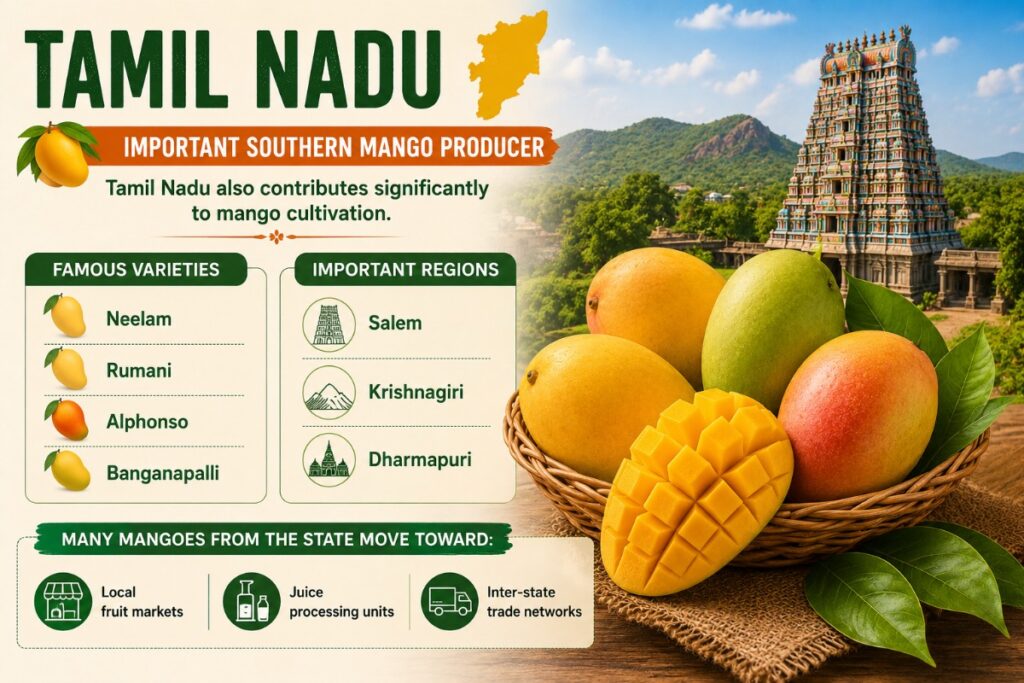
Famous varieties:
- Neelam
- Rumani
- Alphonso
- Banganapalli
Important regions:
- Salem
- Krishnagiri
- Dharmapuri
Many mangoes from the state move toward:
- Local fruit markets
- Juice processing units
- Inter-state trade networks
Bihar
Traditional Mango Belt
Bihar has a long history of mango cultivation.
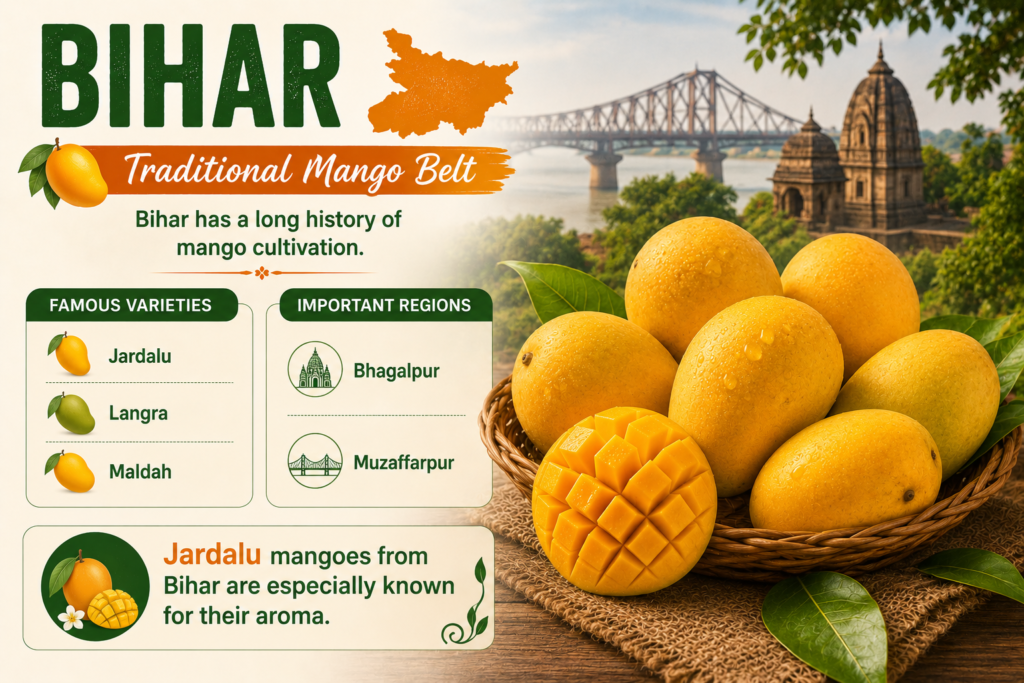
Famous varieties:
- Jardalu
- Langra
- Maldah
Important regions:
- Bhagalpur
- Muzaffarpur
Jardalu mangoes from Bihar are especially known for their aroma.
West Bengal
Famous for Sweet Mango Varieties
West Bengal produces several popular varieties.
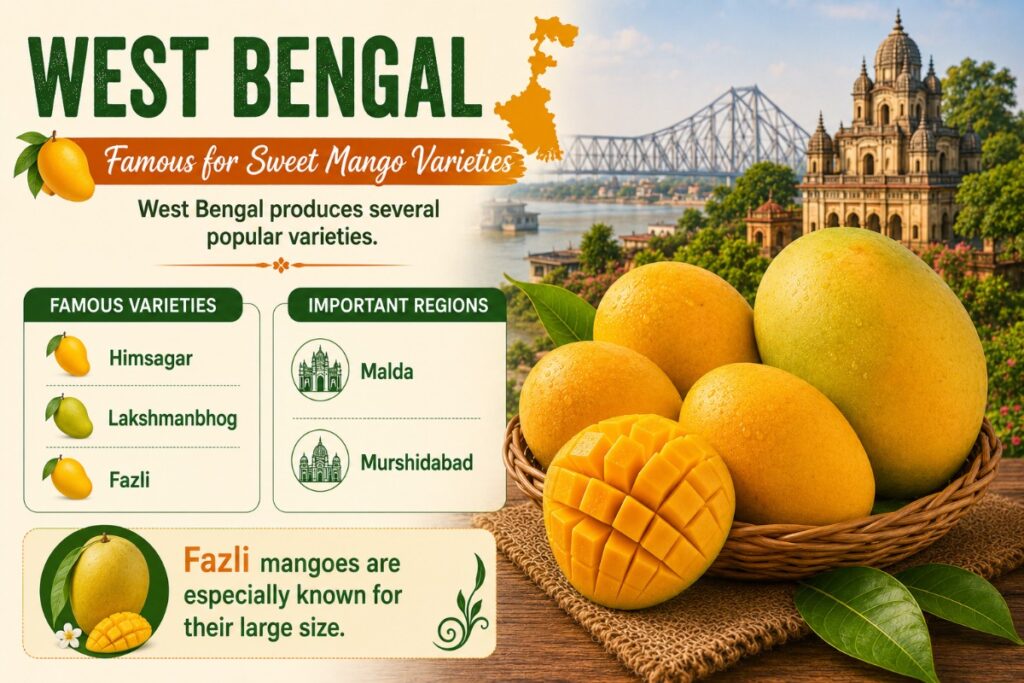
Famous varieties:
- Himsagar
- Lakshmanbhog
- Fazli
Important regions:
- Malda
- Murshidabad
Fazli mangoes are especially known for their large size.
How the Mango Supply Chain Works
The mango economy depends on a large supply chain.
The process usually works like this:
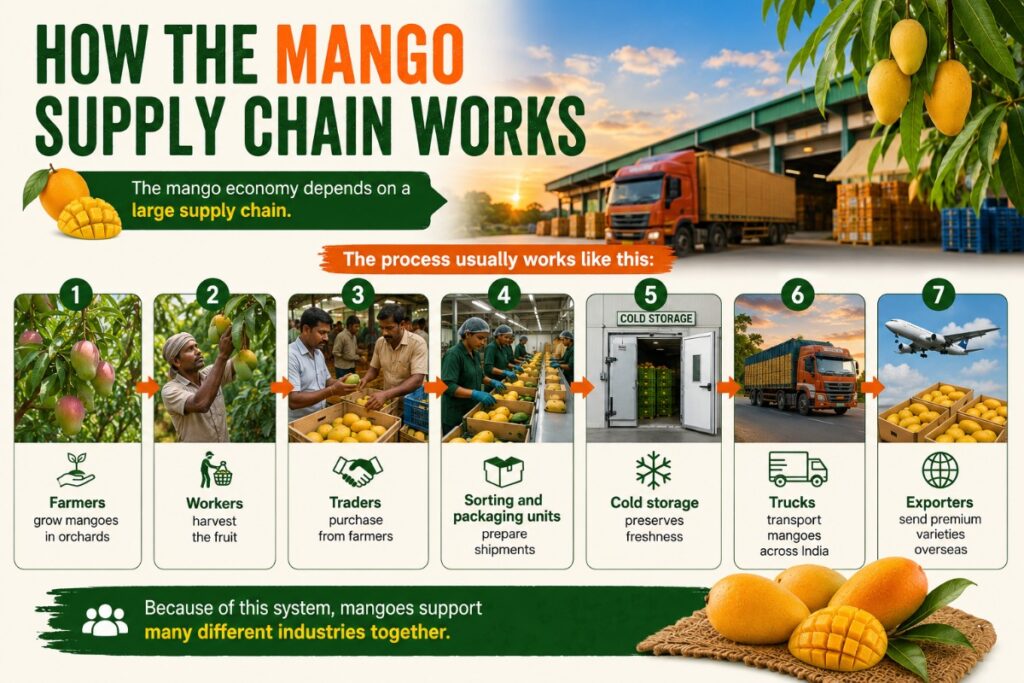
- Farmers grow mangoes in orchards
- Workers harvest the fruit
- Traders purchase from farmers
- Sorting and packaging units prepare shipments
- Cold storage preserves freshness
- Trucks transport mangoes across India
- Exporters send premium varieties overseas
Because of this system, mangoes support many different industries together.
Packaging, Cold Storage, and Processing
Fresh mangoes require careful handling.
So many mango-producing regions now have:
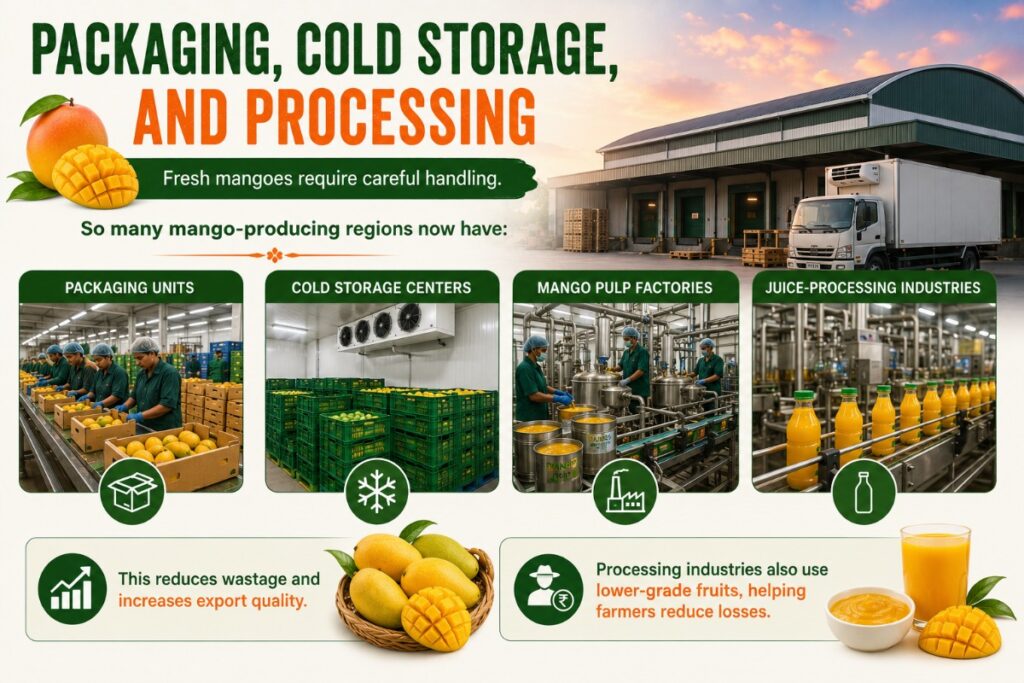
- Packaging units
- Cold storage centers
- Mango pulp factories
- Juice-processing industries
This reduces wastage and increases export quality.
Processing industries also use lower-grade fruits, helping farmers reduce losses.
People Behind India’s Mango Economy
This industry supports a huge number of livelihoods.
It includes:
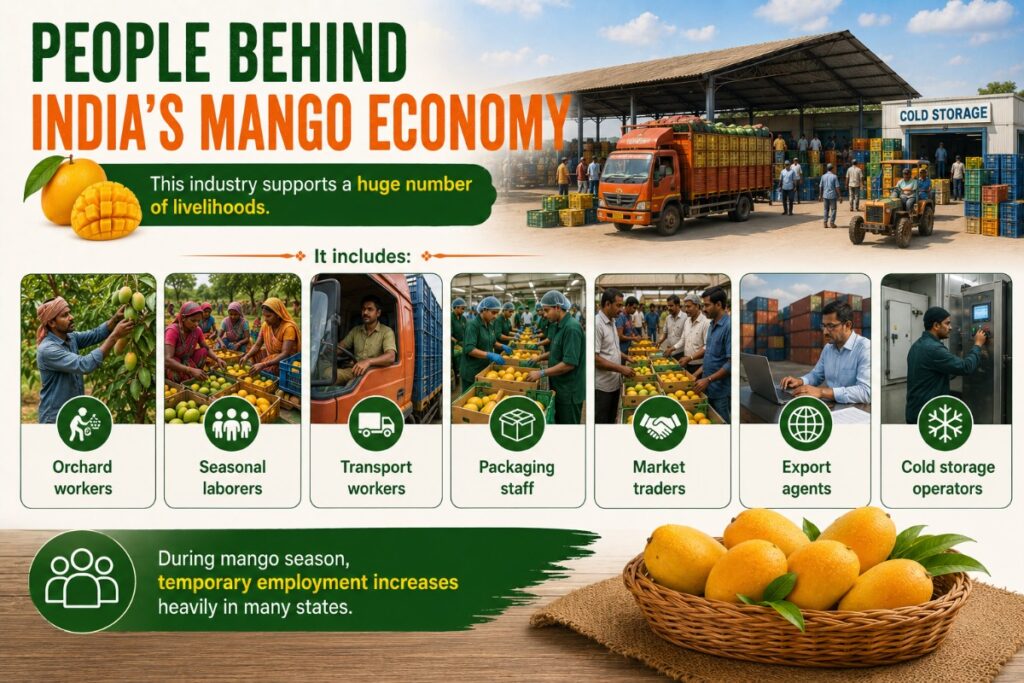
- Orchard workers
- Seasonal laborers
- Transport workers
- Packaging staff
- Market traders
- Export agents
- Cold storage operators
During mango season, temporary employment increases heavily in many states.
Export Economy of Indian Mangoes
India exports mangoes to many countries every year.
Premium export varieties include:
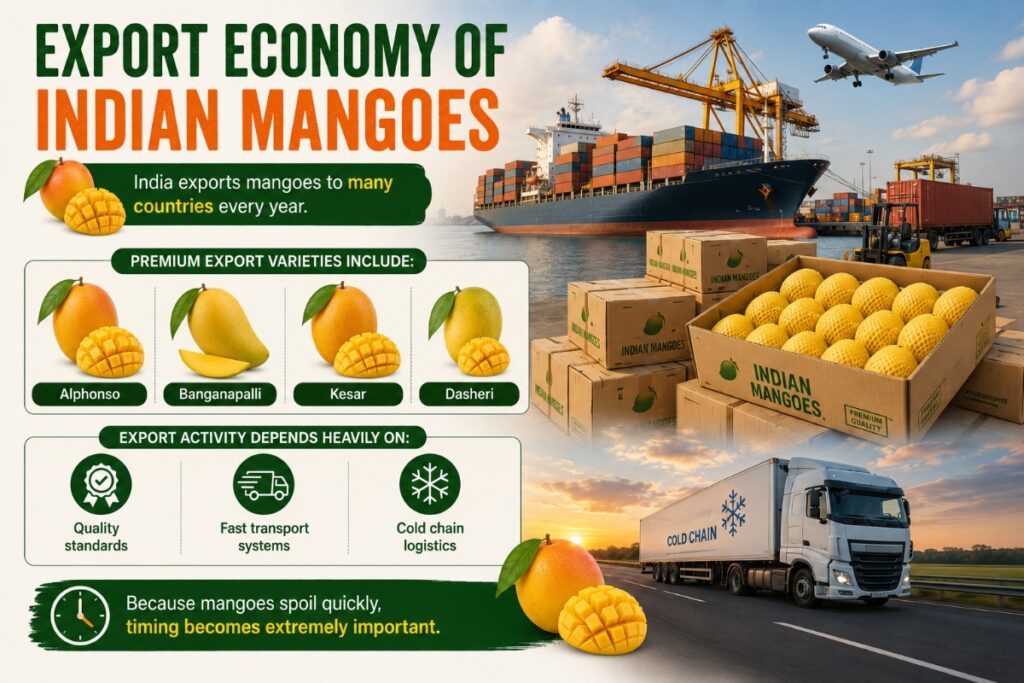
- Alphonso
- Banganapalli
- Kesar
- Dasheri
Export activity depends heavily on:
- Quality standards
- Fast transport systems
- Cold chain logistics
Because mangoes spoil quickly, timing becomes extremely important.
Challenges Faced by Mango Farmers
Even though mangoes are profitable, the industry faces several problems.
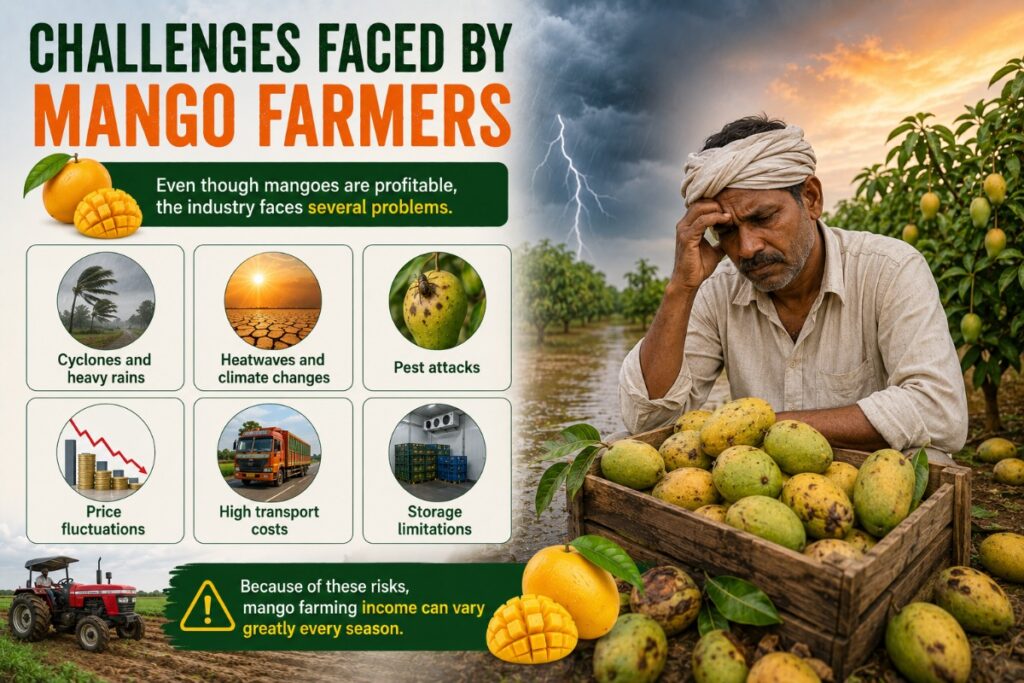
- Cyclones and heavy rains
- Heatwaves and climate changes
- Pest attacks
- Price fluctuations
- High transport costs
- Storage limitations
Because of these risks, mango farming income can vary greatly every season.
Future of India’s Mango Economy
The future looks promising for India’s mango sector.
Growth areas include:
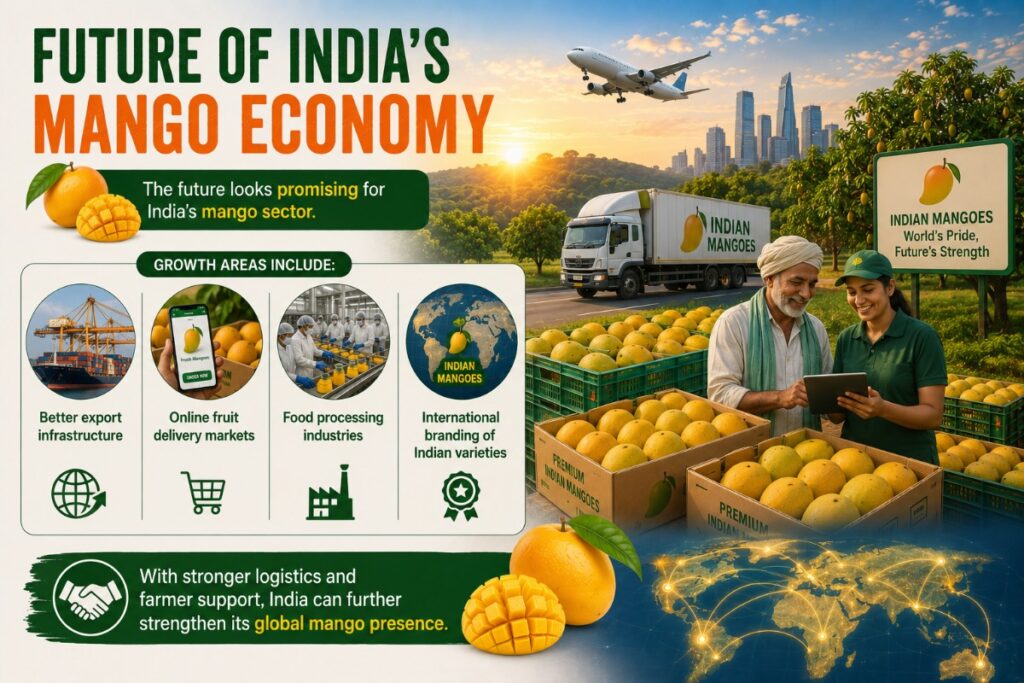
- Better export infrastructure
- Online fruit delivery markets
- Food processing industries
- International branding of Indian varieties
With stronger logistics and farmer support, India can further strengthen its global mango presence.
Conclusion
Mangoes may look like simple seasonal fruits, but behind them lies one of India’s largest agricultural economies.
From orchards in Uttar Pradesh to export hubs in and premium Alphonso regions in Maharashtra, every state contributes differently to the mango industry.
Farmers, traders, workers, exporters, transport systems, and processing industries all become part of this large seasonal network.
So next time you eat a mango, remember that it represents much more than fruit. It represents farming traditions, trade systems, seasonal livelihoods, and a hidden economy that quietly supports millions across India.