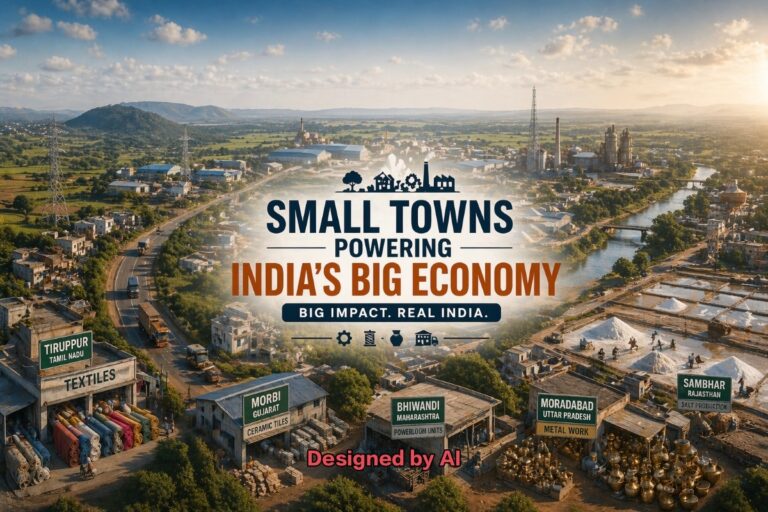
Let us see about how Small Towns Powering India’s Big Economy below in detailed.
When we talk about India’s economy, most of us immediately think about big cities like Mumbai (Maharashtra) or Delhi. These cities are always in the spotlight. However, that’s only one side of the story.
If you look a bit beyond these metro cities, you’ll start noticing something interesting. There are many small towns across India quietly doing a lot of heavy lifting. They may not appear in news or big discussions, but they still produce goods, create jobs, and keep industries moving every single day.
Designed by AI
What Do We Mean by Small Towns?
When we say small towns, we don’t mean unimportant places. We simply mean towns that are not as large or crowded as metro cities.
In fact, many of these towns focus on one kind of work. Over time, they get really good at it. Slowly, workers, suppliers, and traders build strong connections in that area. Because of this, these towns become known for certain products or industries.
So yes, they may be smaller in size, but their role in the economy is anything but small.
Why Small Towns Matter in the Economy
At first, it may look like big cities handle everything. But once you understand the system, you’ll see that small towns play a very important role.
- They provide jobs to local people
- They reduce the need to migrate to big cities
- They support industries by producing goods and materials
- They help spread development across different regions
Because of this, the economy doesn’t depend only on a few big cities. It becomes more balanced.
Examples of Small Towns Driving Big Industries
Let’s look at some real examples. This will make things much clearer.
Tiruppur (Tamil Nadu)
Tiruppur is a great example. Even though it’s not a metro city, people in the textile industry know it very well.
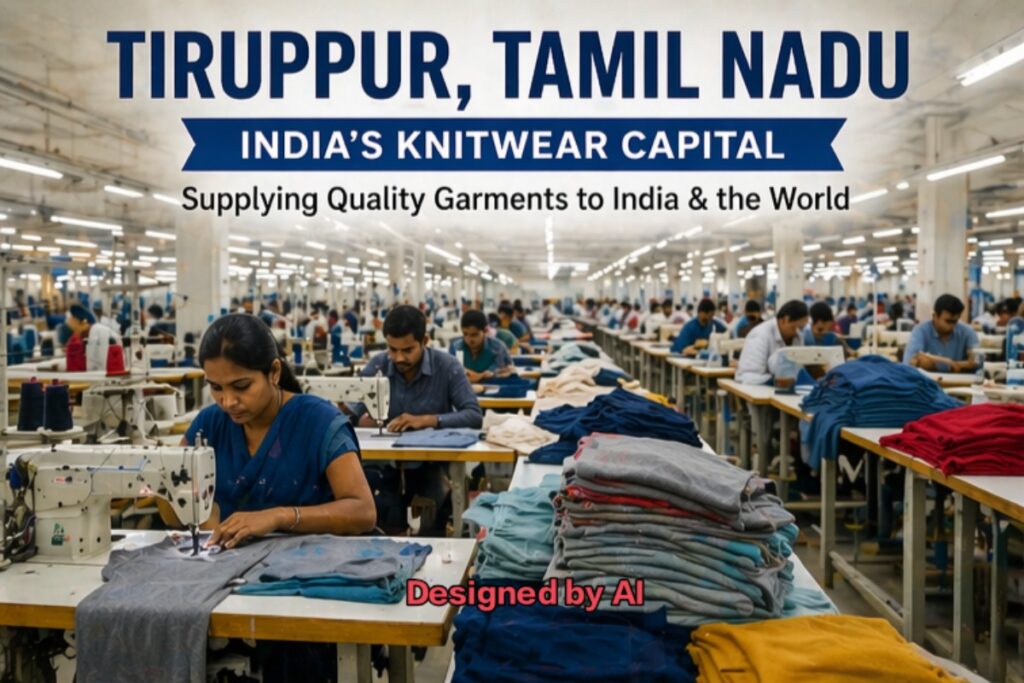
India’s Knitwear capital
Designed by AI
- Known for knitwear and garments
- Supplies clothes across India and even abroad
- Supports thousands of workers
Because of this, a lot of clothing you see in stores may actually start from here.
Morbi (Gujarat)
Morbi has grown a lot over the years.
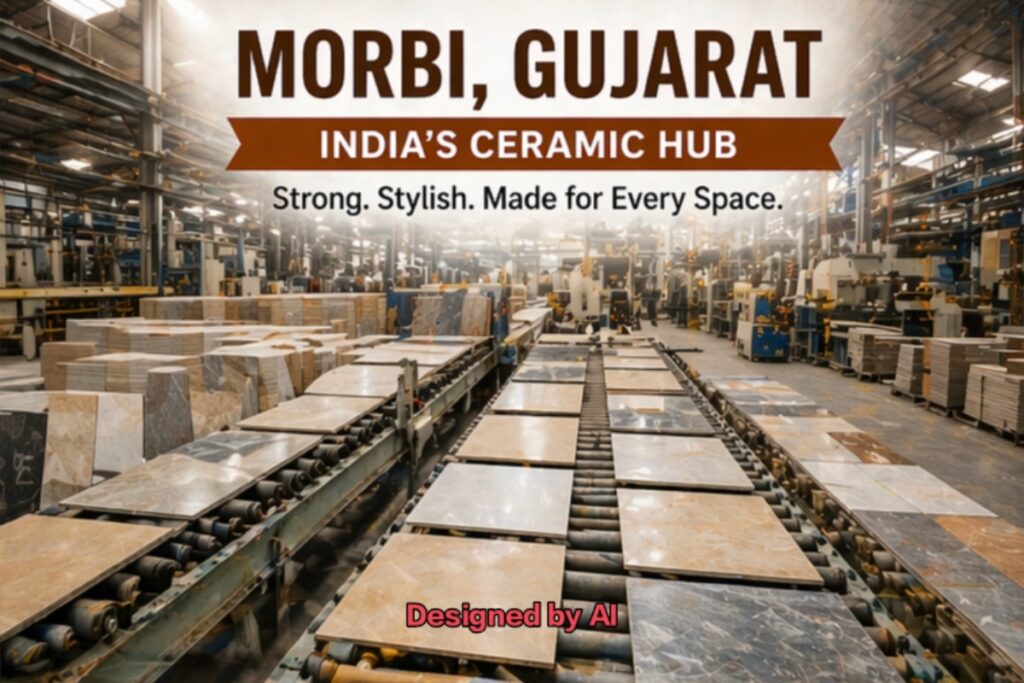
India’s Ceramic Hub
Designed by AI
- Famous for tiles and ceramic products
- Supplies to construction projects across India
- Has many small and medium factories
So, the tiles you see in homes or offices often come from places like Morbi.
Bhiwandi (Maharashtra)
Bhiwandi works mostly in the background, but its role is very important.
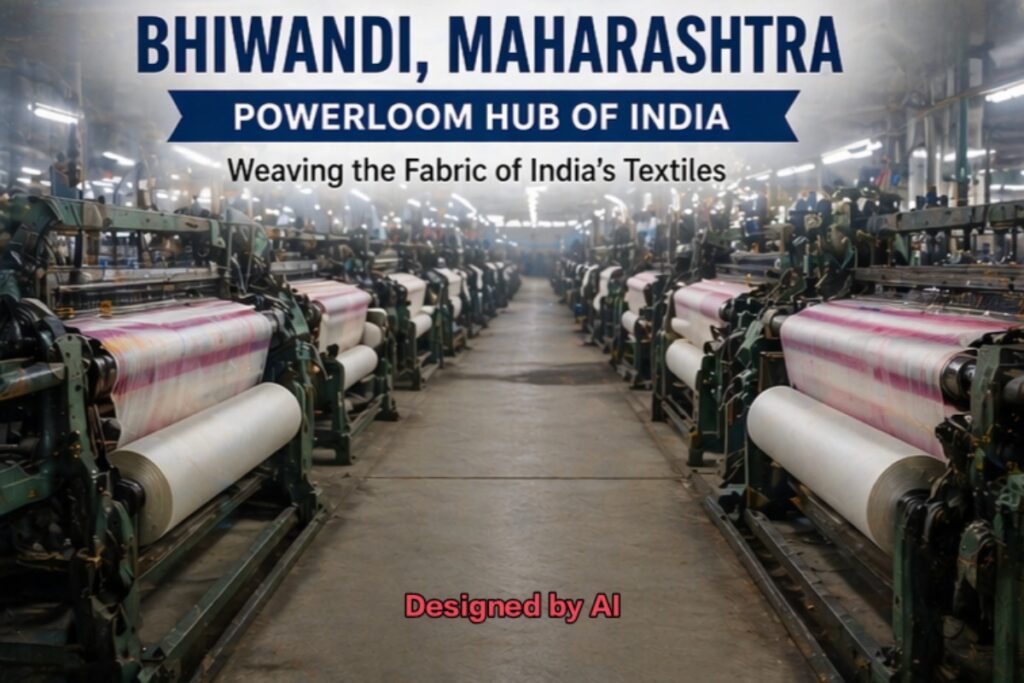
Powerloom Hub of India
Designed by AI
- Produces large amounts of fabric
- Supplies to bigger markets and brands
- Runs on many small units
Because of this, it supports a big part of the textile supply chain.
Sambhar (Rajasthan)
Sambhar may look like a quiet town, but it has its own importance.

India’s Salt Bowl
Designed by AI
- Located near Sambhar Lake
- Produces a large amount of salt
- Supports many local workers
So, something as simple as salt often starts its journey from places like this.
Moradabad (Uttar Pradesh)
Moradabad is known for its metal work.
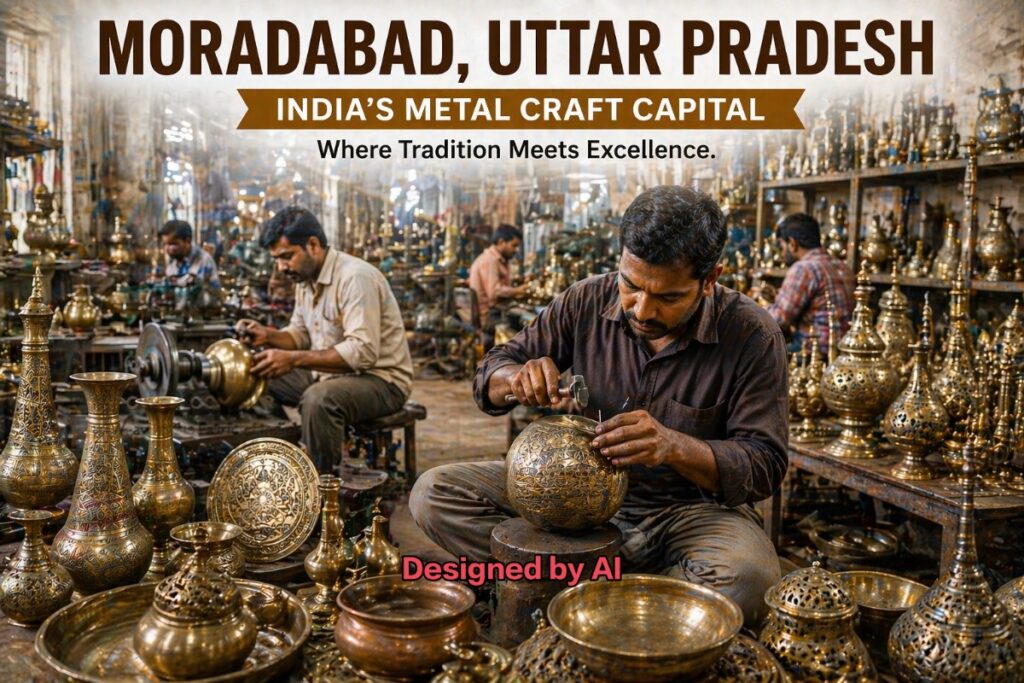
India’s Metal Craft Capital
Designed by AI
- Famous for brass and metal items
- Supplies products to both Indian and international markets
- Has skilled artisans
Because of this, it connects traditional skills with modern demand.
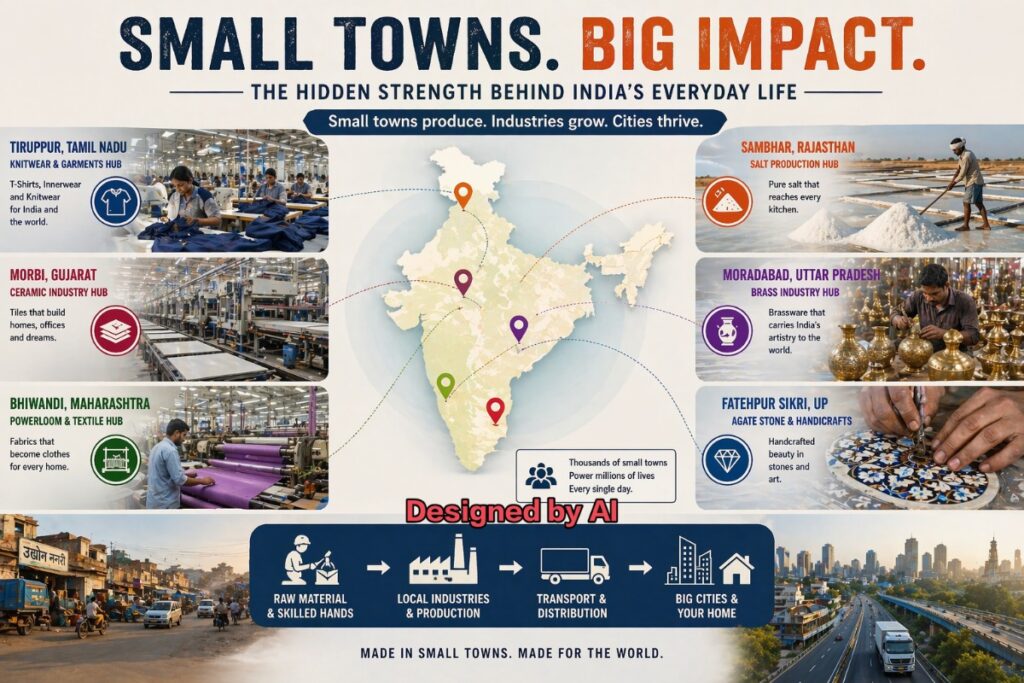
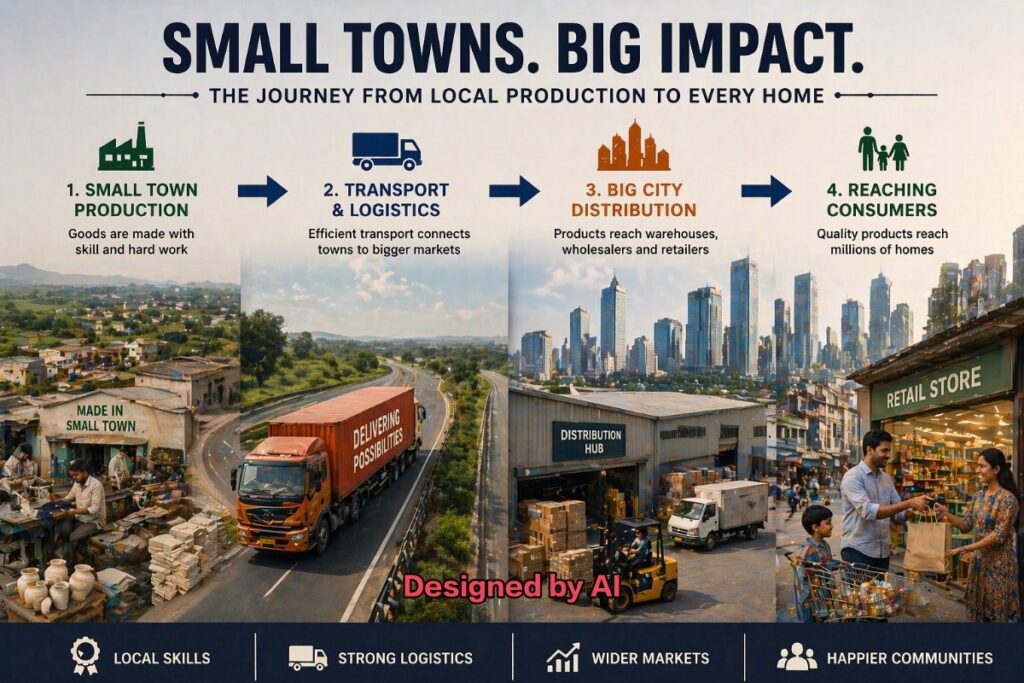
How Small Towns Support Big Cities
Now, let’s understand how everything connects.
Designed by AI
- Small towns handle production
- Big cities focus on branding and selling
- Transport connects both
- Markets help distribute products everywhere
So, it’s not a separate system. It’s all connected. One cannot function properly without the other.
Role of Small Towns in Everyday Products We Use
If you think about your daily life, you’ll realize something surprising. Many things you use every day actually come from small towns.
For example, the clothes you wear often begin their journey in places like Tiruppur (Tamil Nadu) or Bhiwandi (Maharashtra). These towns handle the early stages of production before the final product reaches big stores.
In the same way, tiles used in homes are usually made in Morbi (Gujarat). Even if you buy them from a city showroom, the actual manufacturing often happens in such towns.
Kitchen items like metal utensils often come from places like Moradabad (Uttar Pradesh). Workers there shape and design them before they move through wholesalers and retailers.
And then there’s salt. A basic item in every home often comes from Sambhar (Rajasthan), where workers produce it under tough conditions.
So, even if we don’t notice it, small towns are part of our daily lives. Almost everything we use has some connection to them.
Employment and Local Livelihood
One of the biggest advantages of small towns is that they provide jobs locally.
- People can work close to their homes
- Family businesses continue across generations
- Skills are passed down naturally
Because of this, many people don’t have to leave their hometowns to find work.
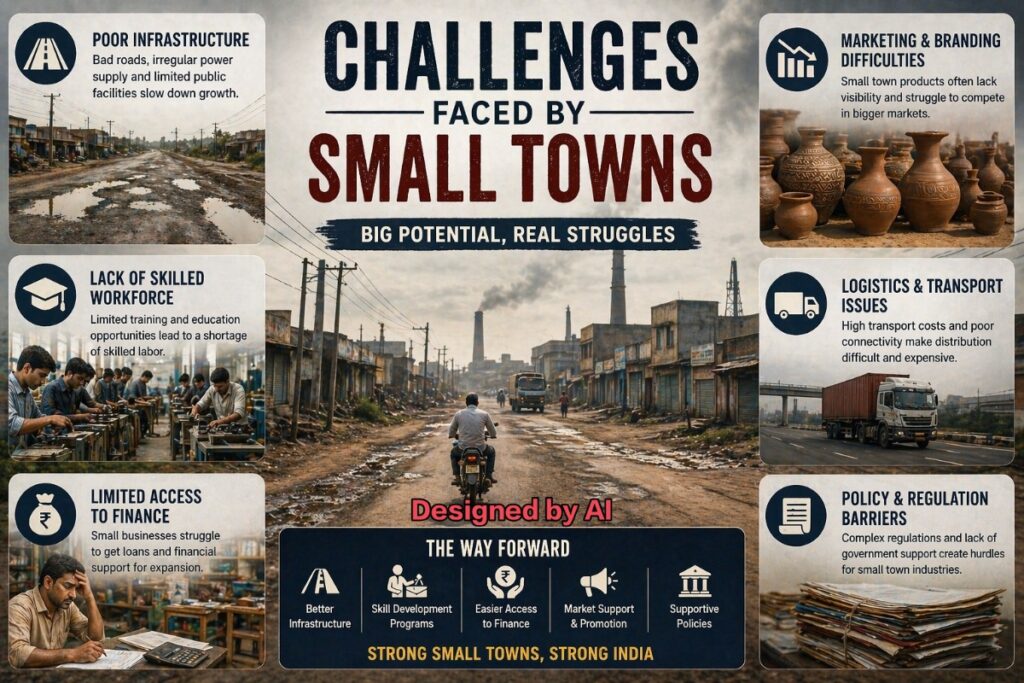
Challenges Faced by Small Towns
Even though these towns contribute a lot, they still face some real challenges.
Designed by AI
- Limited infrastructure
- Difficulty reaching larger markets
- Financial struggles for small businesses
- Less visibility compared to big cities
Because of this, their growth is sometimes slower than it should be.
Opportunities for Growth
At the same time, things are slowly improving.
- Online platforms are opening new markets
- Government schemes are supporting small industries
- Better roads are improving connectivity
- People are showing more interest in local products
So, there is definitely scope for growth in the coming years.
Why We Should Pay Attention
Small towns are more than just production centers.
- They keep industries running quietly
- They support millions of families
- They carry traditional skills
- They contribute to exports
Because of this, they deserve more recognition than they usually get.
Future of Small Town Economies
Looking ahead, small towns may become even more important.
- Industries may shift to smaller locations due to lower costs
- Workers are already skilled and experienced
- Infrastructure is slowly improving
So, these towns can become strong economic centers in the future.
Conclusion
When we think about economy, it’s easy to focus only on big cities. But that doesn’t give the full picture.
In reality, small towns quietly keep the system running. They produce goods, create jobs, and stay connected with larger markets. Without them, things would not move as smoothly as they do now.
At the same time, these towns carry hard work, skill, and consistency. That’s something we don’t always notice.
So next time you think about growth, remember this — it doesn’t happen only in big cities. It also happens in small towns, where people keep working every day without much attention.
And honestly, these places are the real backbone of India’s economy. They continue shaping India’s growth story in ways most people still do not notice today.