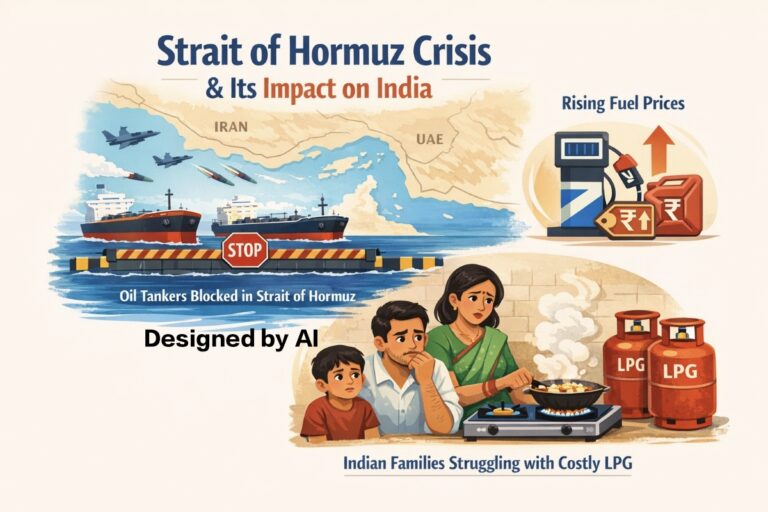
Let us see about How Prices in India Could Rise If the Strait of Hormuz Blockade Continues below in detailed.
The Strait of Hormuz, a narrow waterway in the Persian Gulf, is one of the most important routes for oil and gas in the world. Right now, tensions in this area are causing major concerns. If the blockade continues, it could affect not only global oil prices but also daily life in India.
India depends heavily on imported fuel and gas. Therefore, any disruption in this route can quickly cause prices to rise. From petrol and diesel to food and household goods, nearly everything could become more expensive.
Why the Strait of Hormuz Blockade Matters for India
India imports a large portion of its oil and gas from countries connected through this strait. If ships cannot pass freely, supplies get delayed or reduced.
Moreover, fuel is the backbone of transportation, manufacturing, and daily life. So, when fuel becomes expensive, the cost of almost everything else increases.
Even a small disruption can create a chain reaction. For example, higher oil prices mean higher transport costs, which then increase food prices and the cost of manufactured goods.
1. Petrol and Diesel Prices Will Rise First
The most immediate effect of the blockade is on petrol and diesel. Since India imports a significant portion of crude oil, any global price increase hits the domestic market quickly.
What happens:
- Fuel companies face losses.
- The government may adjust prices to reflect global rates.
- Transportation costs rise across the country.
Daily impact for people:
- Higher petrol and diesel bills for personal vehicles.
- More expensive cab rides or bus tickets.
- Increased transport costs for goods, which eventually raise product prices.
In simple terms, petrol and diesel price hikes are the first and most visible effect of the blockade.
2. LPG Cylinder Prices Can Increase
LPG, or cooking gas, is essential for most Indian households. India imports a large portion of LPG through the Strait of Hormuz. Therefore, any disruption affects both supply and cost.
What happens:
- Limited supply leads to price increases.
- Cylinder deliveries may be delayed.
- Households may need to switch to alternative fuels, such as kerosene.
Daily impact for families:
- Cooking expenses rise.
- Rural families may face longer waiting times for refills.
- Families might have to plan meals differently to save fuel.
LPG is a critical daily need, so shortages affect everyone almost immediately.
3. Transportation Costs Will Go Up
Fuel affects all types of transportation, from trucks to trains and ships. When petrol or diesel prices rise, logistics costs increase, which in turn raises the prices of goods.
What happens:
- Delivery companies increase charges.
- Businesses pass these costs to customers.
- Public transport fares may also rise.
Daily impact for people:
- Online delivery and courier services become more expensive.
- Market prices of goods increase because transport costs are higher.
- Travel for daily work or school becomes more costly.
Transportation is the link between fuel and other prices, so this effect spreads quickly.
4. Food Prices Will Increase
Food prices are very sensitive to fuel costs. Even if farmers produce enough crops, higher fuel and transport costs increase the final price in markets.
What happens:
- Farmers spend more on diesel for tractors and transport.
- Fertilizer costs rise because many fertilizers depend on imported gas.
- Storage and delivery costs increase.
Food items likely affected:
- Vegetables and fruits
- Rice, wheat, and pulses
- Milk and other dairy products
Daily impact for people:
- Higher grocery bills
- Expensive vegetables and fruits
- Increased cost of milk and dairy
In short, food becomes more expensive almost immediately after fuel prices rise.
5. Fertilizer Prices May Rise
Fertilizers depend on natural gas and imported chemicals. If the blockade disrupts supply, fertilizer costs increase, which in turn raises the cost of farming.
What happens:
- Farmers spend more on fertilizers.
- Crop production costs increase.
- Food prices rise later as farmers pass costs to consumers.
Long-term impact:
- Higher crop prices
- Lower profits for farmers
- Increased inflation for daily essentials
This shows how the effect of fuel shortages spreads beyond transportation to agriculture.
6. Construction and Housing Costs Will Increase
Construction materials like cement and steel depend heavily on fuel and electricity. When fuel prices rise, the cost of producing and transporting these materials increases.
What happens:
- Builders spend more on materials.
- Project costs rise.
- Housing prices increase.
Daily impact for people:
- Renting or buying a home may become more expensive.
- Construction projects may slow down.
- Infrastructure development costs increase.
This demonstrates that even sectors not directly related to fuel still feel the impact.
7. Electricity Bills May Go Up
Electricity generation in India uses multiple sources, including imported fuel. If fuel becomes expensive, electricity production costs rise, especially for thermal power plants.
What happens:
- Power generation costs increase.
- Electricity bills for households and businesses may rise.
- Industries may face higher production costs.
Daily impact for people:
- Families pay more for electricity.
- Small businesses face higher operating costs.
Thus, electricity is another essential service affected indirectly by the blockade.
8. Prices of Goods and Products Will Rise
Manufactured goods also depend on fuel and transportation. When these costs rise, factories and companies increase product prices to cover expenses.
What happens:
- Production costs increase for electronics, appliances, and packaged goods.
- Companies raise prices to maintain profit margins.
- Consumers pay more for everyday products.
Daily impact for people:
- Electronics and household items become more expensive.
- Grocery and packaged goods prices increase.
- Purchasing power decreases.
The effect spreads from fuel to almost everything people buy.
9. Travel and Tourism Will Become Costly
Airlines use jet fuel, which is directly affected by oil prices. As fuel costs rise, airline ticket prices increase, making travel more expensive.
What happens:
- Flight tickets become costly.
- Travel companies may raise tour prices.
- Tourism may slow down temporarily.
Daily impact for people:
- Expensive vacation travel
- Reduced leisure trips
- Higher costs for family travel
Even though tourism is not a daily necessity, it feels the effect quickly.
10. Medicine Prices May Slightly Increase
Even medicine costs can rise slightly due to higher fuel and transport costs. Pharmaceutical products rely on raw materials, many of which are imported.
What happens:
- Transport cost increases.
- Raw material import costs rise.
Daily impact for people:
- Slight rise in medicine prices
- Increased healthcare expenses
Though smaller than other sectors, this impact affects everyone’s well-being.
How Long Could This Crisis Continue?
No one can give an exact date for when the blockade might end. Experts, however, suggest three possible timelines:
Short-term (2–4 weeks)
- Situation improves quickly.
- Fuel supply stabilizes.
- Price increases remain limited.
Medium-term (1–3 months)
- Tensions continue for a few months.
- Oil prices stay high.
- LPG shortages and food price increases are noticeable.
Long-term (3–6 months or more)
- Blockade continues longer.
- Severe fuel shortages may occur.
- Inflation rises across sectors, slowing the economy.
Tip: People should plan for at least a few months of higher expenses if the crisis persists.
How the Price Increase Chain Works
The impact spreads in this order:
- Oil prices increase
- Transportation costs increase
- Production costs increase
- Product prices increase
This shows how one problem creates multiple challenges in daily life.
Which Prices Rise Fast and Which Rise Slowly
Fast increase (weeks):
- Petrol and diesel
- LPG
- Transport costs
Medium (1–3 months):
- Food prices
- Electricity bills
- Flight tickets
Slow (3+ months):
- Housing
- Manufactured goods
- Job market impact
This timeline helps understand what to expect and when.
Conclusion
If the Strait of Hormuz blockade continues for the next few weeks or months, India will face rising prices in almost every sector. Fuel and LPG prices increase first, followed by transportation, food, electricity, and goods. Long-term effects could include higher housing costs, inflation, and slower economic growth.
Understanding this helps people plan their budgets and make better daily decisions. When fuel prices rise, everything else eventually follows. Being aware of the possible consequences is the first step to managing them effectively.
Final Thought
The blockade is serious, but awareness can help families and businesses prepare. Planning for increased expenses now may reduce stress later. If the crisis continues beyond a few months, India could face a much more significant economic impact.