
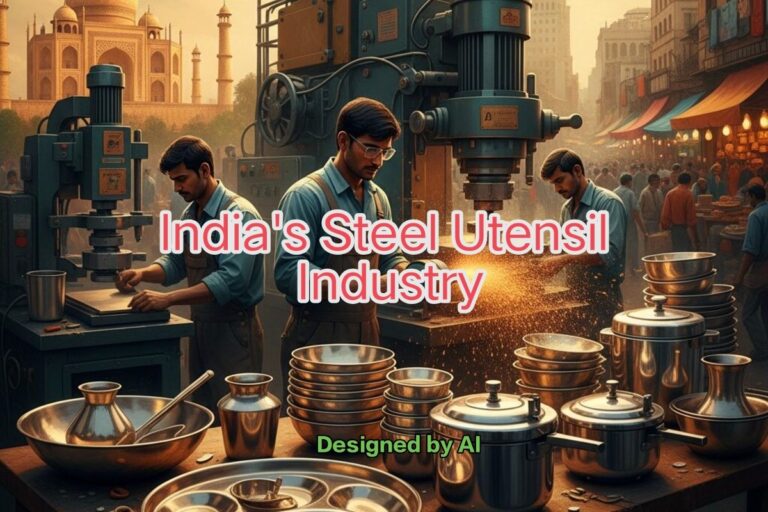
Let us see about India’s Steel Utensil Industry below in detailed.
Almost every home in India uses steel utensils daily. From morning tea to dinner time, we depend on them without even thinking much about where they come from. However, there is a whole system working behind these simple items.
In fact, the steel utensil industry in India is not just about big factories. Instead, it includes many small towns, local workers, and traditional methods. Some places are well known, while many others quietly support the entire process.
Well-Known Steel Utensil Hubs
Before we explore hidden areas, it helps to look at a few places that already have a strong reputation in this field.
Jamnagar
Jamnagar is widely known for metal and brass products, including utensils.
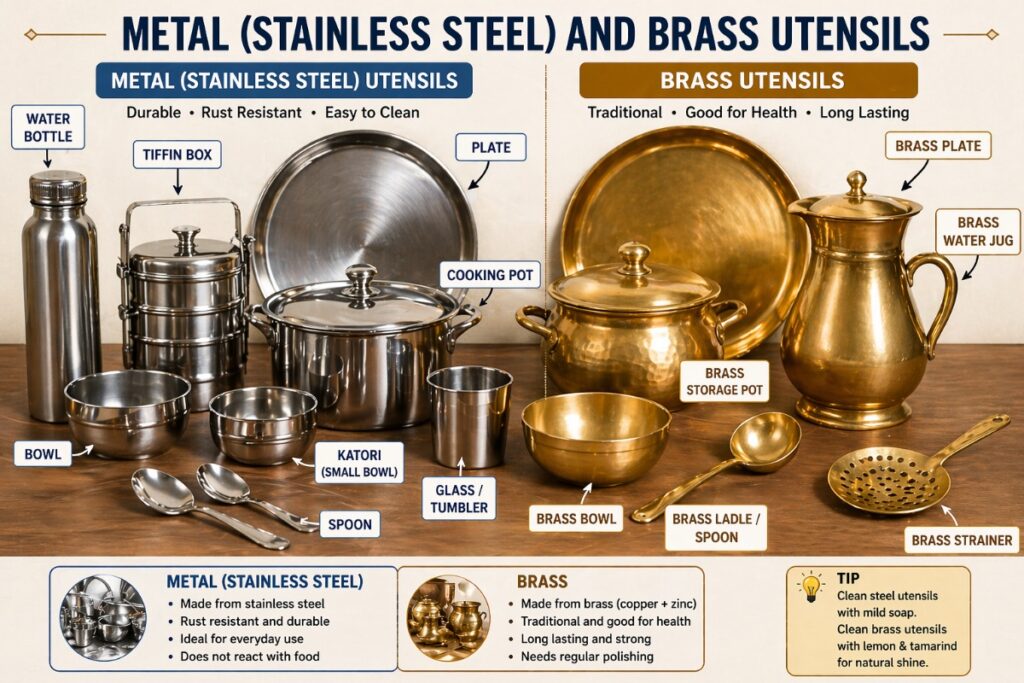
- Large number of small and medium factories
- Strong supply network across India
- Experience in metal processing
Because of this, it plays an important role in production.
Delhi (Wholesale Markets)
Delhi may not produce everything, but it acts as a major distribution center.
- Big wholesale markets
- Connects manufacturers to retailers
- Supplies utensils across different states
So, it becomes a key point in the supply chain.
While these places are more visible, many smaller clusters work quietly in the background.
Hidden Steel Utensil Clusters in India
Now let’s look at the places that do a lot of work but don’t get much attention.
Jagadhri, Haryana
Jagadhri is one of the most important yet lesser-known hubs.
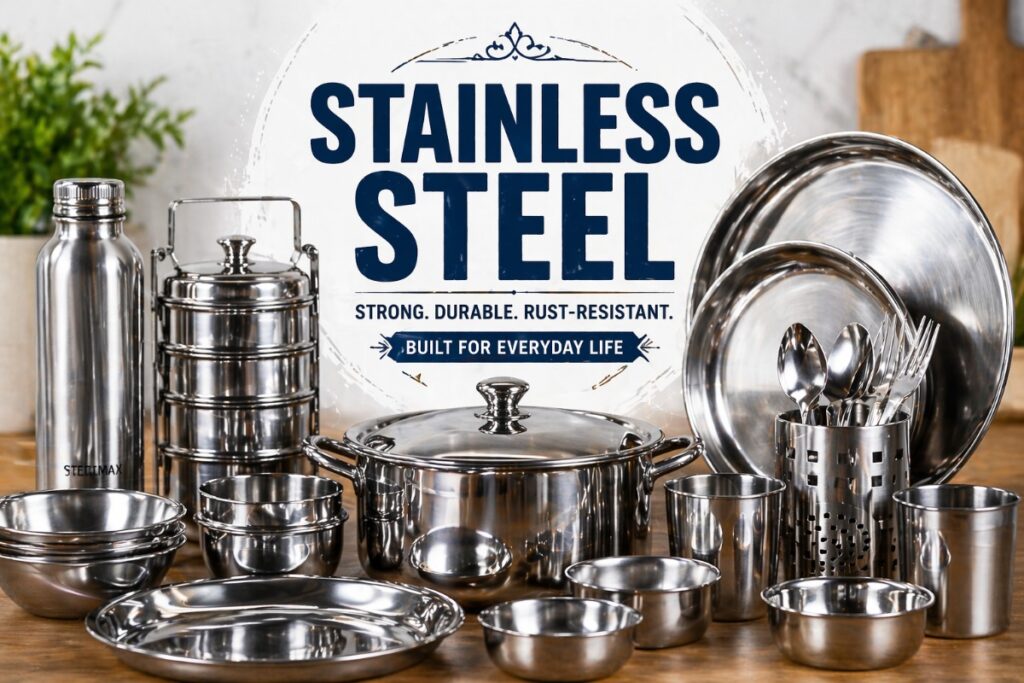
- Known for stainless steel utensils
- Many family-run units
- Long history of metal work
Even today, a lot of utensils in Indian homes come from here.
Moradabad, Uttar Pradesh
Moradabad is famous for metal crafts, but it also contributes to utensils.
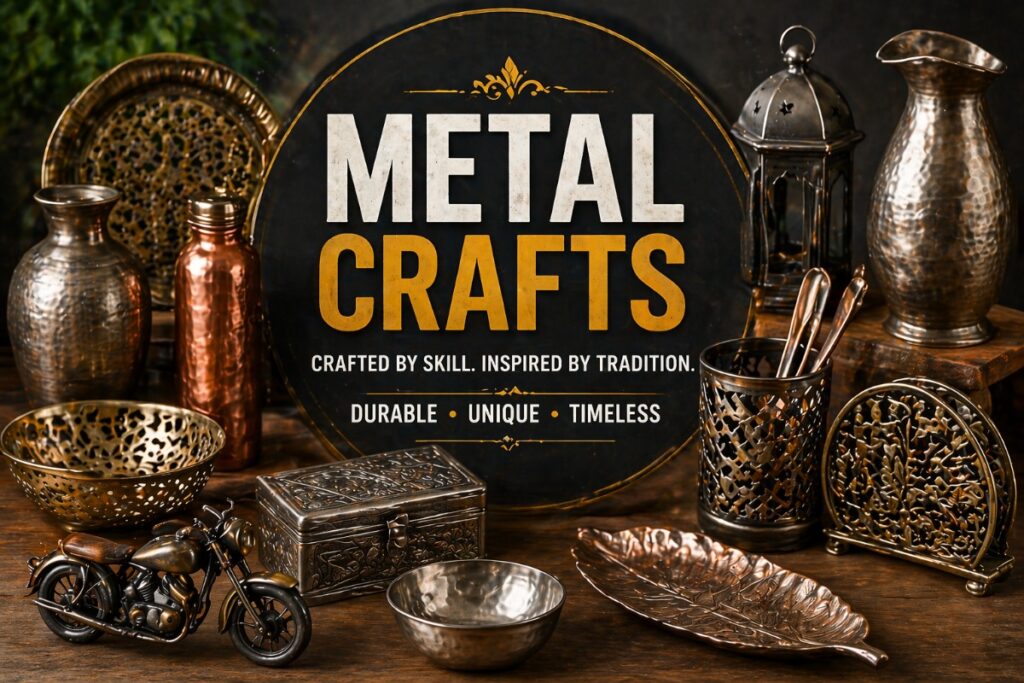
- Skilled artisans
- Work with different metals
- Strong export market
So, it mixes both utility and design.
Thane Region, Maharashtra
The Thane area has several small manufacturing units.
- Produces everyday steel utensils
- Supplies to nearby cities
- Mix of machines and manual work
Because of its location, distribution becomes easier.
Coimbatore Region, Tamil Nadu
This region supports utensil production in different ways.
- Strong engineering base
- Supplies tools and machinery
- Helps in production processes
So, even if it is not directly visible, it plays a supporting role.
How Steel Utensils Are Made
If we break it down, the process is not very complicated, but it involves several steps.
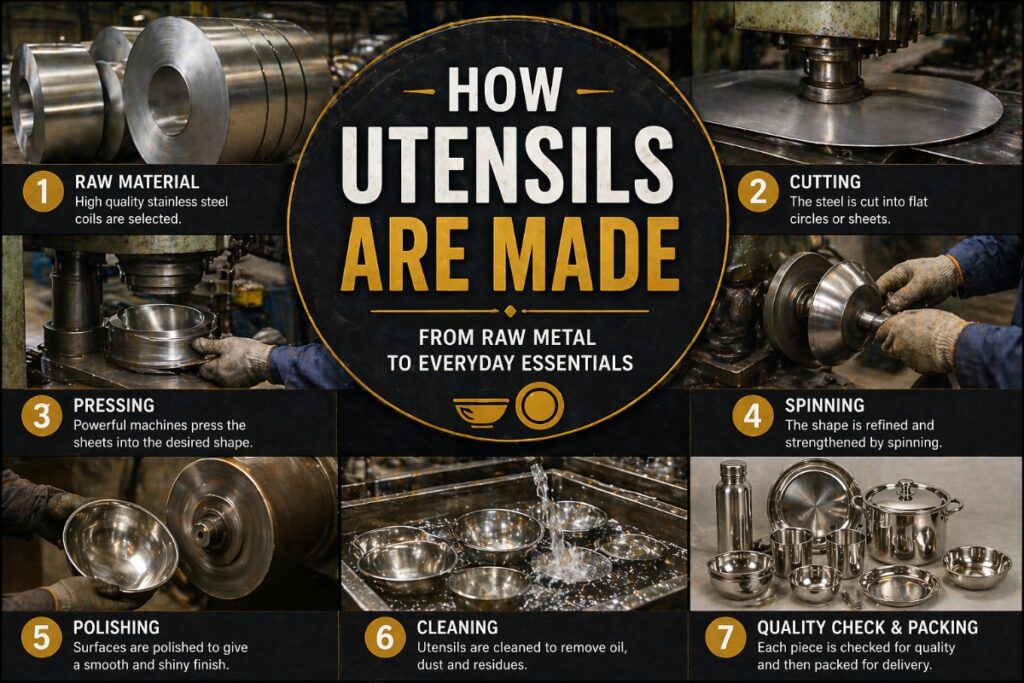
Step-by-step process:
- Steel sheets are cut into shapes
- Machines press them into utensils
- Edges are polished for smooth finishing
- Some products get additional coating or design
After that, they move to markets.
How the Supply Chain Works
The journey of a steel utensil is quite interesting.
- Raw material comes from steel plants
- Small factories shape the utensils
- Wholesale markets distribute them
- Retail shops sell them to customers
So, multiple layers work together before the product reaches your kitchen.
Everyday Use of Steel Utensils in Indian Homes
If we look around any Indian kitchen, steel utensils are everywhere. In fact, most families still prefer them over other materials. This is not just about habit, but also about practicality.
For example, people use steel glasses for drinking water, steel plates for meals, and steel containers for storing food. These items are simple, but they last for years. Because of that, families do not need to replace them often.
At the same time, steel utensils are used in small hotels, street food stalls, and even big restaurants. So, the demand does not come only from homes. Instead, it comes from many different places.
Another interesting point is that people trust steel more when it comes to safety. Unlike plastic, it does not react with hot food. Because of this, many households slowly move back to steel products even if they tried other options before.
Also, during festivals and weddings, people often buy new utensils. In some traditions, gifting steel items is considered useful and practical. So, cultural habits also help this industry stay active.
Moreover, in rural areas, steel utensils are still the first choice. They are easy to maintain and do not break easily. This makes them suitable for everyday use.
Because of all these reasons, the demand for steel utensils never really goes down. Even when new materials enter the market, steel continues to hold its place.
People Behind the Industry
This industry supports a large number of people.
- Factory workers
- Machine operators
- Transport workers
- Shop owners
Many of them depend on this work for daily income. In smaller towns, this industry becomes the main source of livelihood.
Challenges Faced by the Industry
Even though the demand is high, the industry faces several issues.
- Rising cost of raw materials
- Competition from plastic and other materials
- Limited access to modern machines in small units
- Lack of branding for local products
Because of these challenges, smaller clusters struggle to grow.
Why Steel Utensils Still Matter
Even today, steel utensils remain popular, and there are good reasons for that.
- Long-lasting and durable
- Safe for cooking and storage
- Easy to clean
- Environment-friendly compared to plastic
So, they continue to be a practical choice for most households.
Future of the Steel Utensil Industry
Things are slowly changing in this sector.
- Online platforms help small sellers reach more buyers
- Better machines improve production quality
- Growing awareness about sustainable products
Because of these changes, the industry may grow further in the coming years.
Conclusion
When we use steel utensils every day, we rarely think about the journey behind them. However, many small towns, workers, and businesses play a role in making these simple products available to us.
At one level, big markets and known hubs help in distribution. At the same time, hidden clusters quietly handle production and supply. Together, they keep the entire system running smoothly.
More importantly, this supports livelihoods and keeps traditional skills alive. That is something we often overlook.
So next time you pick up a steel plate or glass, just remember that it represents more than a product. It reflects a network of effort, skill, and everyday work happening across the country.
It will continue supporting millions in India.



Excellent explanation of how production hubs like Jamnagar and distribution centers like Delhi support India’s steel utensil industry.
👍
Excellent information
👍