
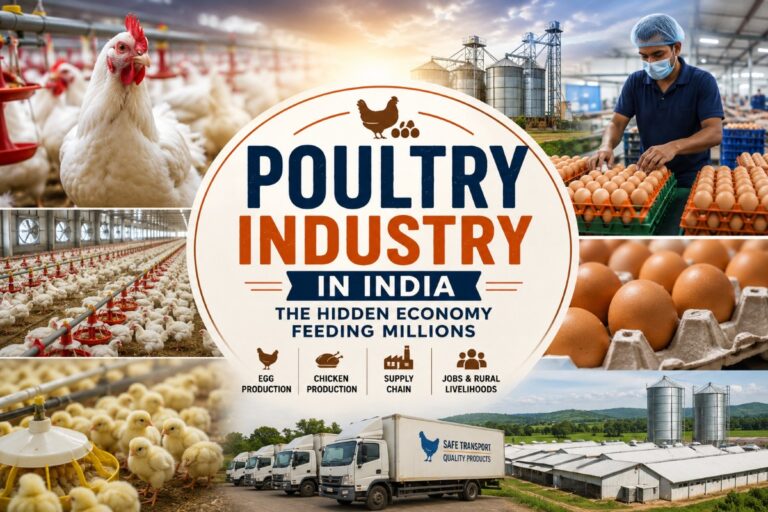
Let us see about Poultry Industry in India below in detailed.
When people think about India’s agriculture sector, they often focus on crops such as rice, wheat, sugarcane, or fruits. However, another industry quietly contributes billions of rupees to the economy every year—the poultry industry.
From eggs served at breakfast to chicken sold in restaurants, poultry products have become an important part of India’s food system. Behind these products lies a massive network of farmers, hatcheries, feed manufacturers, transport operators, veterinarians, wholesalers, retailers, and processing units.
What started as a small rural activity has grown into one of India’s largest livestock industries.
Today, the poultry sector supports millions of livelihoods and plays a crucial role in food production, employment generation, and rural development.
What Is the Poultry Industry?
The poultry industry involves the breeding and raising of birds for commercial purposes.
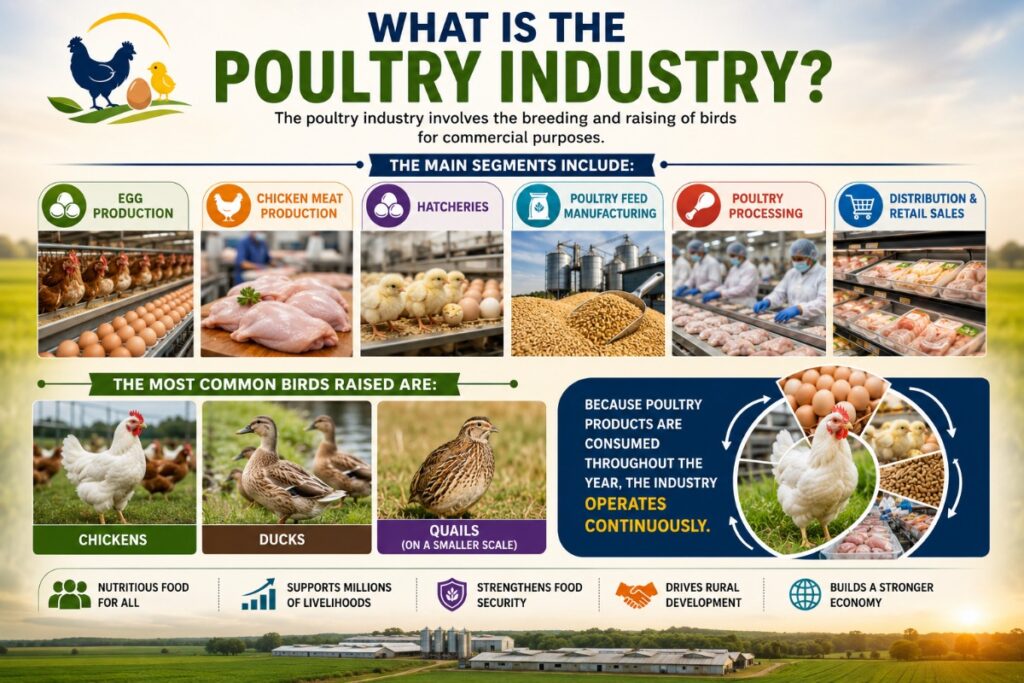
The main segments include:
- Egg production
- Chicken meat production
- Hatcheries
- Poultry feed manufacturing
- Poultry processing
- Distribution and retail sales
The most common birds raised are:
- Chickens
- Ducks
- Quails (on a smaller scale)
Because poultry products are consumed throughout the year, the industry operates continuously.
Why Poultry Is Important in India
The poultry sector has grown rapidly over the past few decades.
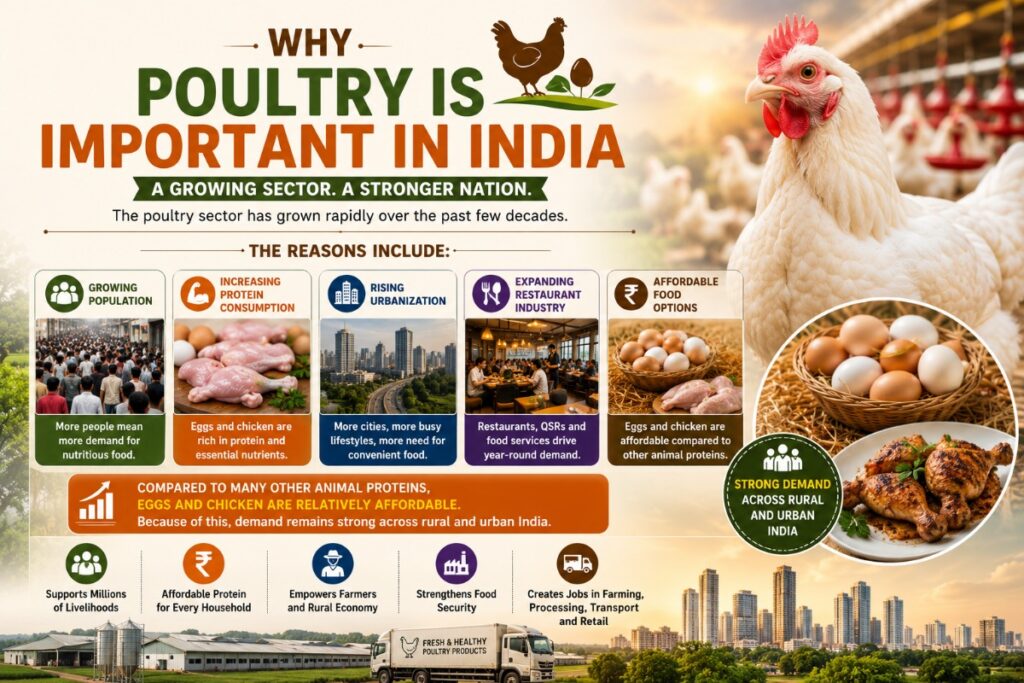
The reasons include:
- Growing population
- Increasing protein consumption
- Rising urbanization
- Expanding restaurant industry
- Affordable food options
Compared to many other animal proteins, eggs and chicken are relatively affordable.
Because of this, demand remains strong across rural and urban India.
The Growth of India’s Poultry Industry
Several decades ago, poultry farming was largely backyard-based.
Families would raise a few birds near their homes for:
- Eggs
- Meat
- Household consumption
Today, the sector has become highly organized.
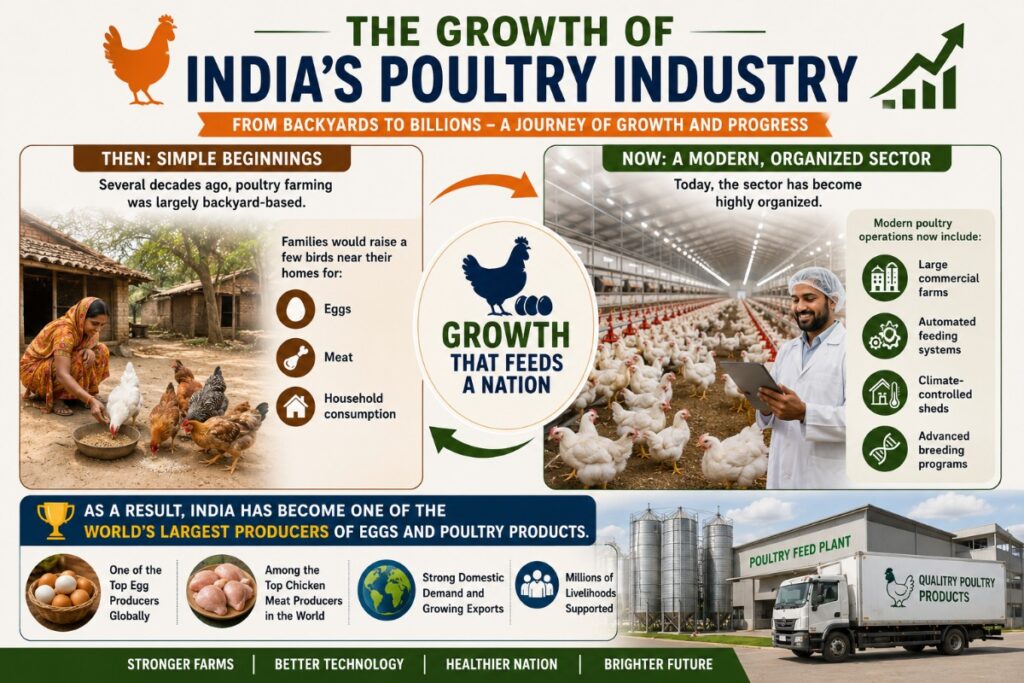
Modern poultry operations now include:
- Large commercial farms
- Automated feeding systems
- Climate-controlled sheds
- Advanced breeding programs
As a result, India has become one of the world’s largest producers of eggs and poultry products.
Major Poultry-Producing States in India
Certain states have developed strong poultry ecosystems.
Andhra Pradesh
Andhra Pradesh is one of India’s leading poultry-producing states.
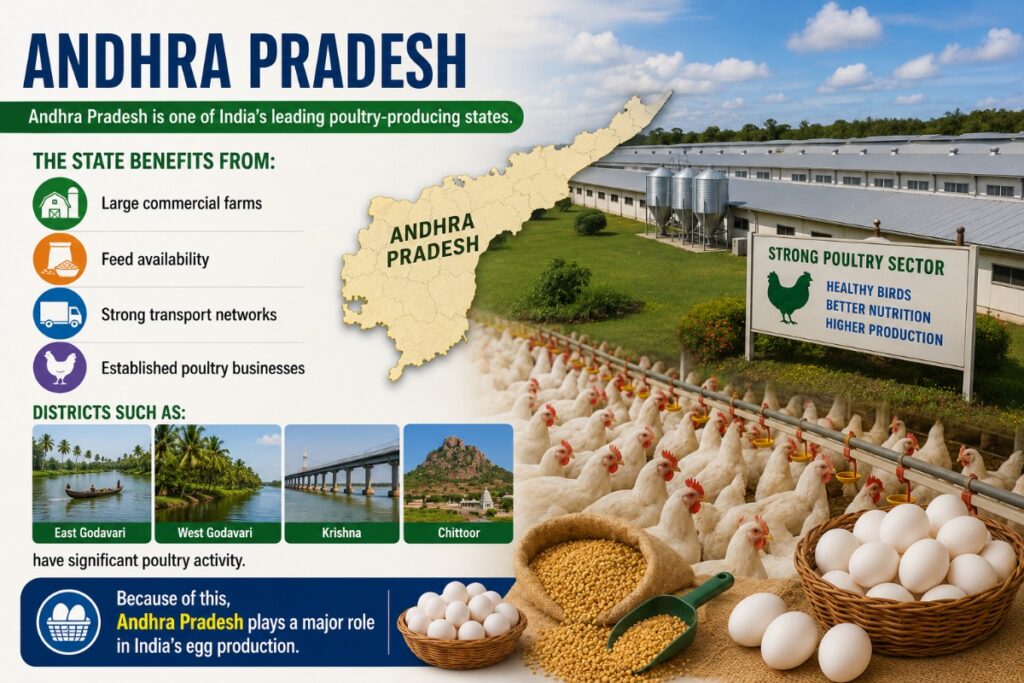
The state benefits from:
- Large commercial farms
- Feed availability
- Strong transport networks
- Established poultry businesses
Districts such as:
- East Godavari
- West Godavari
- Krishna
- Chittoor
have significant poultry activity.
Because of this, Andhra Pradesh plays a major role in India’s egg production.
Telangana
Telangana is another important poultry hub.
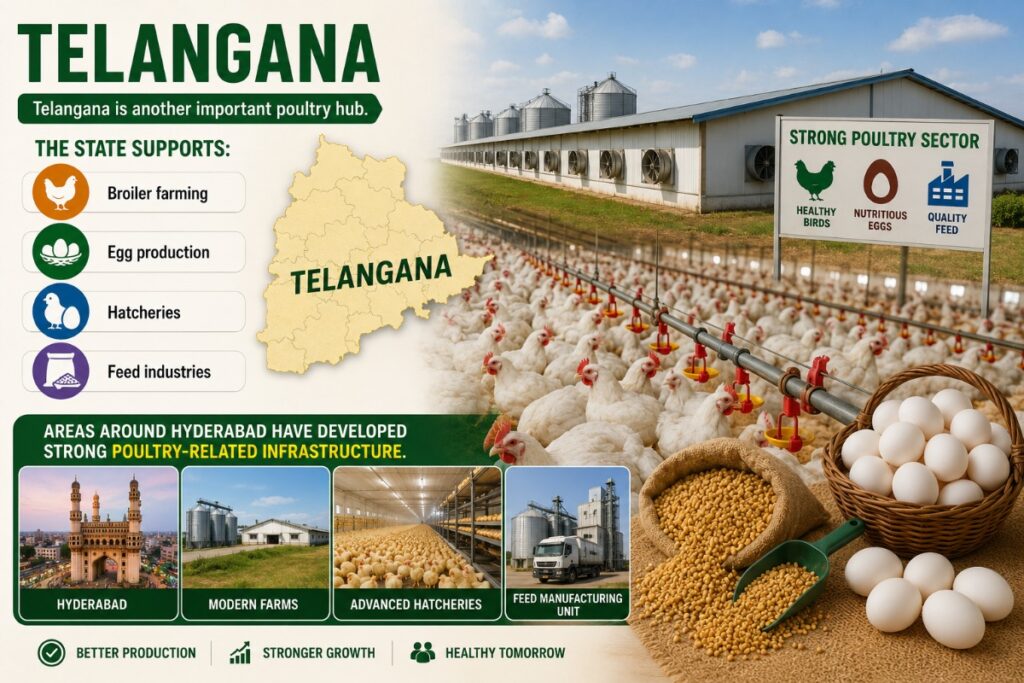
The state supports:
- Broiler farming
- Egg production
- Hatcheries
- Feed industries
Areas around Hyderabad have developed strong poultry-related infrastructure.
Tamil Nadu
Tamil Nadu has one of India’s most established poultry industries.
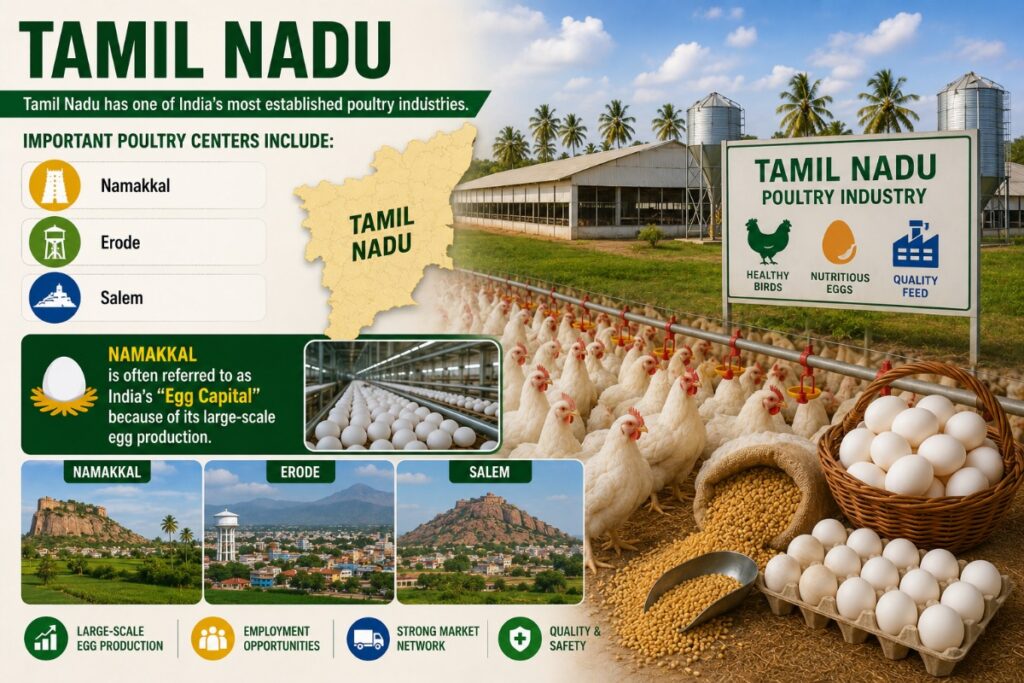
Important poultry centers include:
- Namakkal
- Erode
- Salem
Namakkal is often referred to as India’s “Egg Capital” because of its large-scale egg production.
Karnataka
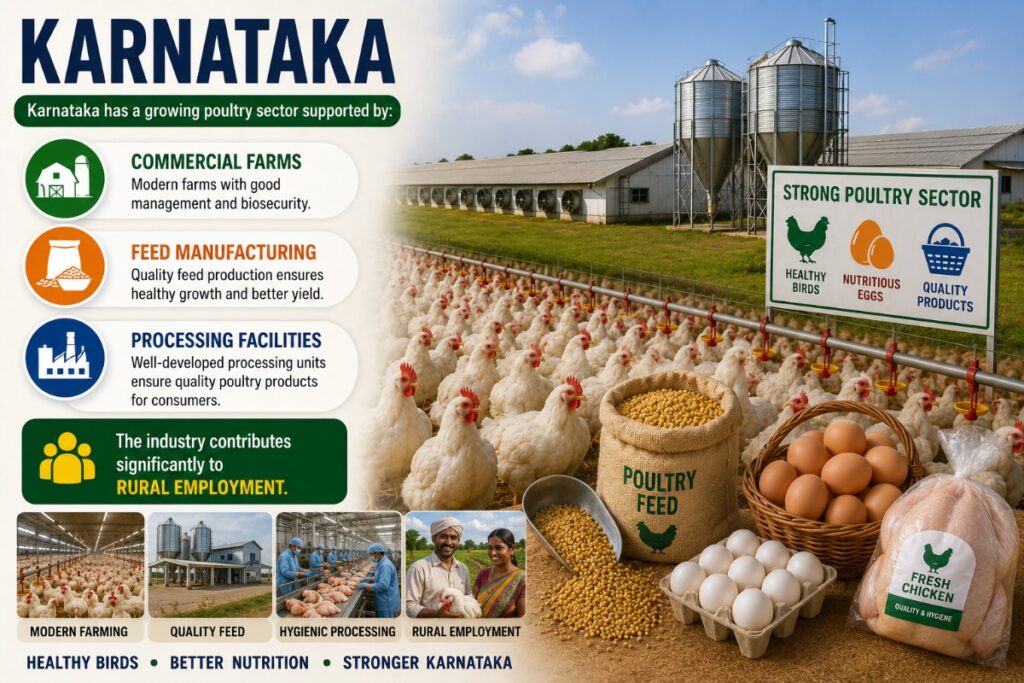
Karnataka has a growing poultry sector supported by:
- Commercial farms
- Feed manufacturing
- Processing facilities
The industry contributes significantly to rural employment.
Maharashtra
Maharashtra also has a strong poultry presence.
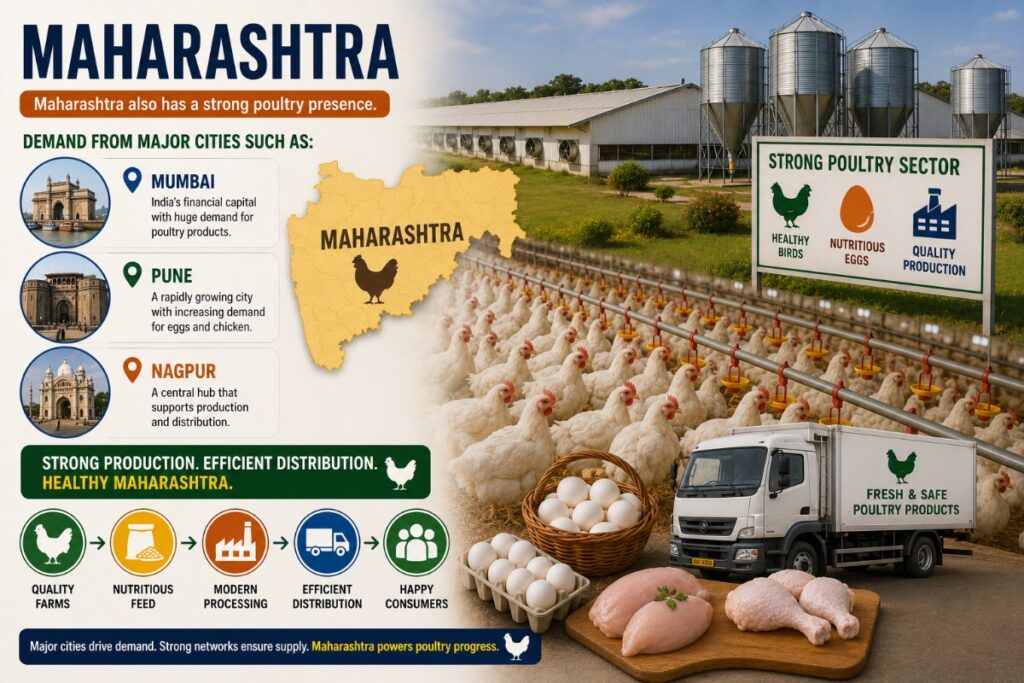
Demand from major cities such as:
- Mumbai
- Pune
- Nagpur
helps support production and distribution networks.
Types of Poultry Farming
The industry consists of different business models.
Layer Farming
Layer farms focus on egg production.
Birds are raised specifically to lay eggs.
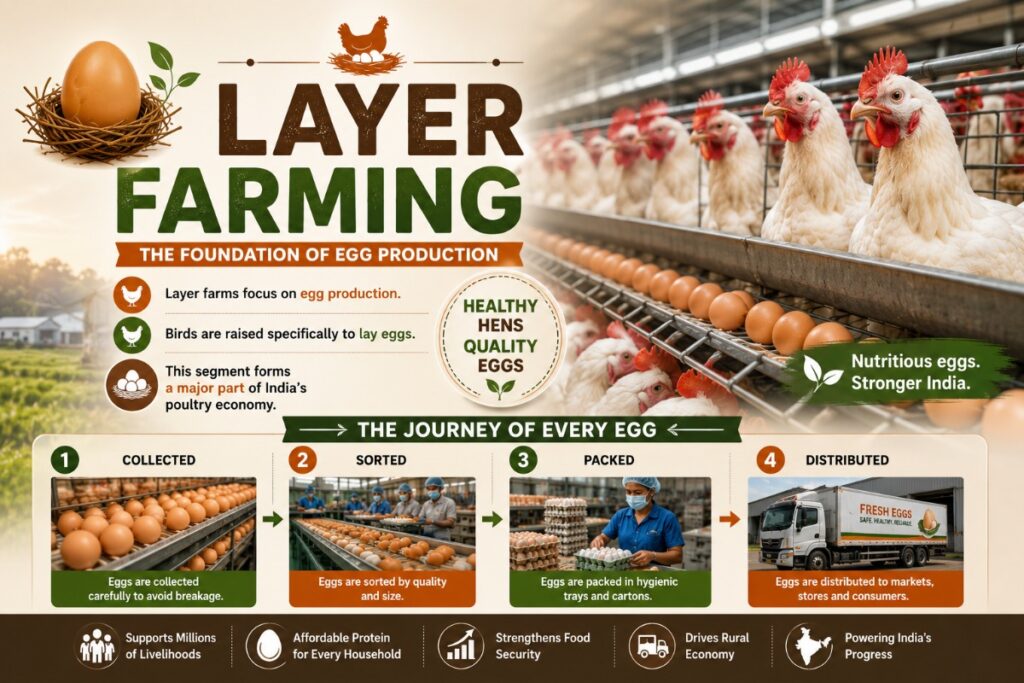
The eggs are then:
- Collected
- Sorted
- Packed
- Distributed
This segment forms a major part of India’s poultry economy.
Broiler Farming
Broiler farms focus on chicken meat production.
Birds are raised for a limited period before being supplied to markets.
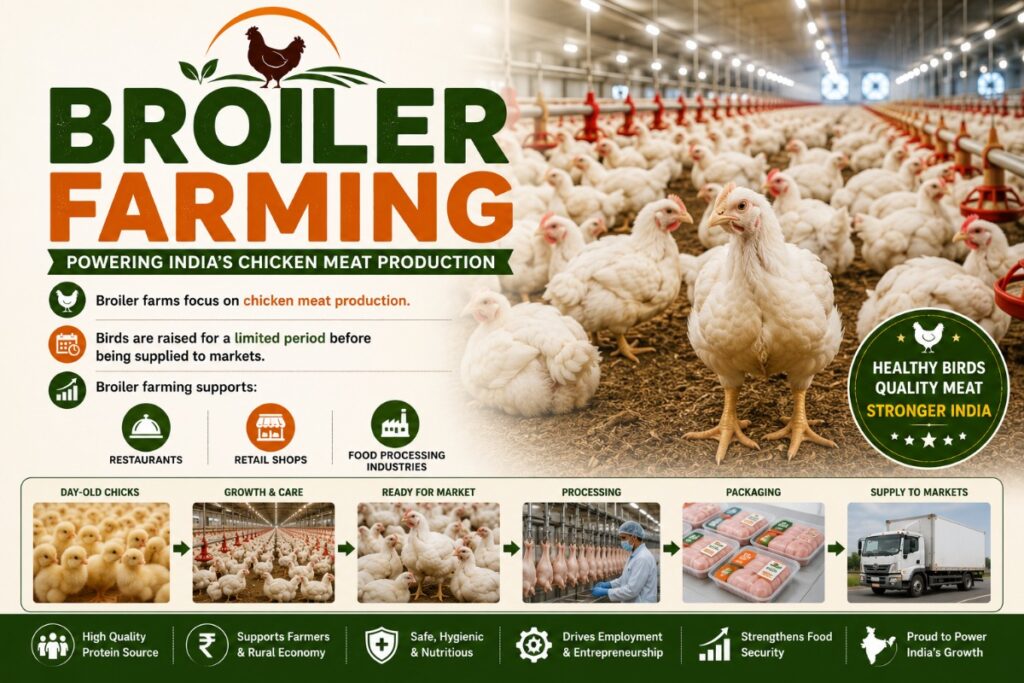
Broiler farming supports:
- Restaurants
- Retail shops
- Food processing industries
Hatcheries
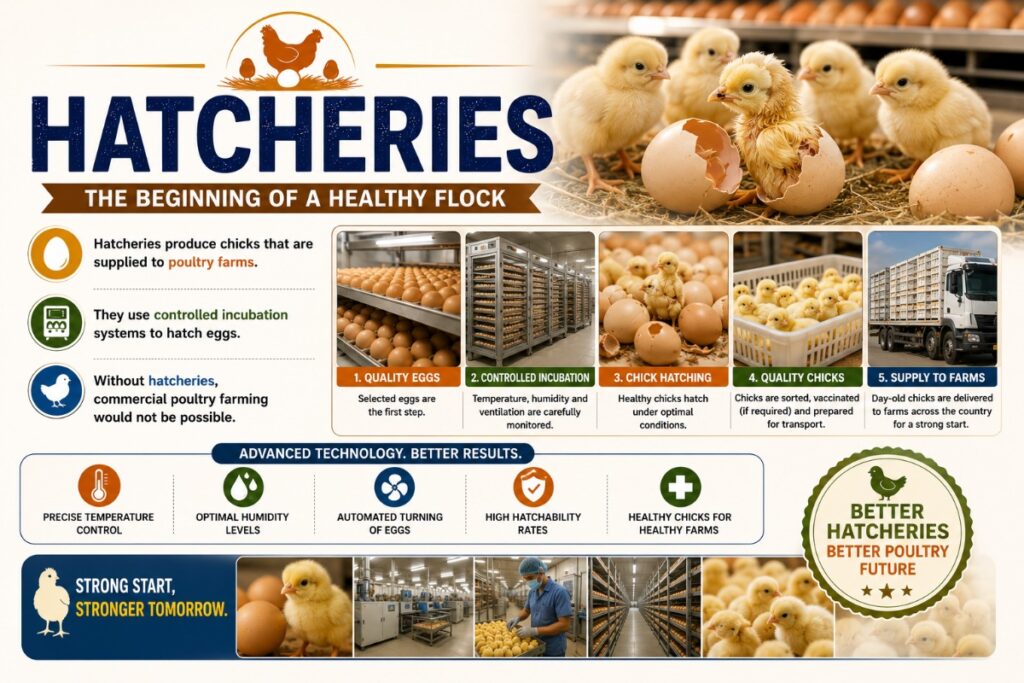
Hatcheries produce chicks that are supplied to poultry farms.
They use controlled incubation systems to hatch eggs.
Without hatcheries, commercial poultry farming would not be possible.
The Supply Chain of the Poultry Industry
The poultry sector has a complex supply chain.
The journey usually follows this path:
Breeding Farms → Hatcheries → Poultry Farms → Processing Units → Wholesale Markets → Retailers → Consumers
Each stage creates jobs and economic activity.
Poultry Feed Industry
One of the most important parts of poultry farming is feed production.
Birds require balanced nutrition for healthy growth.
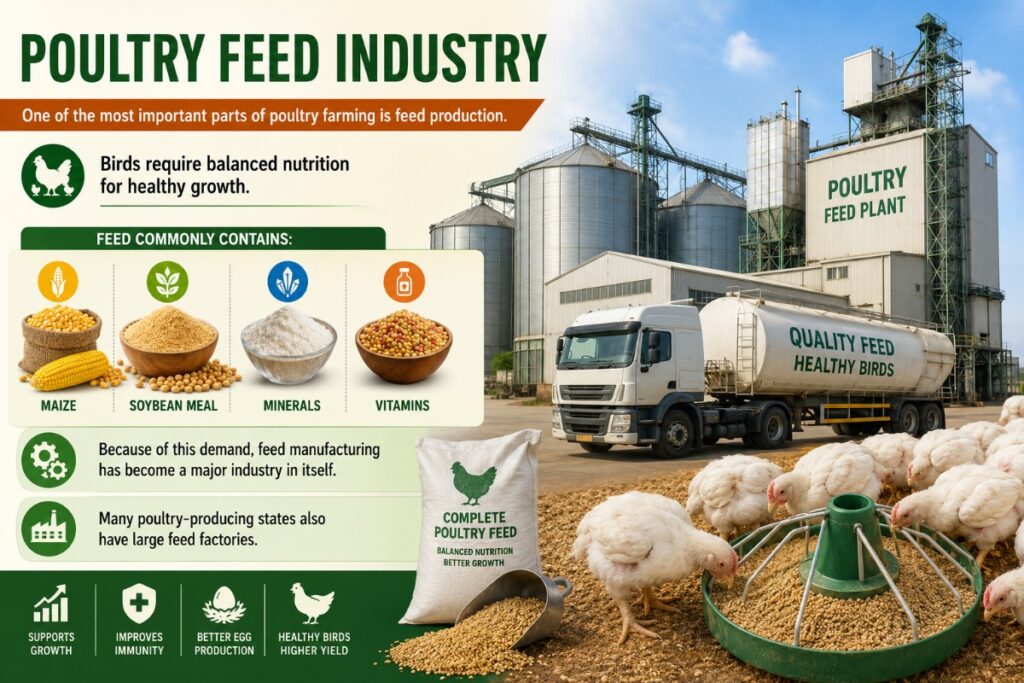
Feed commonly contains:
- Maize
- Soybean meal
- Minerals
- Vitamins
Because of this demand, feed manufacturing has become a major industry in itself.
Many poultry-producing states also have large feed factories.
People Behind the Industry
The poultry sector supports a wide range of occupations.
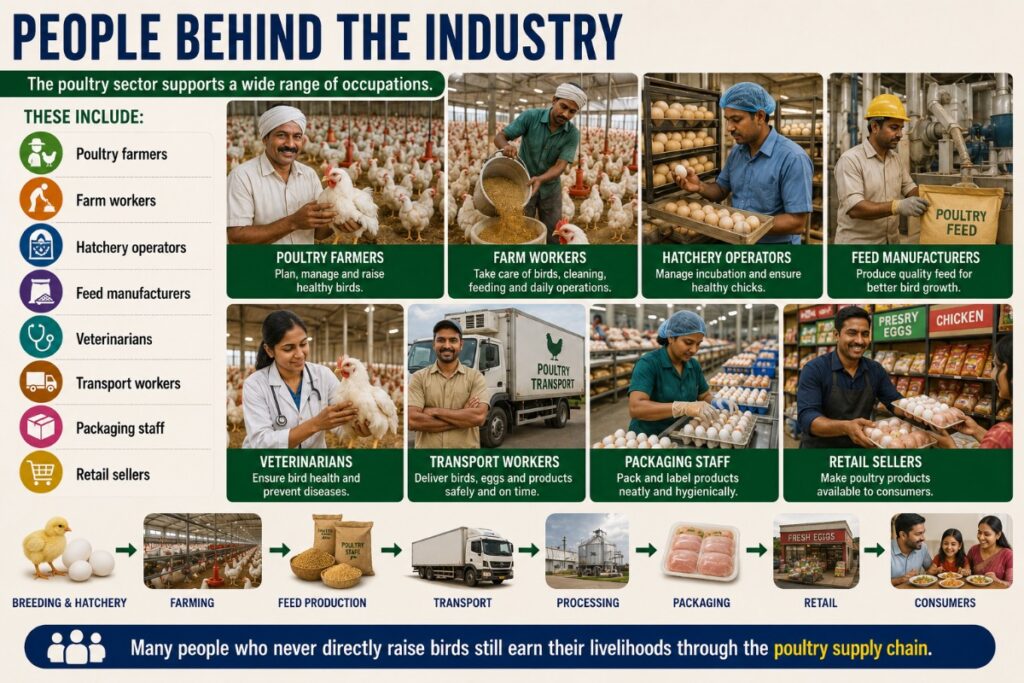
These include:
- Poultry farmers
- Farm workers
- Hatchery operators
- Feed manufacturers
- Veterinarians
- Transport workers
- Packaging staff
- Retail sellers
Many people who never directly raise birds still earn their livelihoods through the poultry supply chain.
Egg Production and Distribution
Eggs travel through multiple stages before reaching consumers.
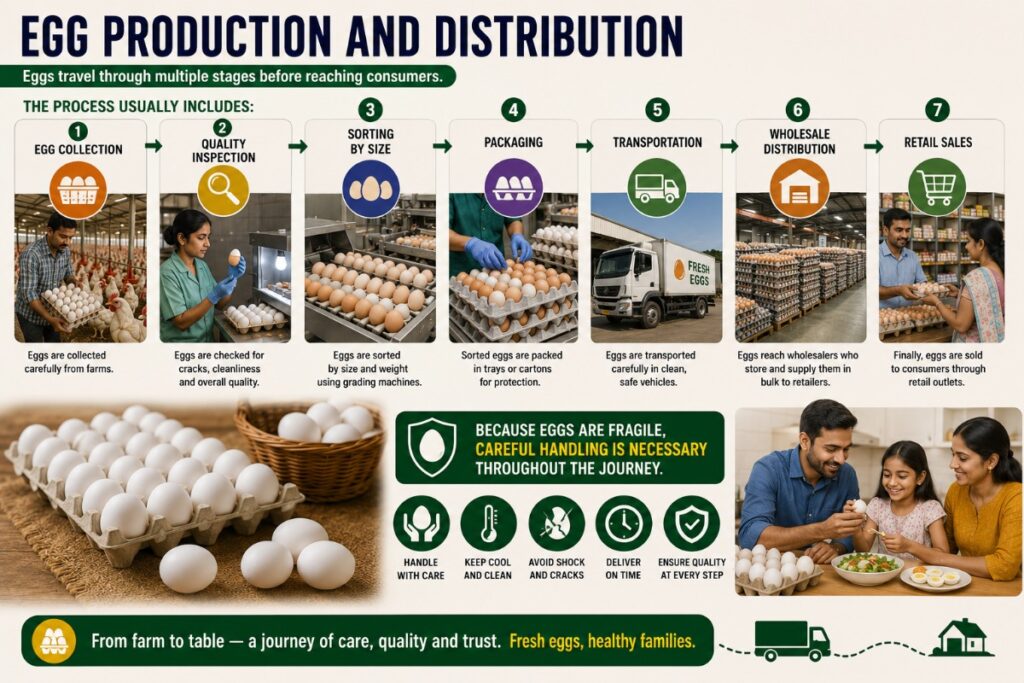
The process usually includes:
- Egg collection
- Quality inspection
- Sorting by size
- Packaging
- Transportation
- Wholesale distribution
- Retail sales
Because eggs are fragile, careful handling is necessary throughout the journey.
Chicken Processing Industry
Modern poultry businesses increasingly use processing facilities.
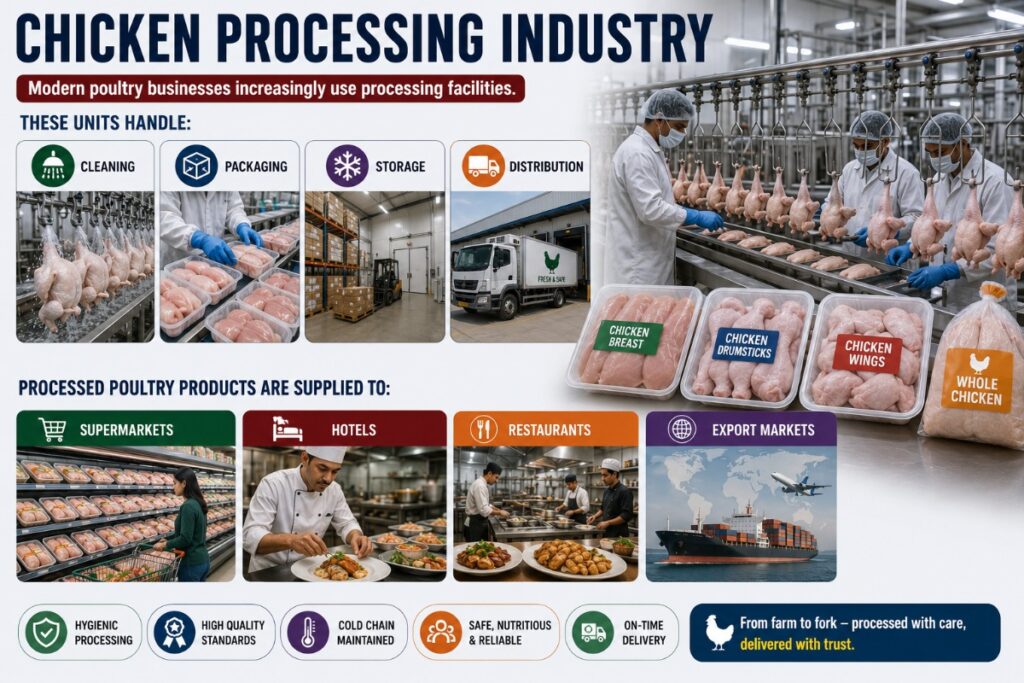
These units handle:
- Cleaning
- Packaging
- Storage
- Distribution
Processed poultry products are supplied to:
- Supermarkets
- Hotels
- Restaurants
- Export markets
Economic Importance of the Poultry Industry
The poultry sector contributes significantly to India’s economy.
It supports:
- Rural employment
- Agricultural growth
- Food security
- Small businesses
- Transport networks
In many districts, poultry farming provides a stable source of income throughout the year.
Technology in Modern Poultry Farming
Technology has transformed the industry.
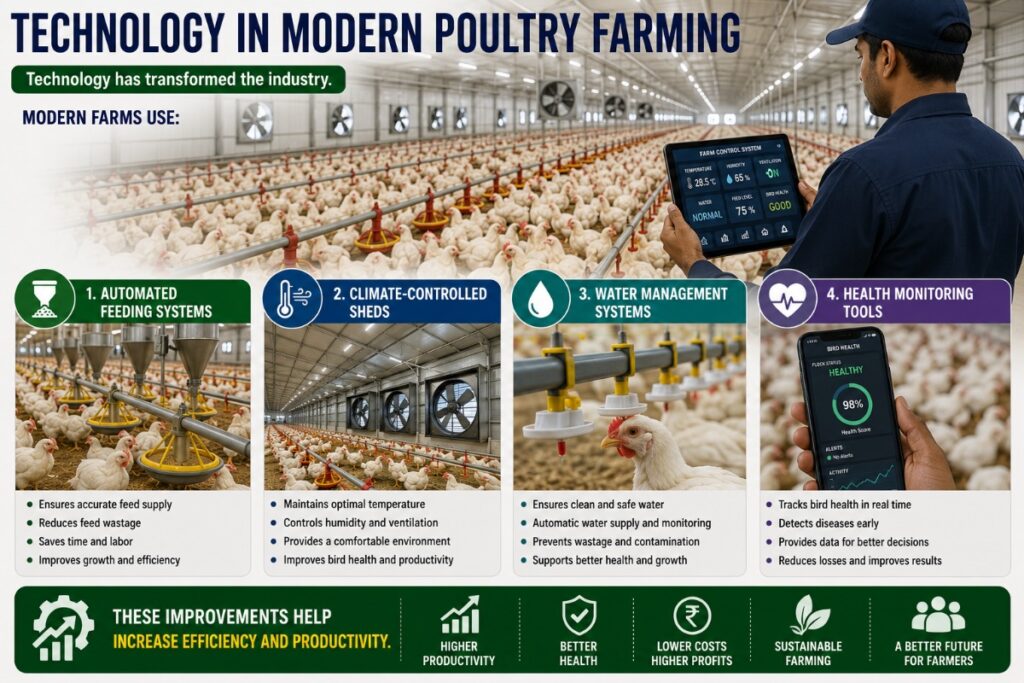
Modern farms use:
- Automated feeding systems
- Climate-controlled sheds
- Water management systems
- Health monitoring tools
These improvements help increase efficiency and productivity.
Challenges Faced by the Industry
Despite its growth, the sector faces several challenges.
Common issues include:
- Feed price fluctuations
- Disease outbreaks
- Rising production costs
- Transport expenses
- Weather-related stress
Farmers must carefully manage these risks to remain profitable.
Poultry and Rural Employment
One reason the poultry industry is important is its ability to generate employment.
The sector creates opportunities for:
- Small farmers
- Women entrepreneurs
- Rural youth
- Local traders
Because poultry farming can be started on various scales, it remains accessible to many households.
Future of India’s Poultry Industry
The future looks promising as demand continues to grow.
Key trends include:
- Higher protein consumption
- Expansion of organized retail
- Growth of processed foods
- Improved farming technologies
- Better cold-chain infrastructure
As incomes rise, poultry products are expected to remain an important part of diets.
Conclusion
India’s poultry industry has evolved from small backyard farming into a major economic sector that supports millions of livelihoods.
States such as Andhra Pradesh, Telangana, Tamil Nadu, Karnataka, and Maharashtra have become important centers of production.
Behind every egg and chicken product lies a network of farmers, workers, transport operators, feed manufacturers, veterinarians, and retailers.
Although consumers often see only the final product, the poultry industry quietly powers a significant portion of India’s agricultural and food economy every single day.




Good content