
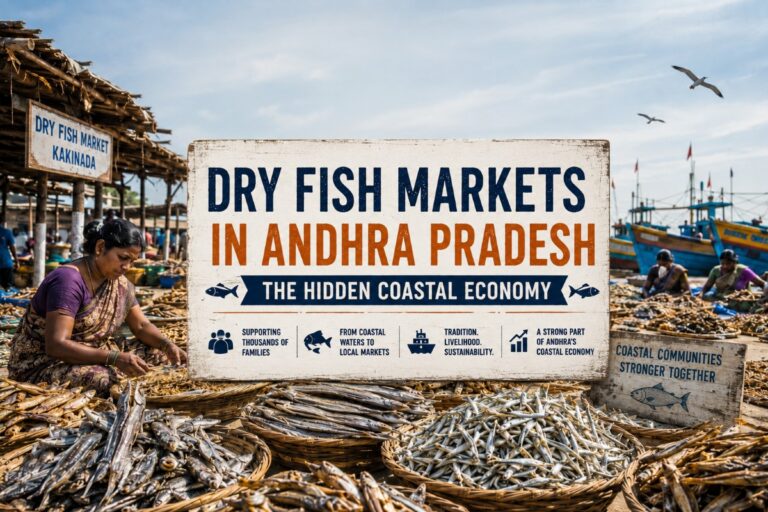
Let us see about Dry Fish Markets in Andhra Pradesh below in detailed.
When people think about seafood in India, they usually imagine fresh fish markets near coastal towns. However, another large business quietly exists behind the scenes — the dry fish economy.
Across coastal regions of Andhra Pradesh, dry fish markets support thousands of livelihoods. In many fishing villages, fish is not only sold fresh. A large portion is cleaned, salted, dried under sunlight, packed, transported, and sold to markets across India.
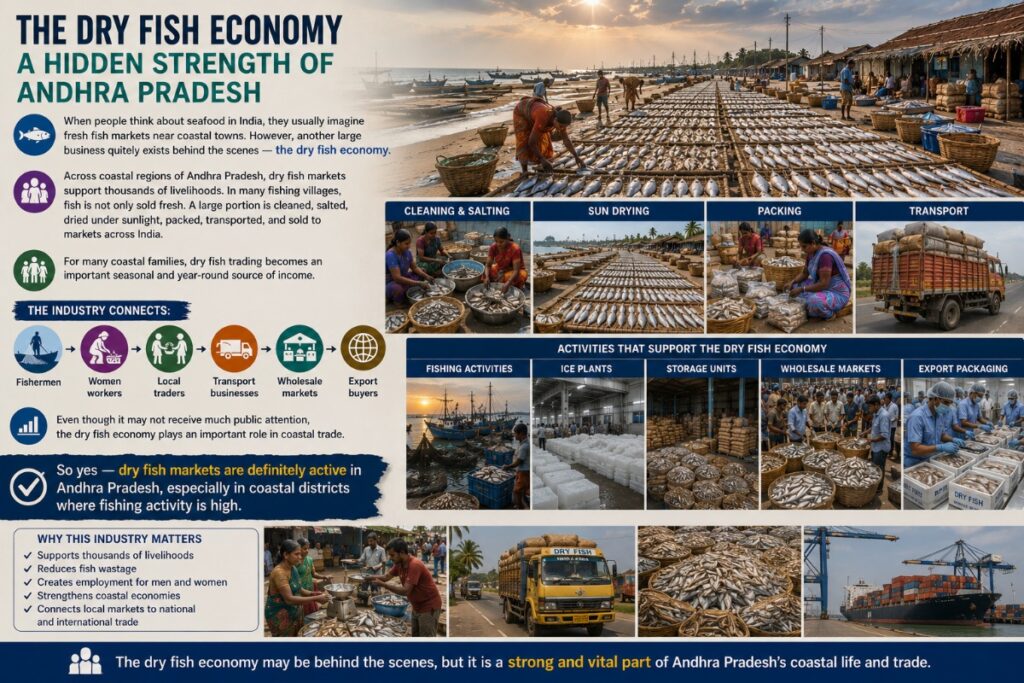
For many coastal families, dry fish trading becomes an important seasonal and year-round source of income.
What makes this industry interesting is that it connects:
- Fishermen
- Women workers
- Local traders
- Transport businesses
- Wholesale markets
- Export buyers
Even though it may not receive much public attention, the dry fish economy plays an important role in coastal trade.
So yes — dry fish markets are definitely active in Andhra Pradesh, especially in coastal districts where fishing activity is high.
What Are Dry Fish Markets?
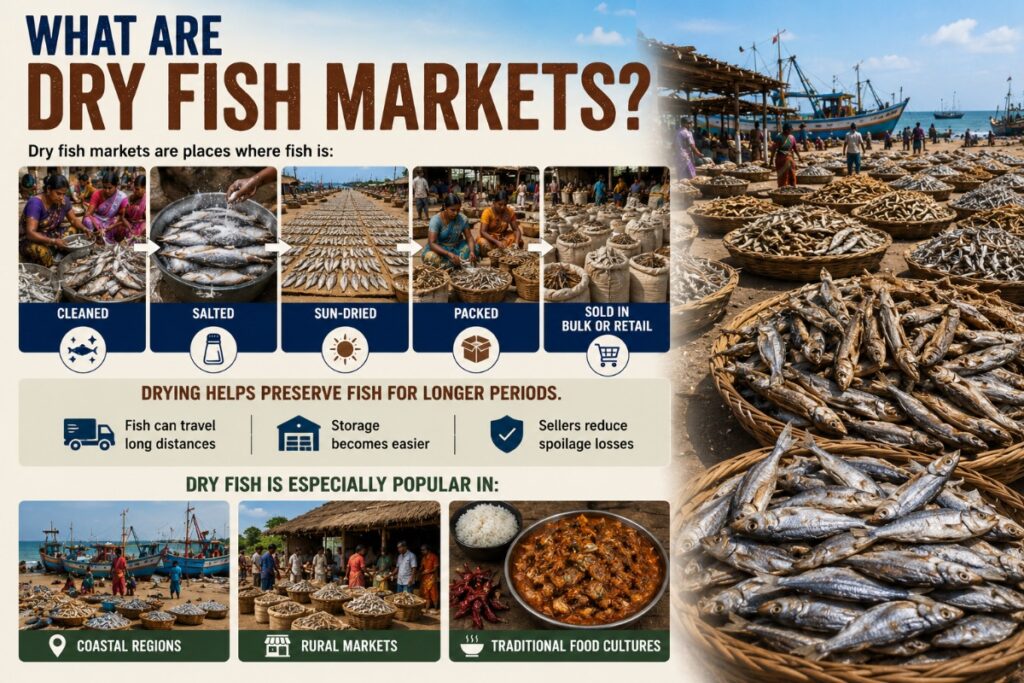
Dry fish markets are places where fish is:
- Cleaned
- Salted
- Sun-dried
- Packed
- Sold in bulk or retail
Drying helps preserve fish for longer periods.
Because of this process:
- Fish can travel long distances
- Storage becomes easier
- Sellers reduce spoilage losses
Dry fish is especially popular in:
- Coastal regions
- Rural markets
- Traditional food cultures
Why Andhra Pradesh Has a Strong Dry Fish Economy
Andhra Pradesh has a long coastline along the Bay of Bengal.
Because of this, the state has:
- Active fishing harbors
- Large fish landings
- Coastal fishing villages
- Strong seafood trade networks
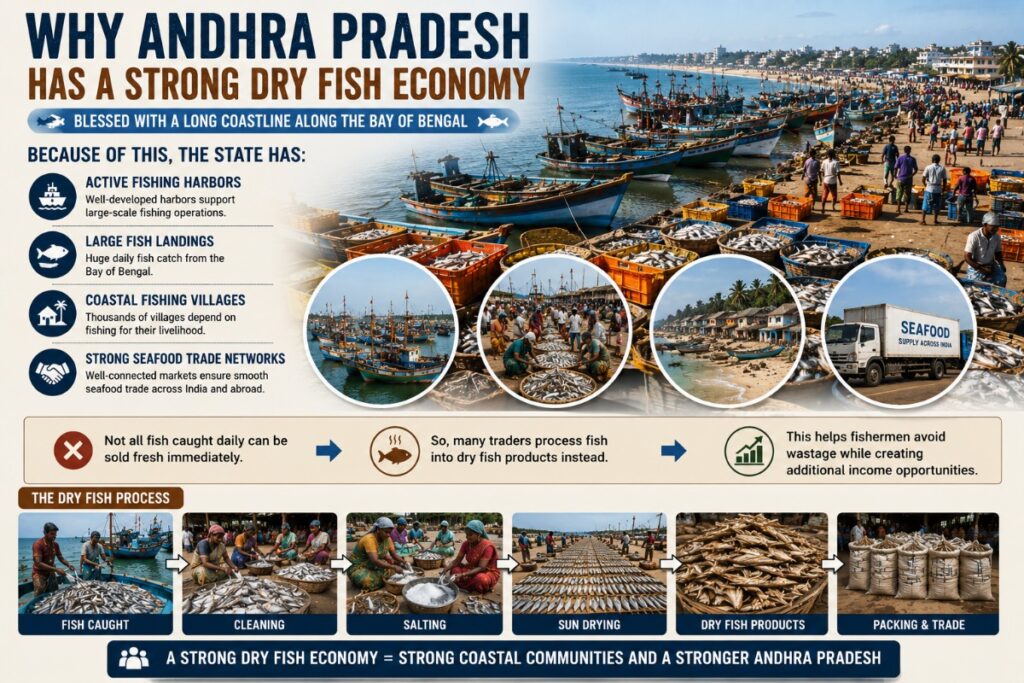
Not all fish caught daily can be sold fresh immediately.
So, many traders process fish into dry fish products instead.
This helps fishermen avoid wastage while creating additional income opportunities.
Important Dry Fish Market Areas in Andhra Pradesh
Several coastal regions are known for dry fish activity.
Kakinada
Kakinada is one of the major coastal trade centers.
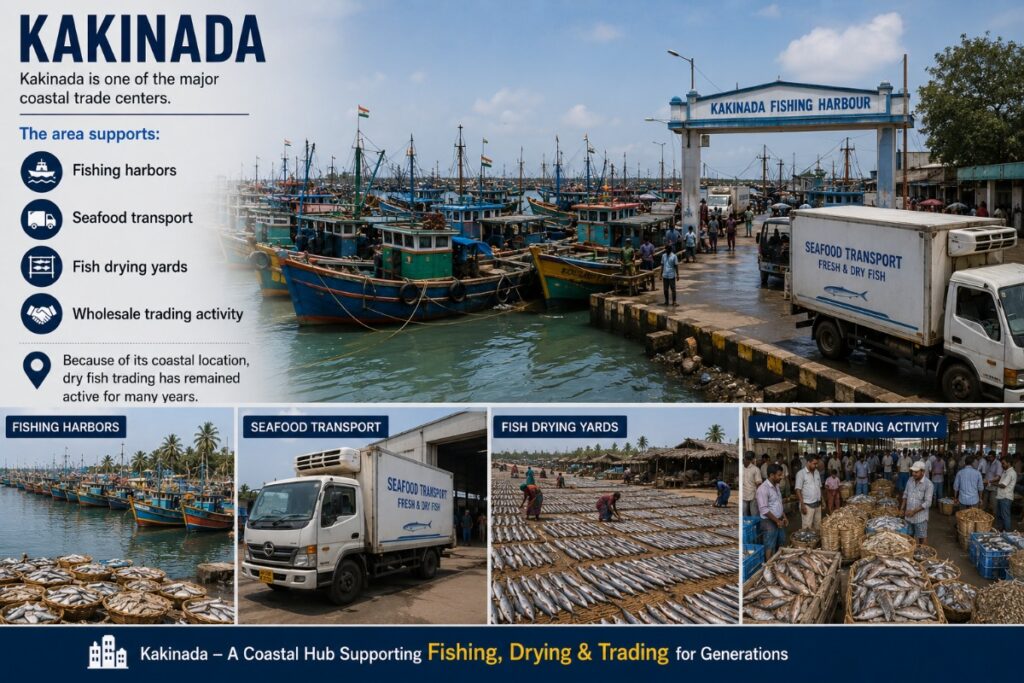
The area supports:
- Fishing harbors
- Seafood transport
- Fish drying yards
- Wholesale trading activity
Because of its coastal location, dry fish trading has remained active for many years.
Machilipatnam
Machilipatnam has a strong traditional fishing economy.
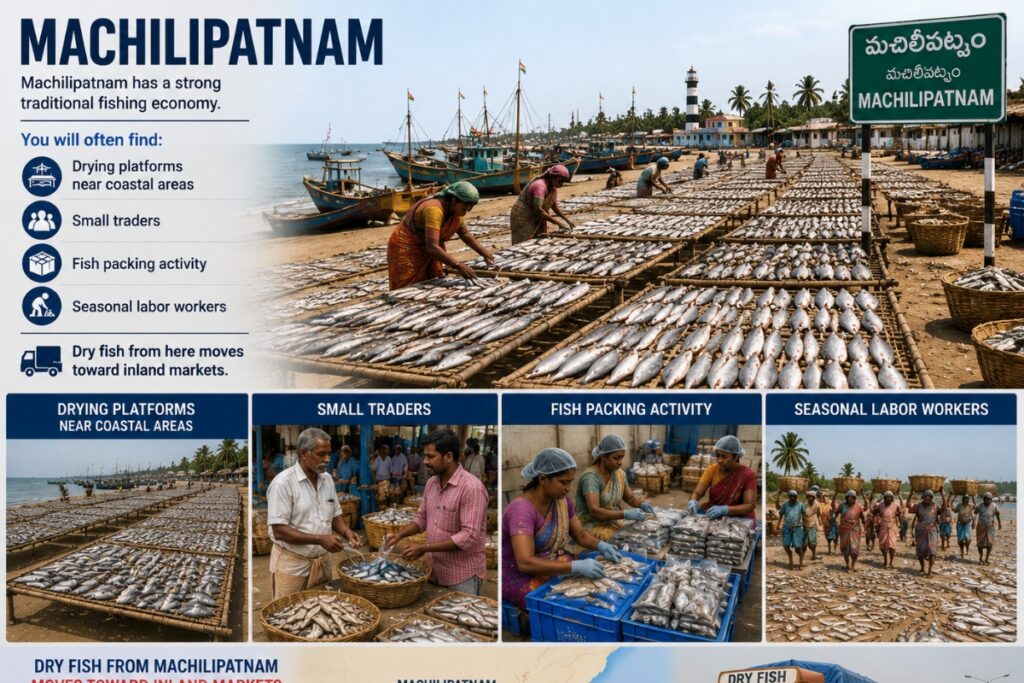
You will often find:
- Drying platforms near coastal areas
- Small traders
- Fish packing activity
- Seasonal labor workers
Dry fish from here moves toward inland markets.
Nellore
Nellore is widely known for aquaculture and seafood-related business.
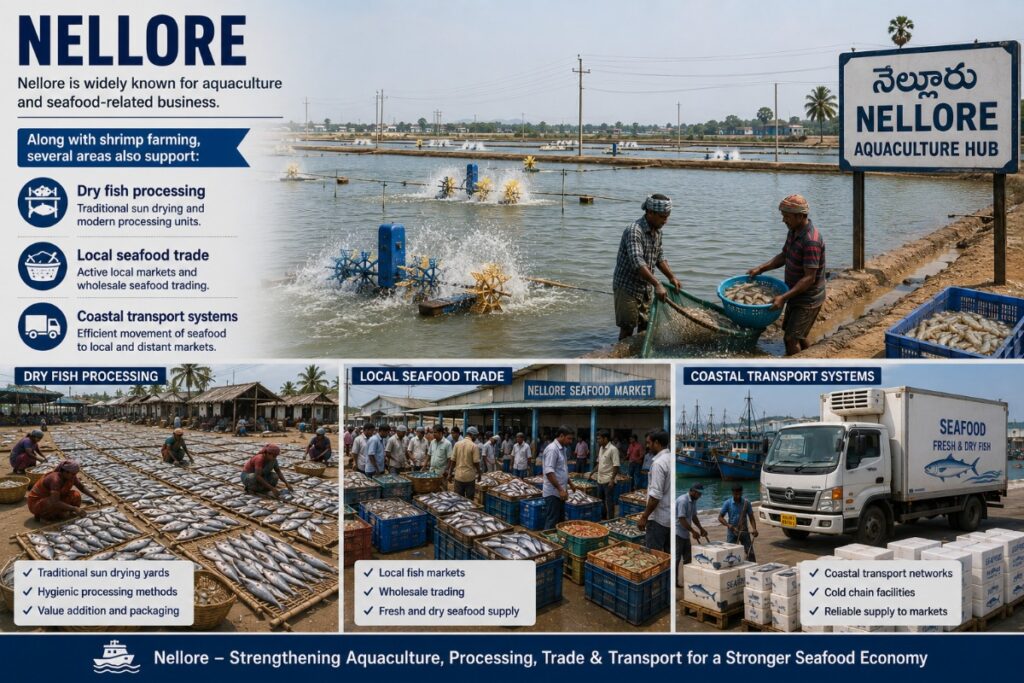
Along with shrimp farming, several areas also support:
- Dry fish processing
- Local seafood trade
- Coastal transport systems
Visakhapatnam
Visakhapatnam has one of the major fishing harbors in eastern India.
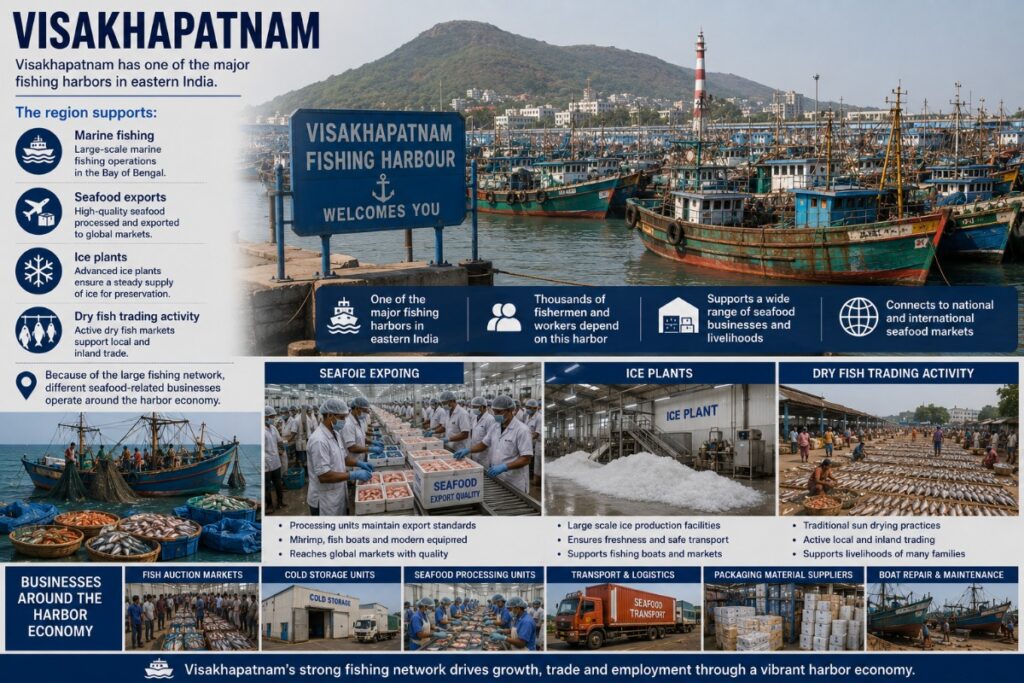
The region supports:
- Marine fishing
- Seafood exports
- Ice plants
- Dry fish trading activity
Because of the large fishing network, different seafood-related businesses operate around the harbor economy.
How Dry Fish Is Prepared
The process may look simple, but it involves multiple steps.
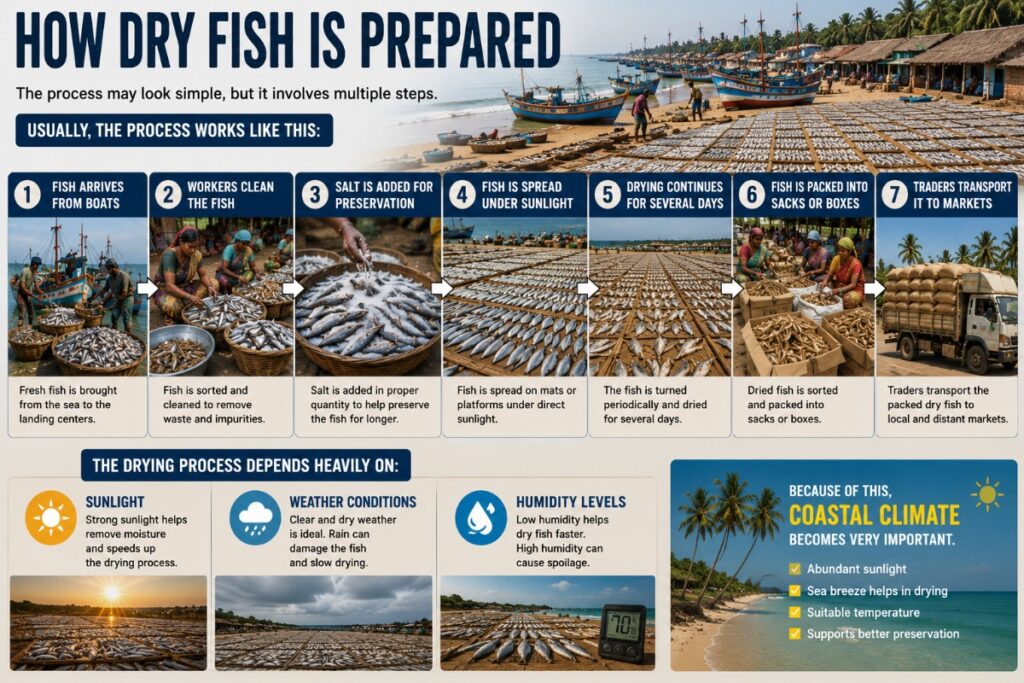
Usually, the process works like this:
- Fish arrives from boats
- Workers clean the fish
- Salt is added for preservation
- Fish is spread under sunlight
- Drying continues for several days
- Fish is packed into sacks or boxes
- Traders transport it to markets
The drying process depends heavily on:
- Sunlight
- Weather conditions
- Humidity levels
Because of this, coastal climate becomes very important.
People Behind the Dry Fish Economy
This industry supports many local workers.
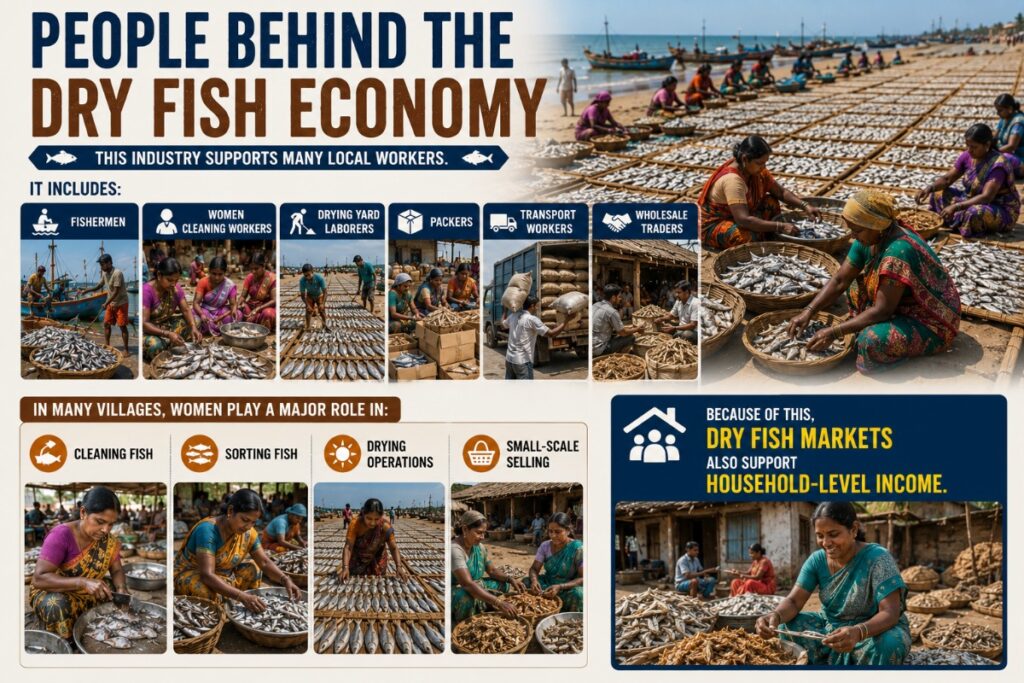
It includes:
- Fishermen
- Women cleaning workers
- Drying yard laborers
- Packers
- Transport workers
- Wholesale traders
In many villages, women play a major role in:
- Cleaning fish
- Sorting fish
- Drying operations
- Small-scale selling
Because of this, dry fish markets also support household-level income.
Supply Chain of Dry Fish Markets
The dry fish economy has its own supply chain system.
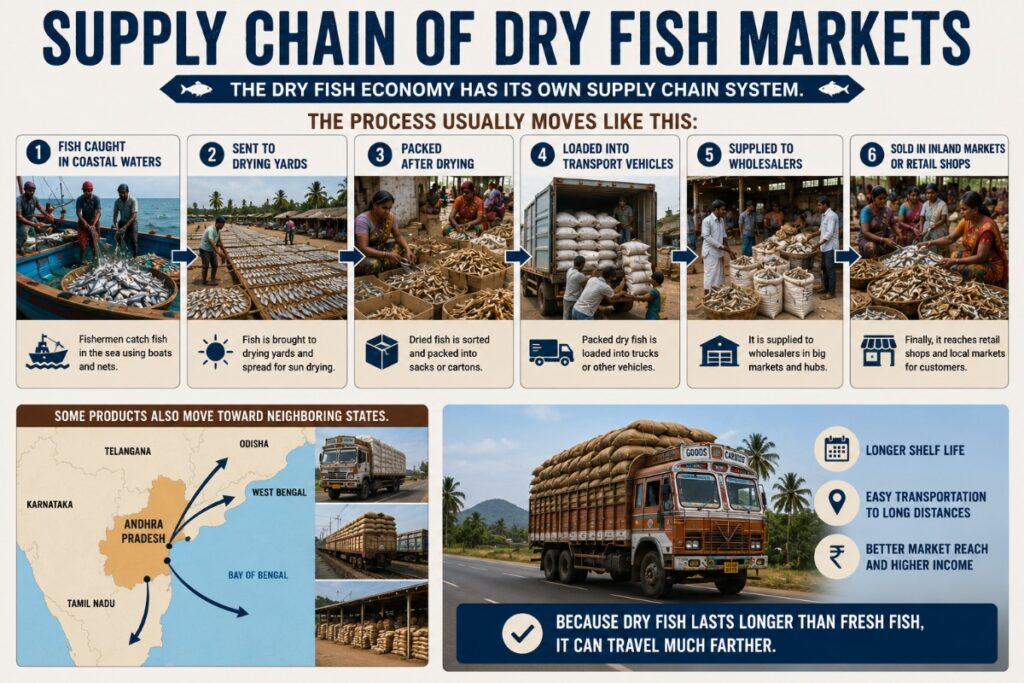
The process usually moves like this:
- Fish caught in coastal waters
- Sent to drying yards
- Packed after drying
- Loaded into transport vehicles
- Supplied to wholesalers
- Sold in inland markets or retail shops
Some products also move toward neighboring states.
Because dry fish lasts longer than fresh fish, it can travel much farther.
Dry Fish Demand Across India
Dry fish has strong demand in many regions.
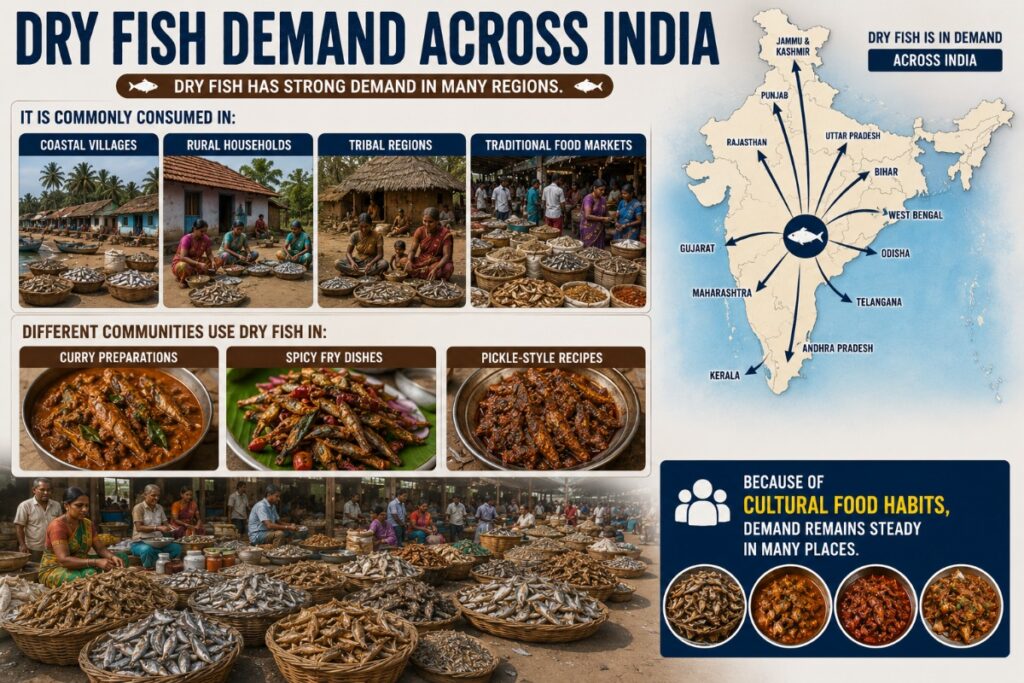
It is commonly consumed in:
- Coastal villages
- Rural households
- Tribal regions
- Traditional food markets
Different communities use dry fish in:
- Curry preparations
- Spicy fry dishes
- Pickle-style recipes
Because of cultural food habits, demand remains steady in many places.
Economic Importance of Dry Fish Markets
Even though the industry looks informal, it supports significant economic activity.
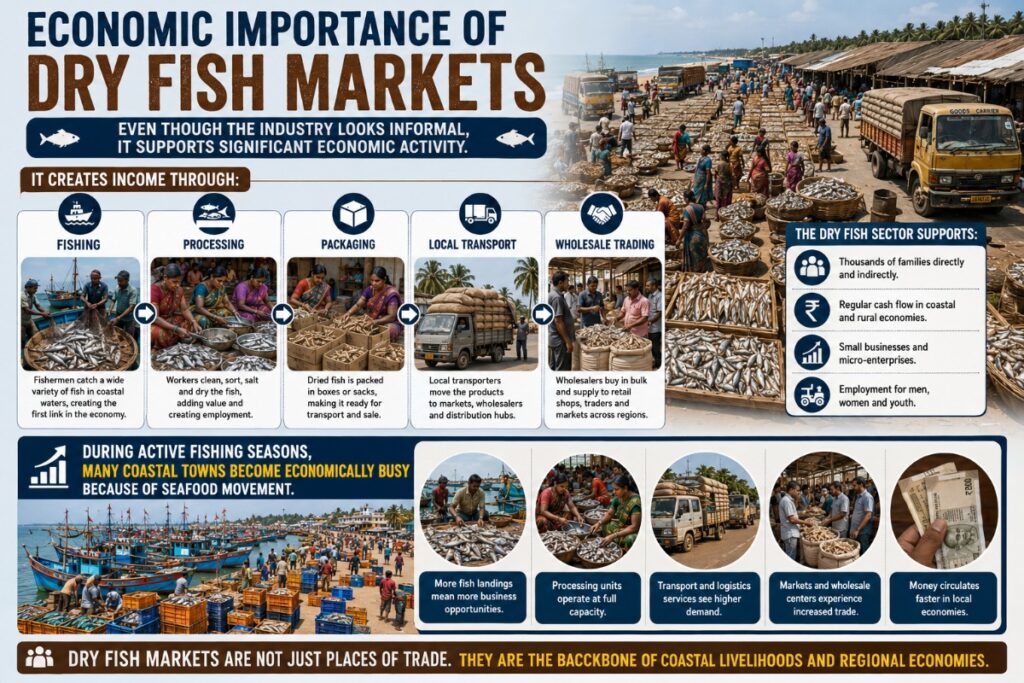
It creates income through:
- Fishing
- Processing
- Packaging
- Local transport
- Wholesale trading
During active fishing seasons, many coastal towns become economically busy because of seafood movement.
Ice Plants, Storage, and Transport
Not all fish goes directly for drying.
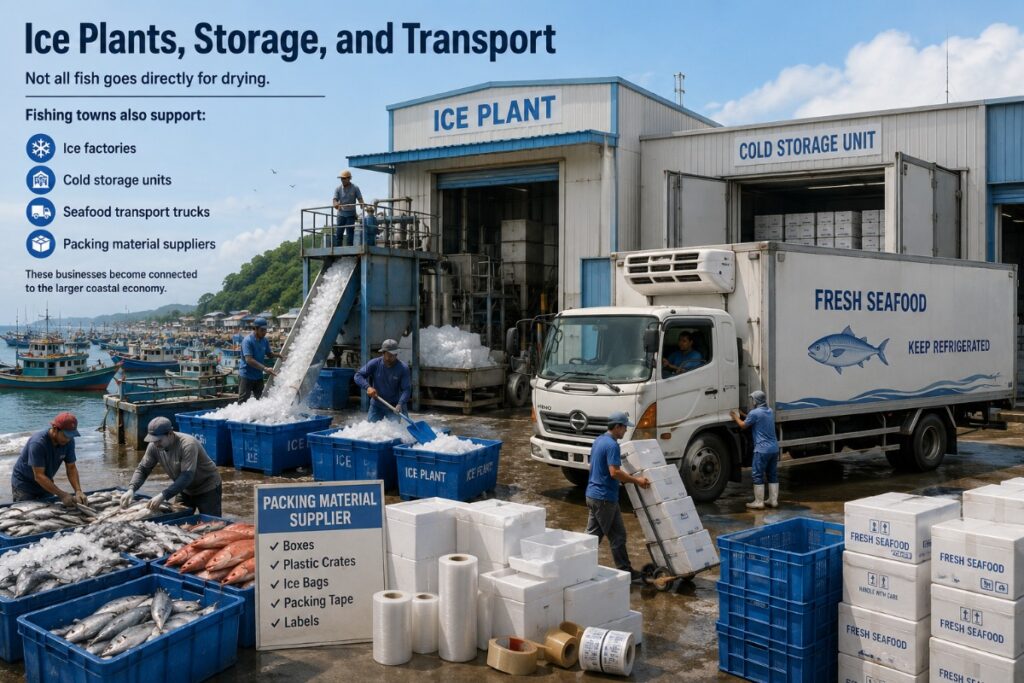
Fishing towns also support:
- Ice factories
- Cold storage units
- Seafood transport trucks
- Packing material suppliers
These businesses become connected to the larger coastal economy.
Challenges Faced by the Industry
Even though the business continues actively, workers face several problems.
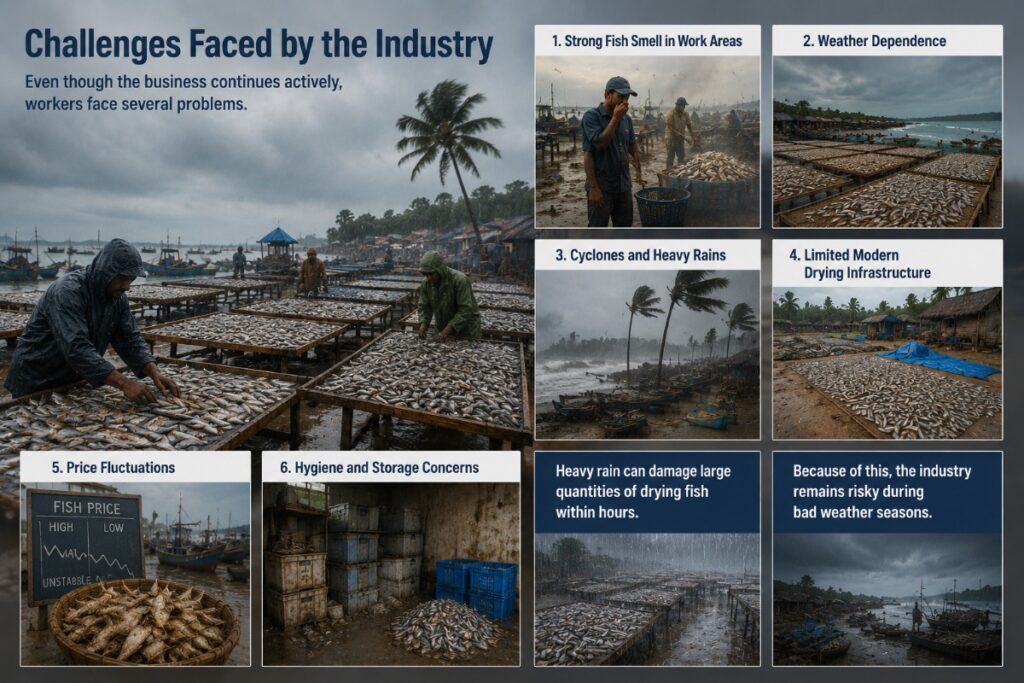
- Strong fish smell in work areas
- Weather dependence
- Cyclones and heavy rains
- Limited modern drying infrastructure
- Price fluctuations
- Hygiene and storage concerns
Heavy rain can damage large quantities of drying fish within hours.
Because of this, the industry remains risky during bad weather seasons.
Future Opportunities
At the same time, the industry has growth potential.
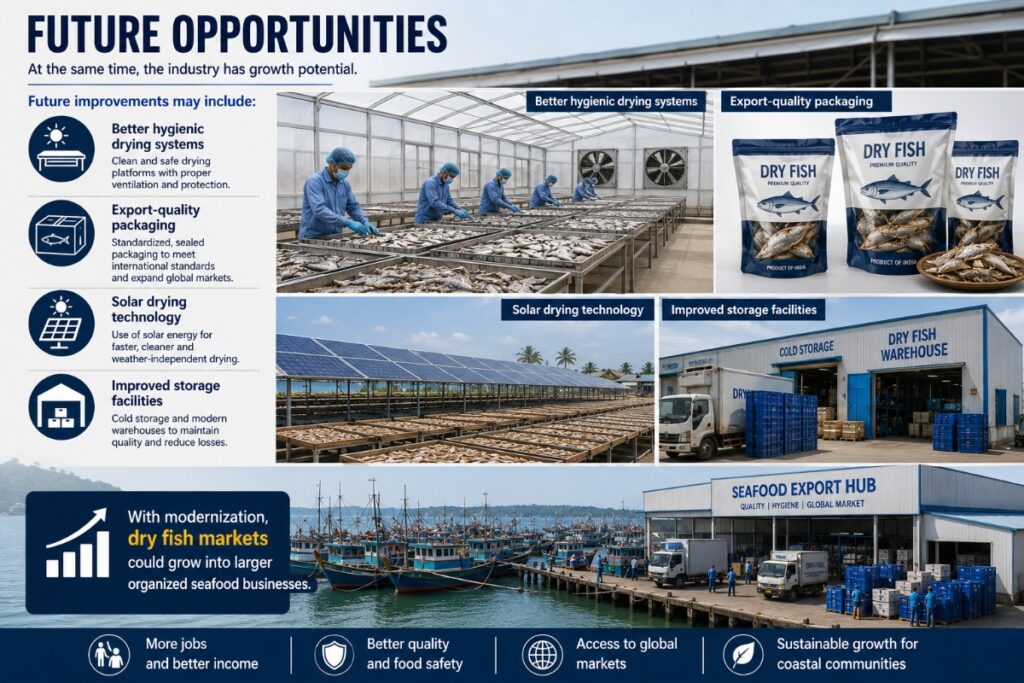
Future improvements may include:
- Better hygienic drying systems
- Export-quality packaging
- Solar drying technology
- Improved storage facilities
With modernization, dry fish markets could grow into larger organized seafood businesses.
Why This Industry Matters
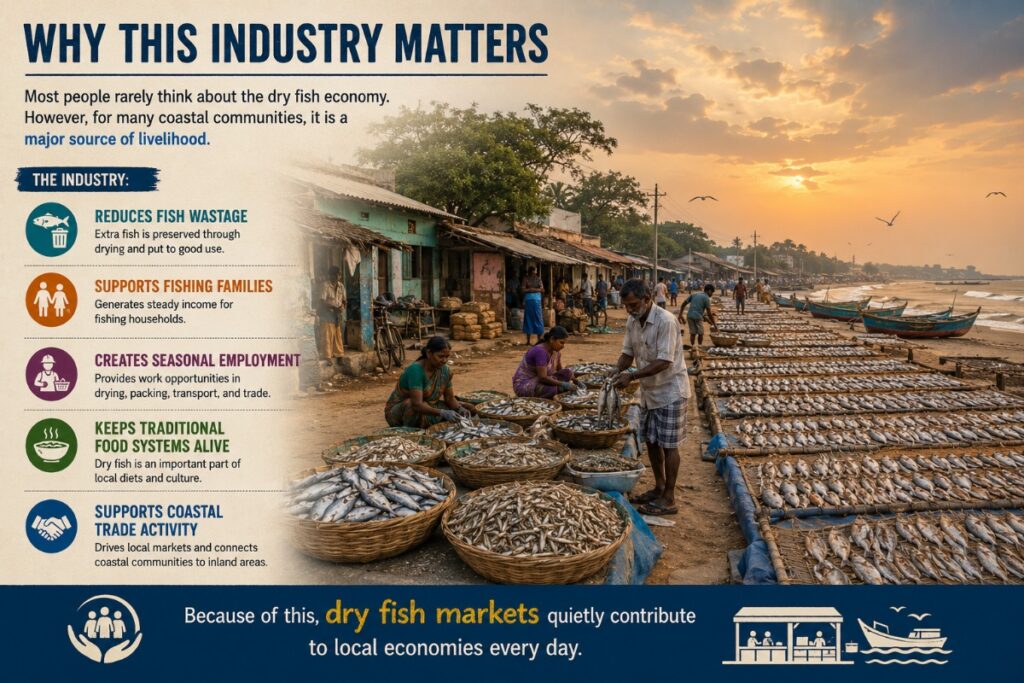
Most people rarely think about the dry fish economy. However, for many coastal communities, it is a major source of livelihood.
The industry:
- Reduces fish wastage
- Supports fishing families
- Creates seasonal employment
- Keeps traditional food systems alive
- Supports coastal trade activity
Because of this, dry fish markets quietly contribute to local economies every day.
Conclusion
The dry fish markets of Andhra Pradesh are part of a hidden coastal economy that many people rarely notice.
From fishing boats in Kakinada and Machilipatnam to drying yards near coastal villages, thousands of workers help move this industry forward.
Even though the work can be physically demanding and weather-dependent, the business continues because it supports livelihoods across fishing communities.
So next time you hear about seafood trade in India, remember that beyond fresh fish markets, an entire dry fish economy is also working quietly along the coastline.



Good information about dry fishes bro thank you
This content gives a good overview of the dry fish industry in Andhra Pradesh in a simple and informative way. It clearly explains how dry fish markets support coastal livelihoods and connect different parts of the seafood supply chain, from fishermen to traders and transport businesses. The article also highlights the importance of fish preservation, local employment, and the economic role of coastal trade. Overall, it is useful for readers who want to understand the traditional and commercial importance of dry fish markets in Andhra Pradesh.