
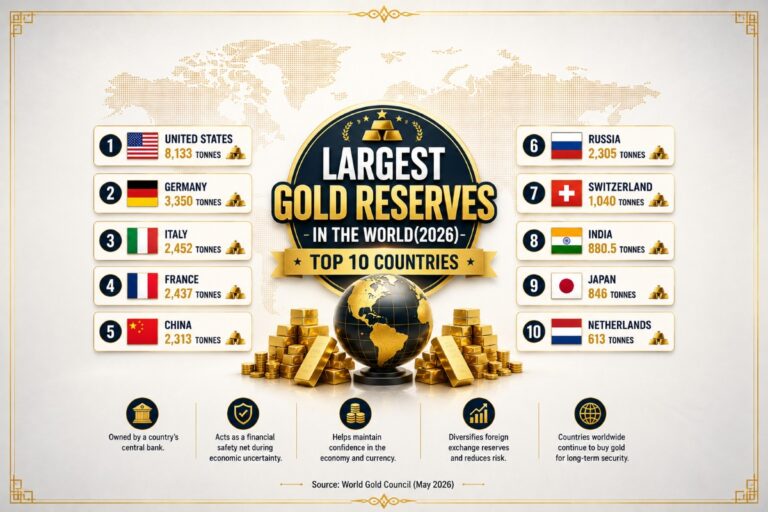
Let us see about Largest Gold Reserves in the World (2026)- Top 10 Countries below in detailed.
When people hear the word gold, they often think about jewellery, ornaments, or investments. However, gold plays a much bigger role in the global economy.
Many of the world’s most powerful countries store thousands of tonnes of gold in highly secure vaults. These gold reserves act as a financial safety net during economic uncertainty, wars, inflation, and global crises.
Even today, when digital banking and electronic currencies dominate financial systems, gold remains one of the world’s most trusted assets.
But have you ever wondered:
- Who owns a country’s gold reserves?
- Why do governments keep so much gold?
- Does holding more gold make a country richer?
- Where does India rank among the world’s largest gold reserve holders?
Let’s understand these questions before looking at the global rankings.
What Are Gold Reserves?
Gold reserves are gold bars and bullion officially owned by a country’s central bank or government.
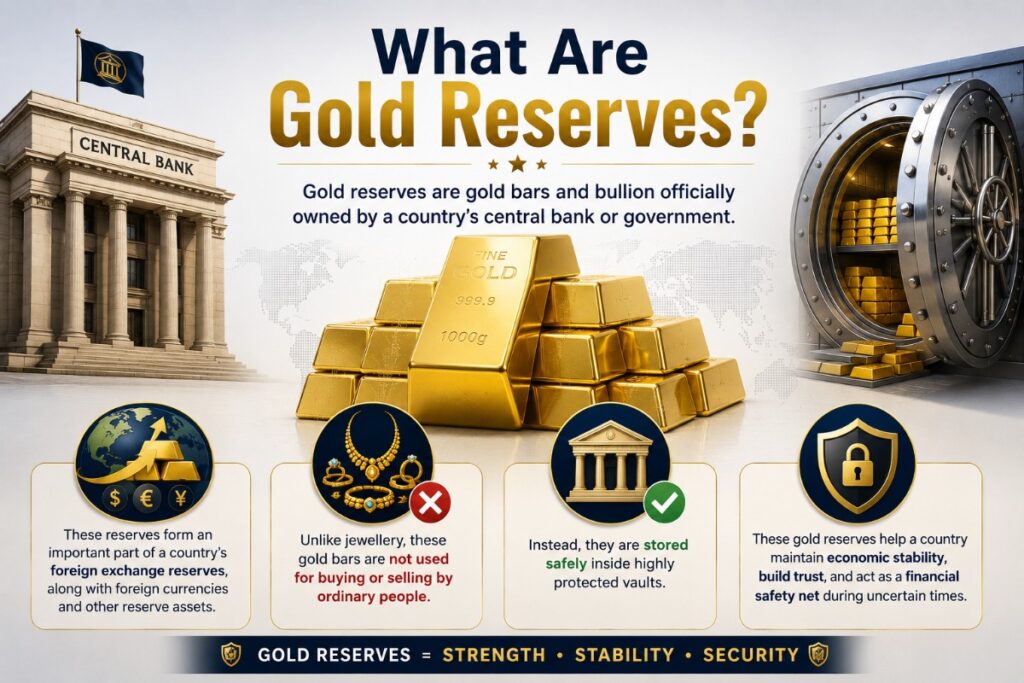
These reserves form an important part of a country’s foreign exchange reserves, along with foreign currencies and other reserve assets.
Unlike jewellery, these gold bars are not used for buying or selling by ordinary people.
Instead, they are stored safely inside highly protected vaults.
Who Owns the Gold?
Many people think all the gold in a country belongs to the government.
That is not true.
Here’s the difference:
| Gold Type | Owner |
|---|---|
| Gold Reserves | Central Bank / Government |
| Jewellery | Citizens |
| Gold Coins at Home | Individuals |
| Temple Gold | Religious Institutions |
| Gold ETFs | Investors |
Example: India
The Reserve Bank of India (RBI) owns India’s official gold reserves.
However, the gold jewellery owned by Indian families does not count as India’s official reserve.
Interestingly, Indian households collectively own far more gold than the RBI, but that privately owned gold is not included in global central bank rankings.
Why Do Countries Keep Gold Reserves?
Gold has protected wealth for thousands of years.
Today, governments continue buying and storing gold because it offers several important benefits.
Gold Reserves Help Countries:
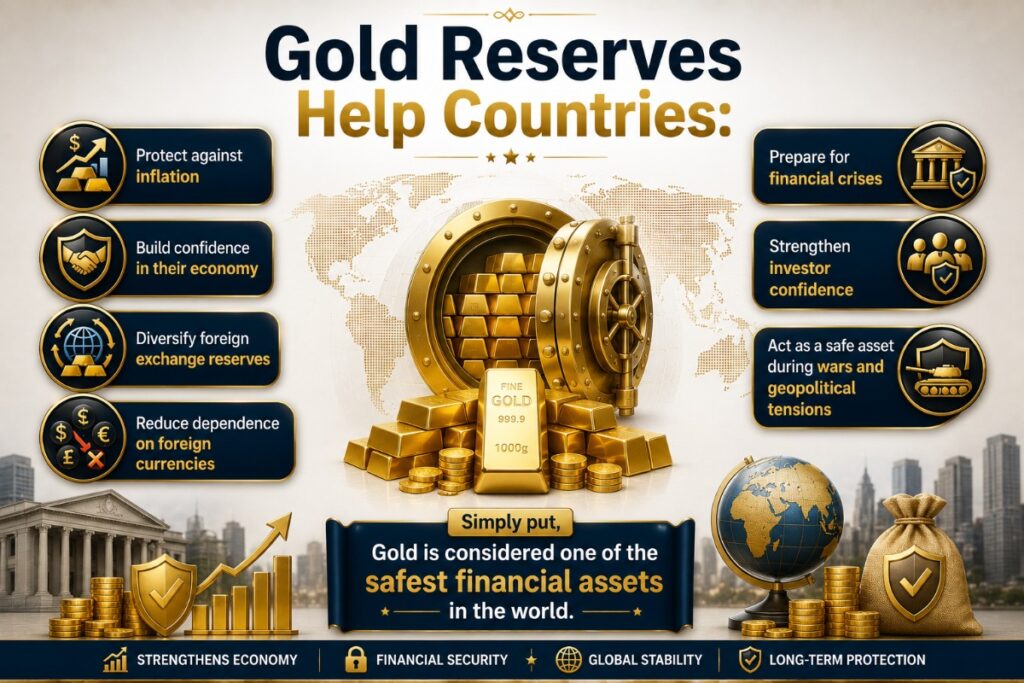
- Protect against inflation
- Build confidence in their economy
- Diversify foreign exchange reserves
- Reduce dependence on foreign currencies
- Prepare for financial crises
- Strengthen investor confidence
- Act as a safe asset during wars and geopolitical tensions
Simply put,
Gold is considered one of the safest financial assets in the world.
Does More Gold Mean a Richer Country?
Not always.
Gold reserves are only one indicator of financial strength.
A country’s overall economy depends on many other factors such as:
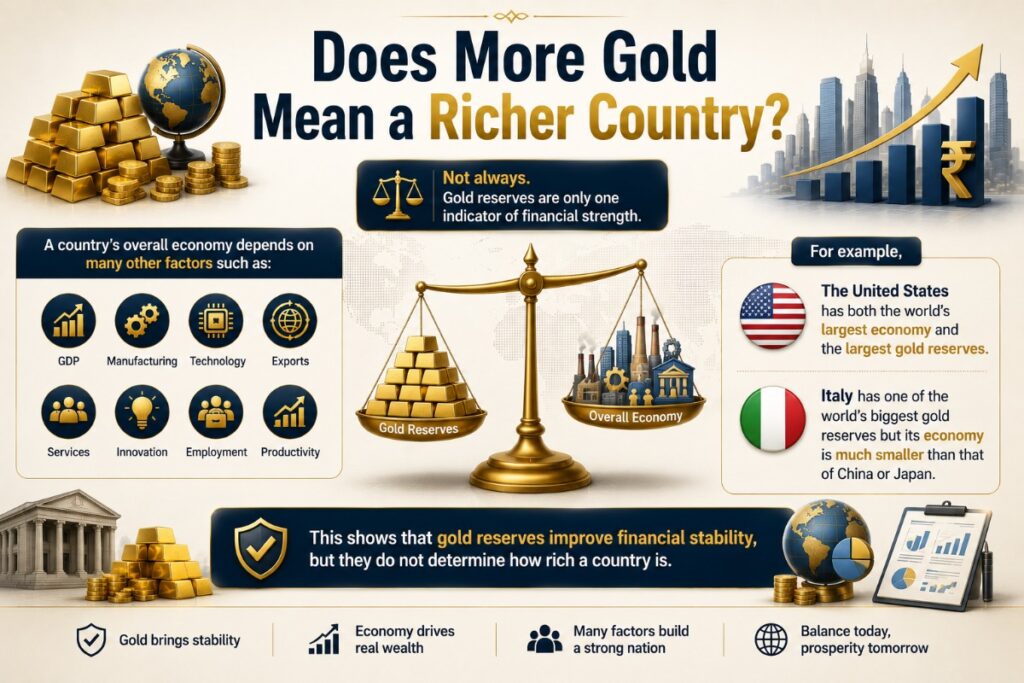
- GDP
- Manufacturing
- Technology
- Exports
- Services
- Innovation
- Employment
- Productivity
For example,
- 🇺🇸 The United States has both the world’s largest economy and the largest gold reserves.
- 🇮🇹 Italy has one of the world’s biggest gold reserves but its economy is much smaller than that of China or Japan.
This shows that gold reserves improve financial stability, but they do not determine how rich a country is.
Top 10 Countries with the Largest Gold Reserves (2026)
| Rank | Country | Gold Reserves (Approx.) |
| 1 | United States | 8,133 Tonnes |
| 2 | Germany | 3,350 Tonnes |
| 3 | Italy | 2,452 Tonnes |
| 4 | France | 2,437 Tonnes |
| 5 | China | 2,313 Tonnes |
| 6 | Russia | 2,305 Tonnes |
| 7 | Switzerland | 1,040 Tonnes |
| 8 | India | 881 Tonnes |
| 9 | Japan | 846 Tonnes |
| 10 | Netherlands | 613 Tonnes |
Approximate official central bank gold holdings based on the latest World Gold Council data.
1. United States 🇺🇸
🏆 Gold Reserve
8,133 Tonnes
The United States has held the world’s largest official gold reserve for decades.
Most of America’s gold is stored inside highly secure government vaults, including the famous Fort Knox in Kentucky and other Federal Reserve facilities.
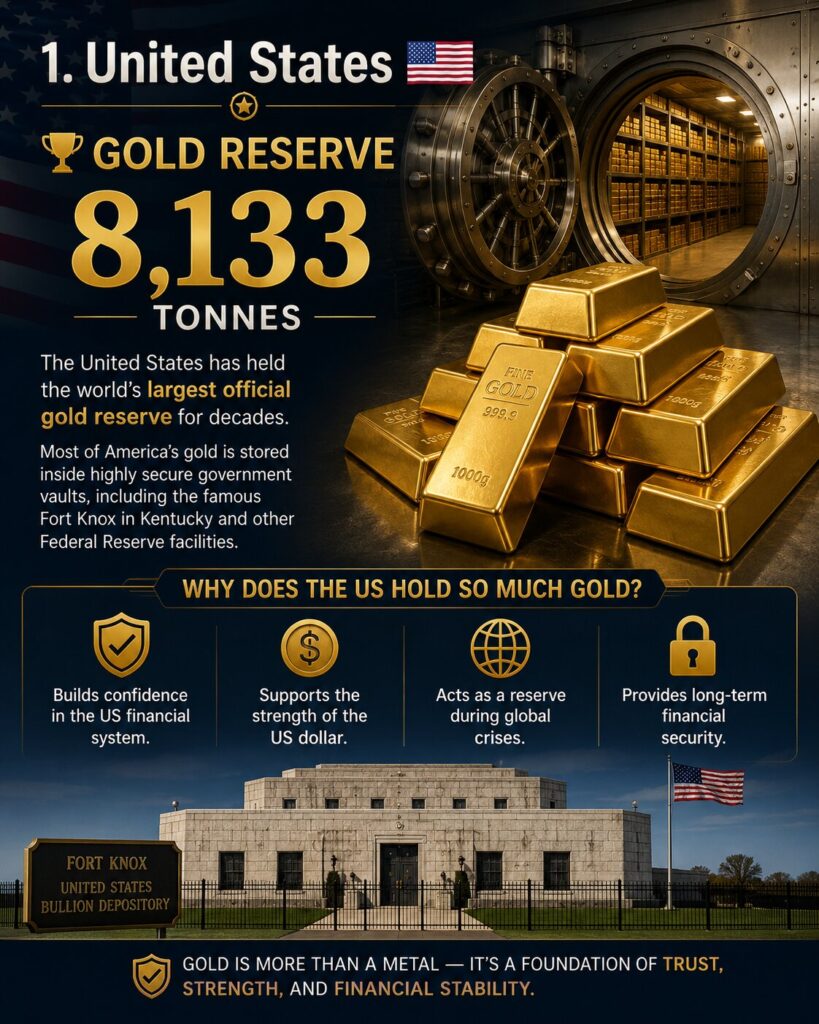
Why Does the US Hold So Much Gold?
- Builds confidence in the US financial system.
- Supports the strength of the US dollar.
- Acts as a reserve during global crises.
- Provides long-term financial security.
Why It Still Leads
Although the US economy is now driven mainly by technology, finance, and services, maintaining the world’s largest gold reserve strengthens confidence in the country’s financial position.
Interesting Fact
The United States holds more than twice as much gold as Germany, the country ranked second.
Key Takeaway
The United States uses its massive gold reserve as a financial backbone while its economy continues to lead the world.
2. Germany 🇩🇪
🏆 Gold Reserve
3,350 Tonnes
Germany owns the second-largest official gold reserve in the world.
After World War II, Germany experienced rapid economic growth. As exports increased and foreign currency reserves expanded, the country also accumulated significant gold reserves.
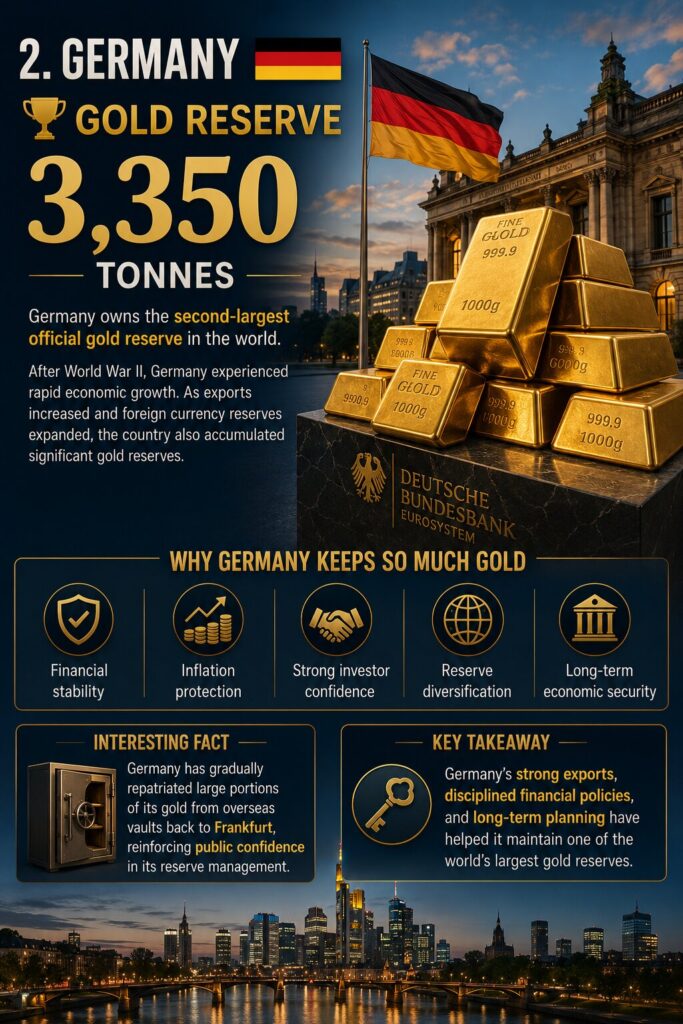
Why Germany Keeps So Much Gold
- Financial stability
- Inflation protection
- Strong investor confidence
- Reserve diversification
- Long-term economic security
Interesting Fact
Germany has gradually repatriated large portions of its gold from overseas vaults back to Frankfurt, reinforcing public confidence in its reserve management.
Key Takeaway
Germany’s strong exports, disciplined financial policies, and long-term planning have helped it maintain one of the world’s largest gold reserves.
3. Italy 🇮🇹
🏆 Gold Reserve
2,452 Tonnes
Many people are surprised to see Italy ranked among the world’s top three gold reserve holders.
Although Italy’s economy is smaller than those of the United States or China, it has accumulated substantial gold reserves over many decades.
The Bank of Italy continues to hold these reserves as an important financial asset.
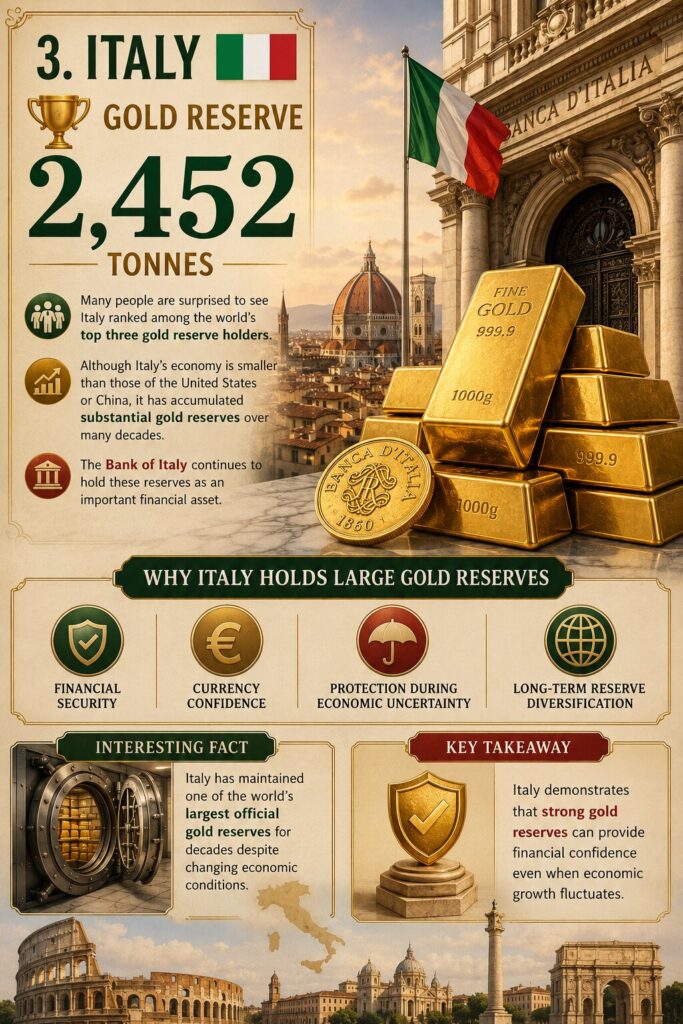
Why Italy Holds Large Gold Reserves
- Financial security
- Currency confidence
- Protection during economic uncertainty
- Long-term reserve diversification
Interesting Fact
Italy has maintained one of the world’s largest official gold reserves for decades despite changing economic conditions.
Key Takeaway
Italy demonstrates that strong gold reserves can provide financial confidence even when economic growth fluctuates.
4. France 🇫🇷
🏆 Gold Reserve
2,437 Tonnes
France has maintained one of the world’s largest gold reserves for decades.
The Bank of France views gold as a strategic reserve that strengthens confidence in the country’s financial system.
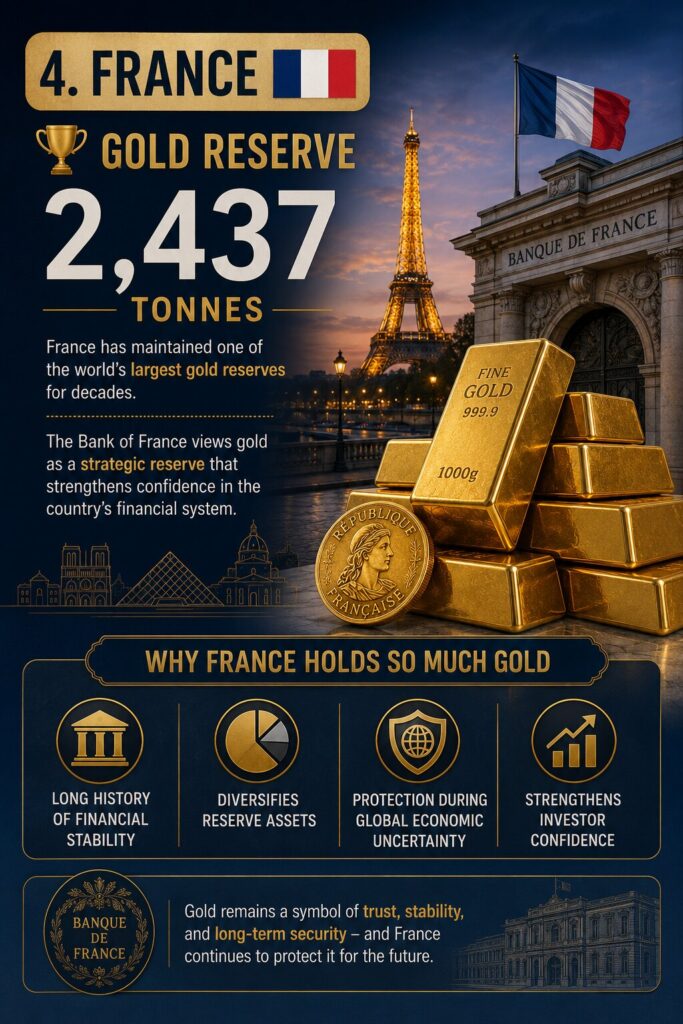
Why France Holds So Much Gold
- Long history of financial stability
- Diversifies reserve assets
- Protection during global economic uncertainty
- Strengthens investor confidence
Interesting Fact
More than 80% of France’s foreign reserves are held in gold, making it one of the highest proportions among major economies.
Key Takeaway
France continues to rely on gold as a trusted financial asset despite having a modern and diversified economy.
5. China 🇨🇳
🏆 Gold Reserve
Approximately 2,313 Tonnes
China has steadily increased its gold reserves over the past few years, with the People’s Bank of China continuing to add gold to its holdings.
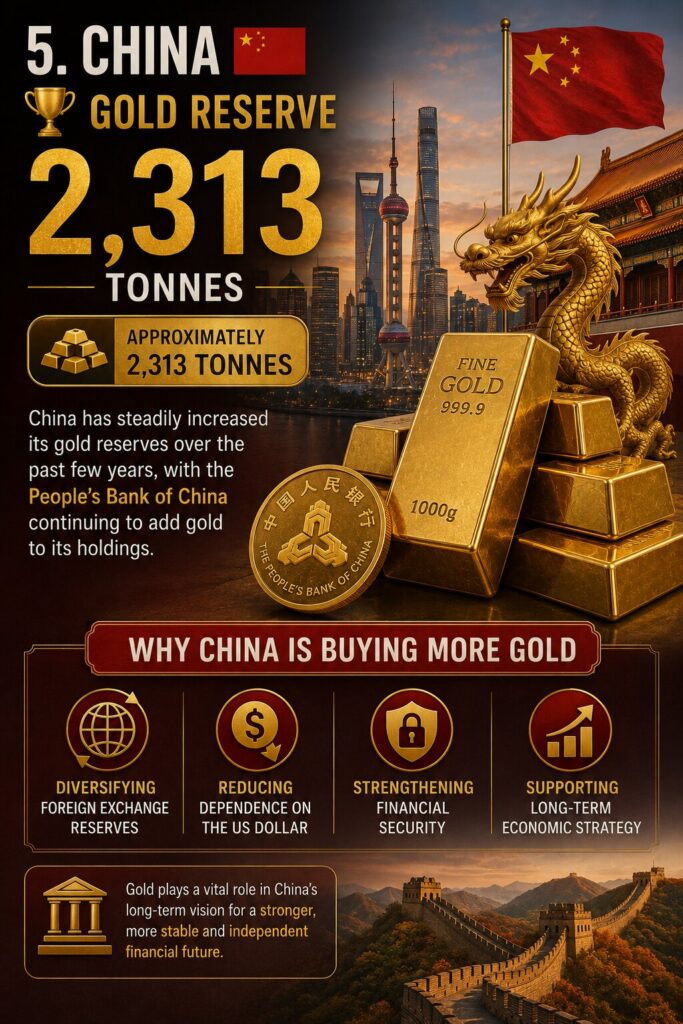
Why China Is Buying More Gold
- Diversifying foreign exchange reserves
- Reducing dependence on the US Dollar
- Strengthening financial security
- Supporting long-term economic strategy
Interesting Fact
China has been one of the most active central-bank buyers of gold in recent years, increasing its reserves over multiple consecutive months.
Key Takeaway
China views gold as an important part of protecting its economy against global financial uncertainty.
6. Russia 🇷🇺
🏆 Gold Reserve
Approximately 2,305 Tonnes
Russia has built one of the world’s largest gold reserves over the past two decades.
The country’s central bank significantly increased gold purchases to reduce reliance on foreign currencies.
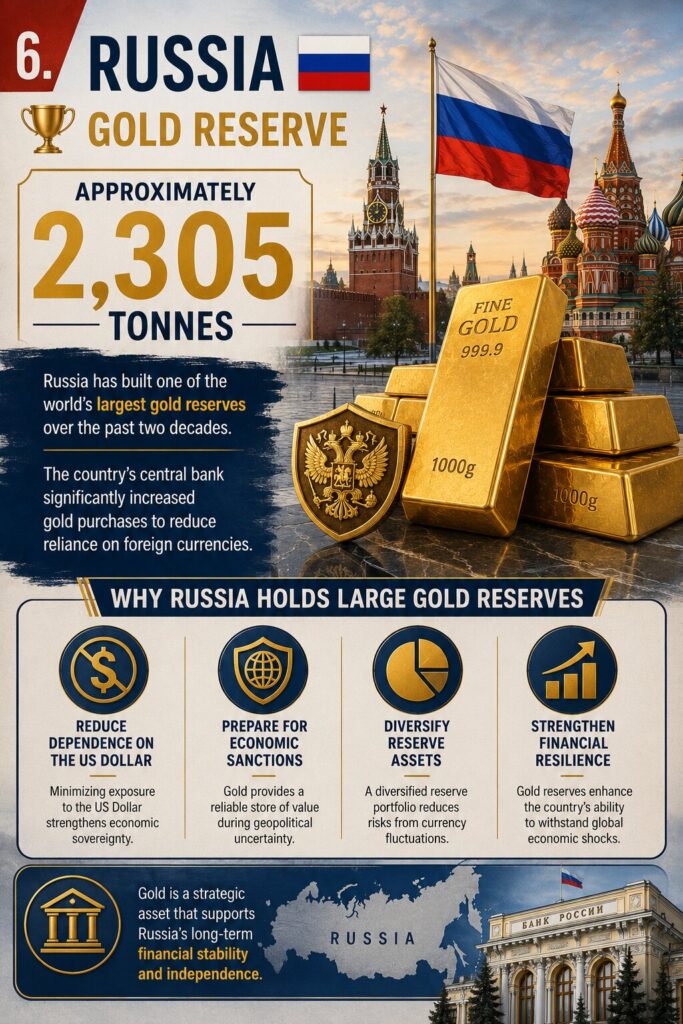
Why Russia Holds Large Gold Reserves
- Reduce dependence on the US Dollar
- Prepare for economic sanctions
- Diversify reserve assets
- Strengthen financial resilience
Interesting Fact
Russia rapidly expanded its gold holdings during the last decade as part of its reserve diversification strategy.
Key Takeaway
Gold has become an important financial shield for Russia during periods of geopolitical uncertainty.
7. Switzerland 🇨🇭
🏆 Gold Reserve
Around 1,040 Tonnes
Although Switzerland is a relatively small country, it remains one of the world’s largest official gold holders.
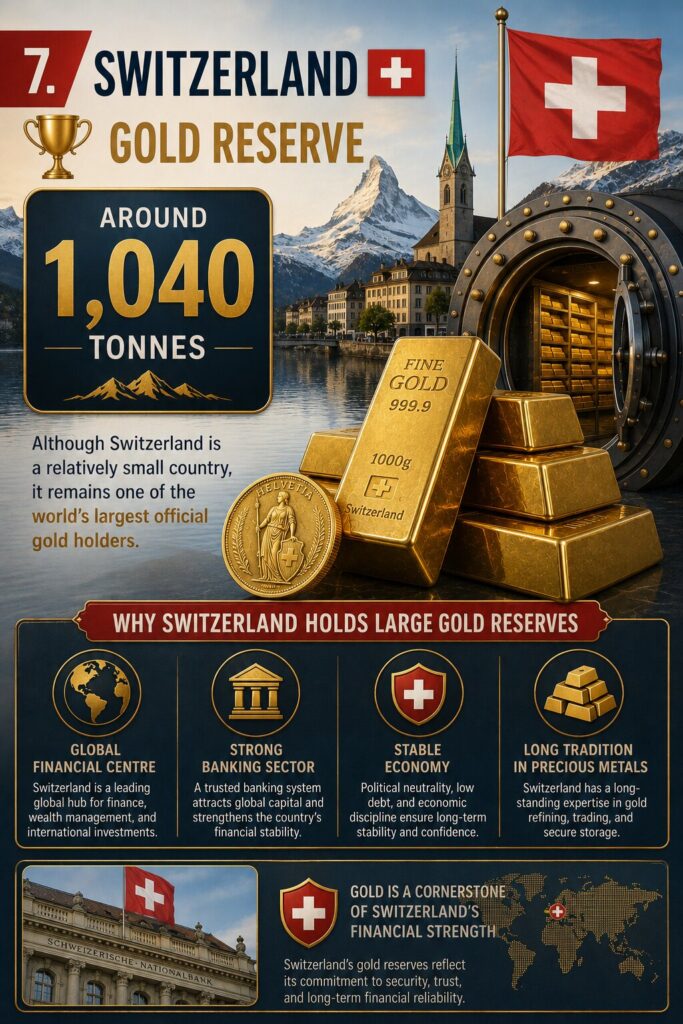
Why Switzerland Holds Large Gold Reserves
- Global financial centre
- Strong banking sector
- Stable economy
- Long tradition in precious metals
Key Takeaway
Switzerland’s financial reputation makes gold an important part of its reserve strategy.
8. India 🇮🇳
🏆 Gold Reserve
Around 880.5 Tonnes
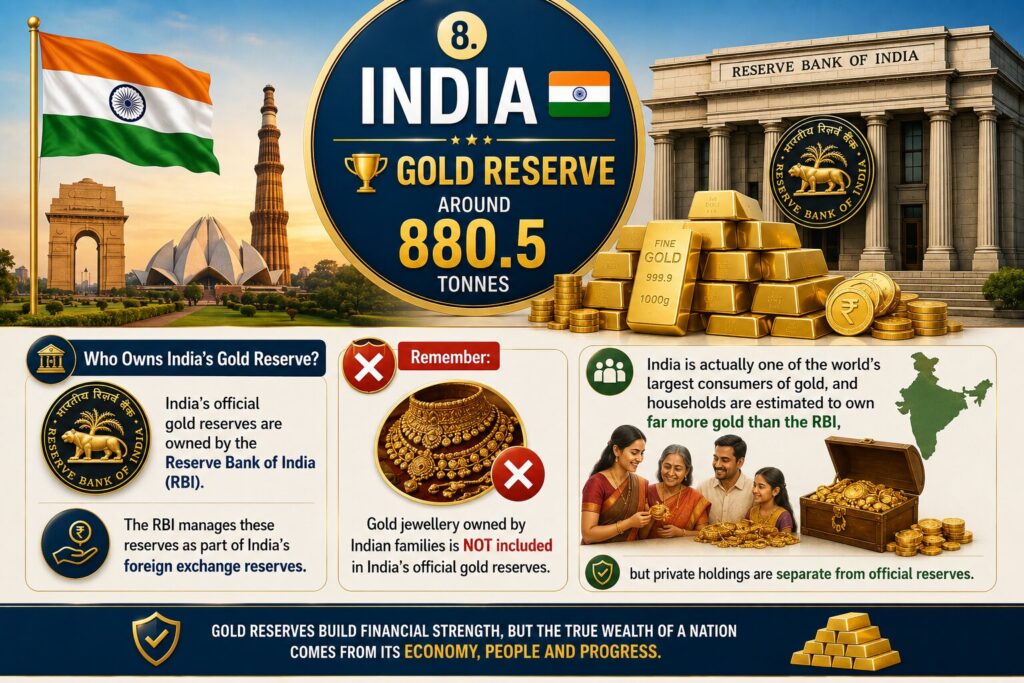
Who Owns India’s Gold Reserve?
India’s official gold reserves are owned by the Reserve Bank of India (RBI).
The RBI manages these reserves as part of India’s foreign exchange reserves.
Remember:
❌ Gold jewellery owned by Indian families is NOT included in India’s official gold reserves.
India is actually one of the world’s largest consumers of gold, and households are estimated to own far more gold than the RBI, but private holdings are separate from official reserves.
Why Does India Hold Gold?
The RBI maintains gold reserves to:
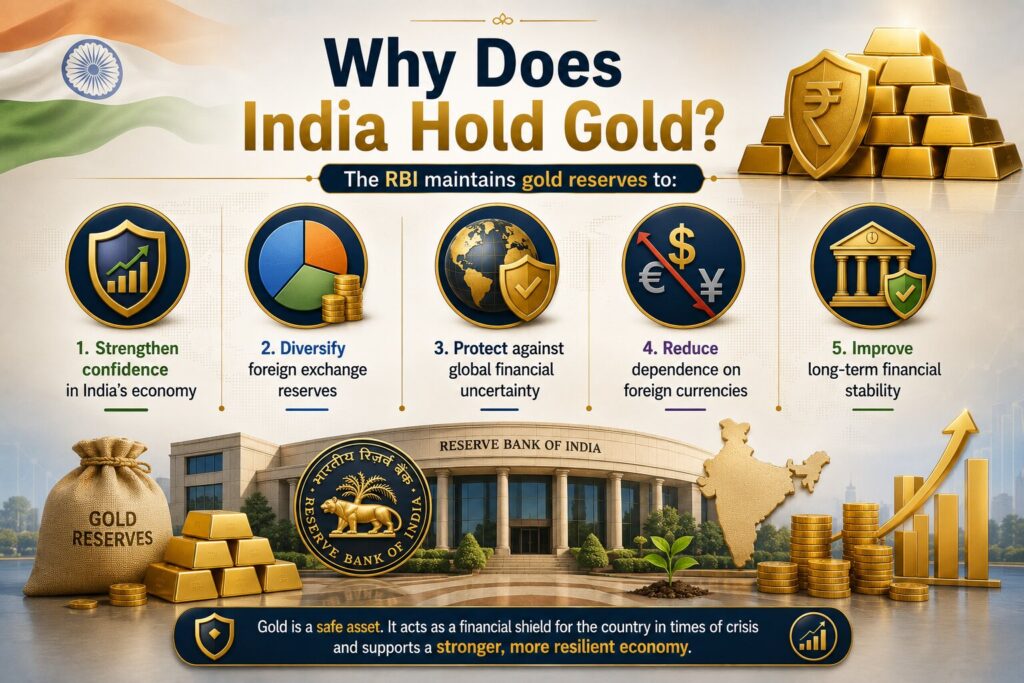
- Strengthen confidence in India’s economy
- Diversify foreign exchange reserves
- Protect against global financial uncertainty
- Reduce dependence on foreign currencies
- Improve long-term financial stability
Where Is India’s Gold Stored?
India’s official gold is stored in:
- RBI vaults within India
- Secure overseas vaults such as those managed by the Bank of England
- Other approved international custodians
Storing some gold abroad can make it easier to use in international financial transactions if needed.
Why Isn’t India in the Top 5?
Although India has one of the largest gold reserves in Asia, several countries accumulated substantial official gold reserves much earlier.
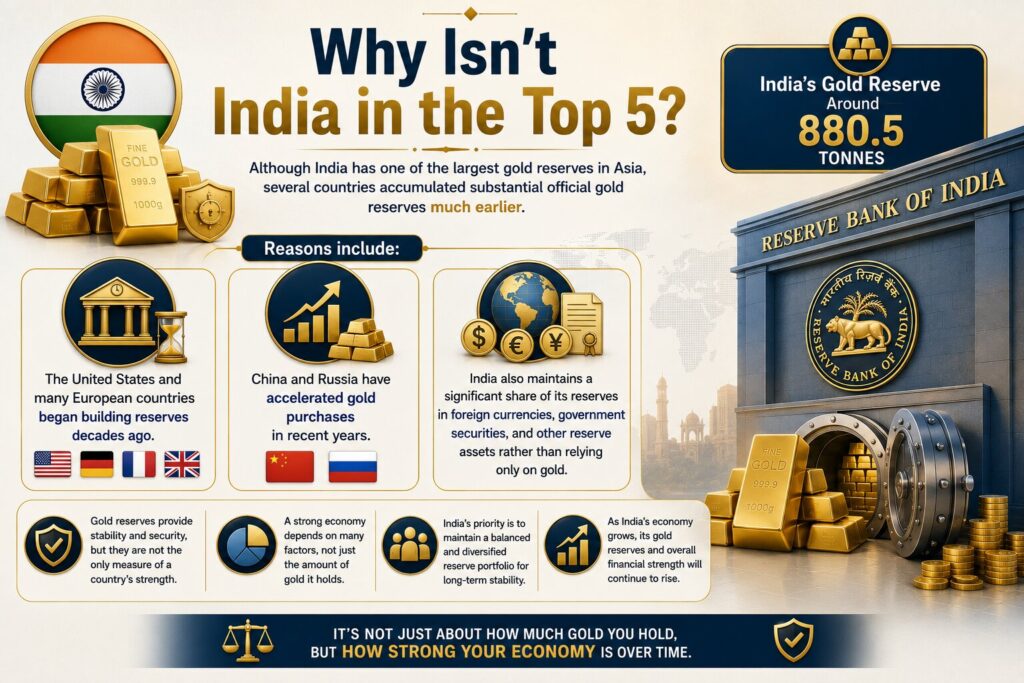
Reasons include:
- The United States and many European countries began building reserves decades ago.
- China and Russia have accelerated gold purchases in recent years.
- India also maintains a significant share of its reserves in foreign currencies, government securities, and other reserve assets rather than relying only on gold.
Should India Buy More Gold?
Many economists believe that gradually increasing gold reserves can:
- Improve reserve diversification
- Reduce concentration in a single reserve asset
- Provide additional protection during global uncertainty
However, central banks aim for a balanced reserve portfolio, so gold is only one part of the RBI’s overall strategy.
Interesting Fact
India’s official gold reserves have grown steadily over the past decade as the RBI has added to its holdings while maintaining a diversified reserve portfolio.
Key Takeaway
India’s 8th-place ranking reflects a strong official gold position, while the country’s overall financial strategy continues to balance gold with other foreign reserve assets.
9. Japan 🇯🇵
🏆 Gold Reserve
Around 846 Tonnes
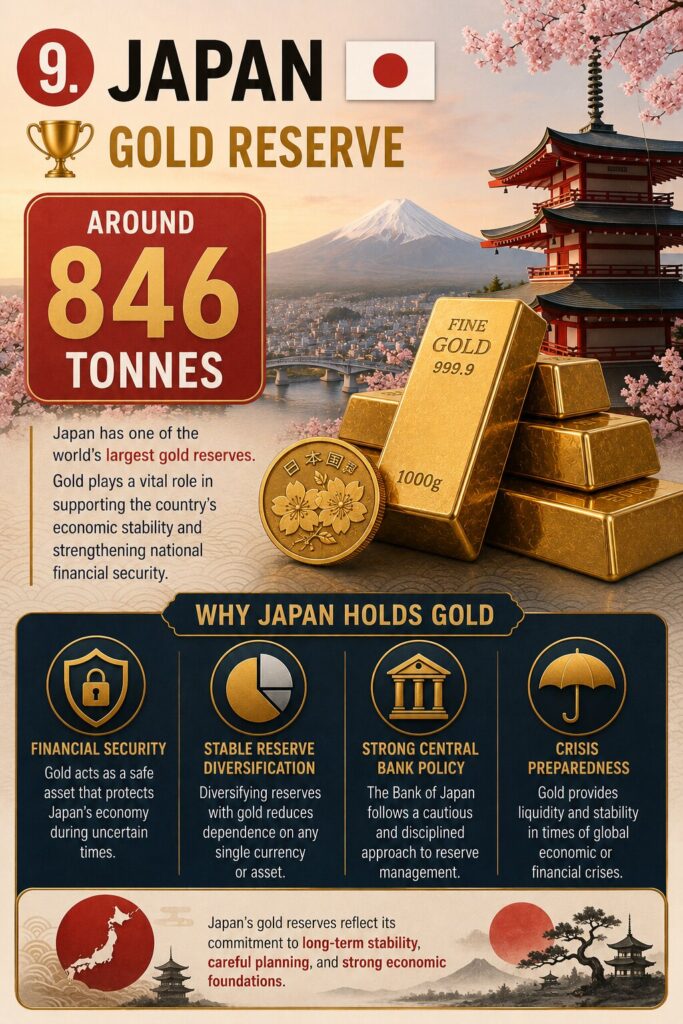
Why Japan Holds Gold
- Financial security
- Stable reserve diversification
- Strong central bank policy
- Crisis preparedness
10. Netherlands 🇳🇱
🏆 Gold Reserve
Around 613 Tonnes
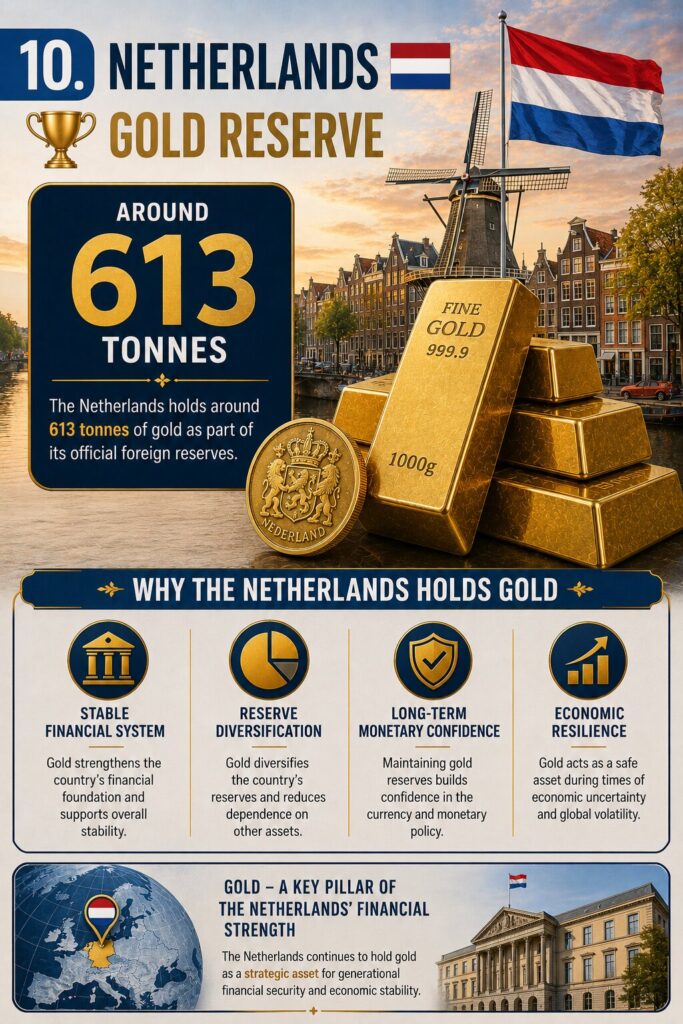
Why the Netherlands Holds Gold
- Stable financial system
- Reserve diversification
- Long-term monetary confidence
- Economic resilience
Interesting Facts About Gold Reserves
- The United States holds more than 8,000 tonnes of official gold—the largest stockpile in the world.
- Central banks collectively own around one-fifth of all the gold ever mined.
Many central banks have increased gold purchases in recent years because of inflation, geopolitical tensions, and the desire to diversify reserves.
🇮🇳 India is one of the world’s largest gold-consuming countries, but most of that gold is owned by households rather than the government.
Conclusion
Gold has remained one of the world’s most trusted financial assets for centuries. While modern economies rely on digital payments, foreign currencies, and financial markets, central banks continue to maintain gold reserves because they provide stability, diversification, and confidence during uncertain times.
Countries such as the United States, Germany, Italy, France, and China have built substantial official gold reserves over many decades as part of their long-term financial strategies. These reserves help strengthen confidence in their economies and act as an important safeguard during global crises.
India’s position as the 8th-largest holder of official gold reserves reflects the RBI’s steady efforts to diversify the country’s foreign exchange reserves while balancing gold with other international assets. As global economic conditions continue to evolve, gold is likely to remain a key component of central bank reserve management around the world.
Although gold alone does not determine a country’s wealth, it remains a symbol of financial strength and resilience. For governments, it is more than a precious metal—it is an asset that supports confidence in the nation’s economy during both stable and challenging times.



Gold reserves provide financial security and strengthen a country’s economy during times of crisis.