
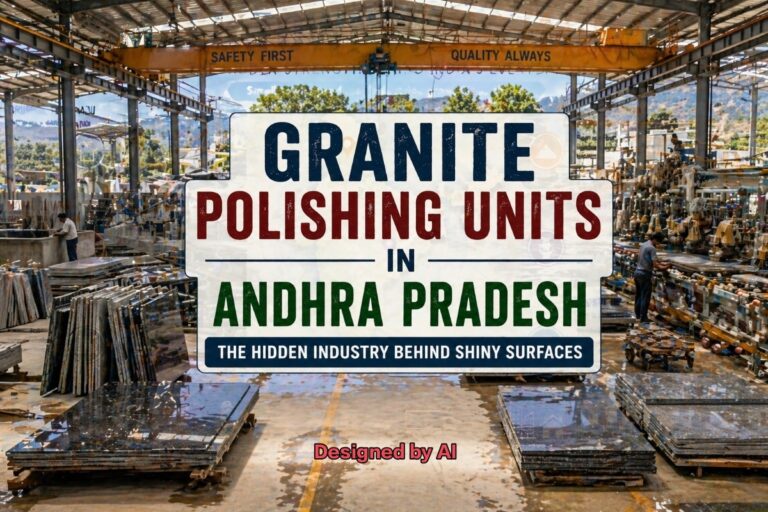
Let us see about Granite Polishing Units in Andhra Pradesh below in detailed.
When we see polished granite in homes, offices, or buildings, we usually admire its smooth and shiny finish. It looks clean, strong, and long-lasting. However, most of us never think about how that stone actually becomes so perfect.
In reality, granite does not come out of the ground in that finished form. It starts as a rough, uneven block. Before it reaches showrooms or construction sites, it goes through several steps. Among these, polishing is one of the most important.
If you look closely, many of these polishing activities do not happen in big cities. Instead, they take place in smaller towns where industries quietly run every day. In states like Andhra Pradesh, this work supports many families and local businesses.
What Are Granite Polishing Units?
Granite polishing units are small or medium-scale setups where raw granite slabs get processed into usable forms.
At first, granite blocks come directly from quarries. These blocks are rough and dull. They cannot be used in homes or buildings as they are.
So, polishing units take over and do the following work:
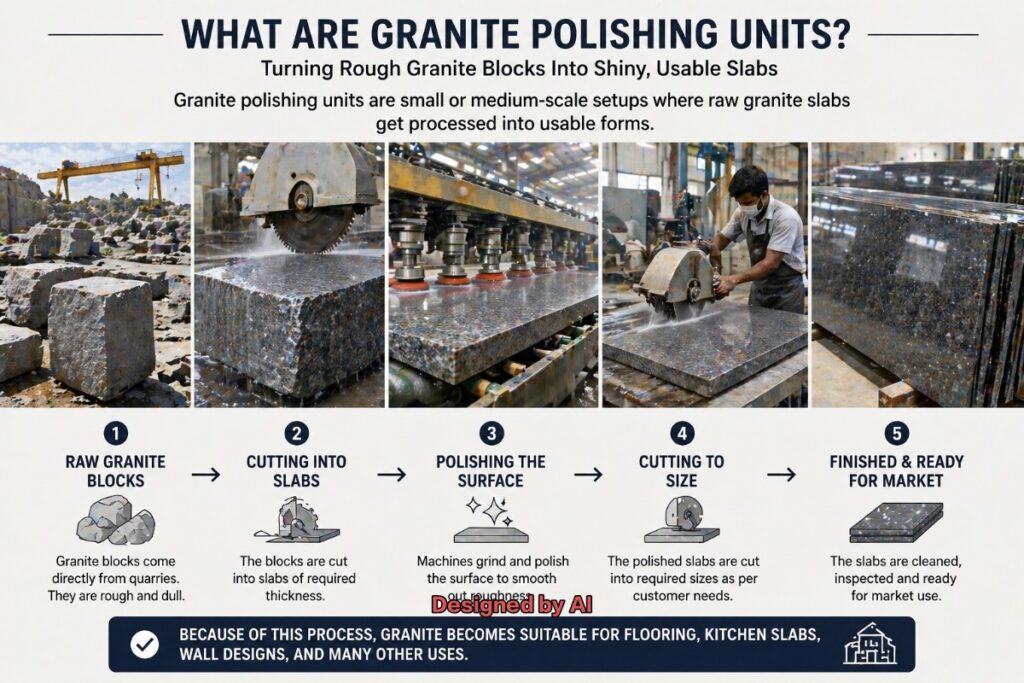
- Cut slabs into required sizes
- Smooth the rough surface
- Add shine and finish
- Prepare them for market use
Because of this process, granite becomes suitable for flooring, kitchen slabs, wall designs, and many other uses.
Why Andhra Pradesh Is a Key Location
Andhra Pradesh plays an important role in India’s granite industry.
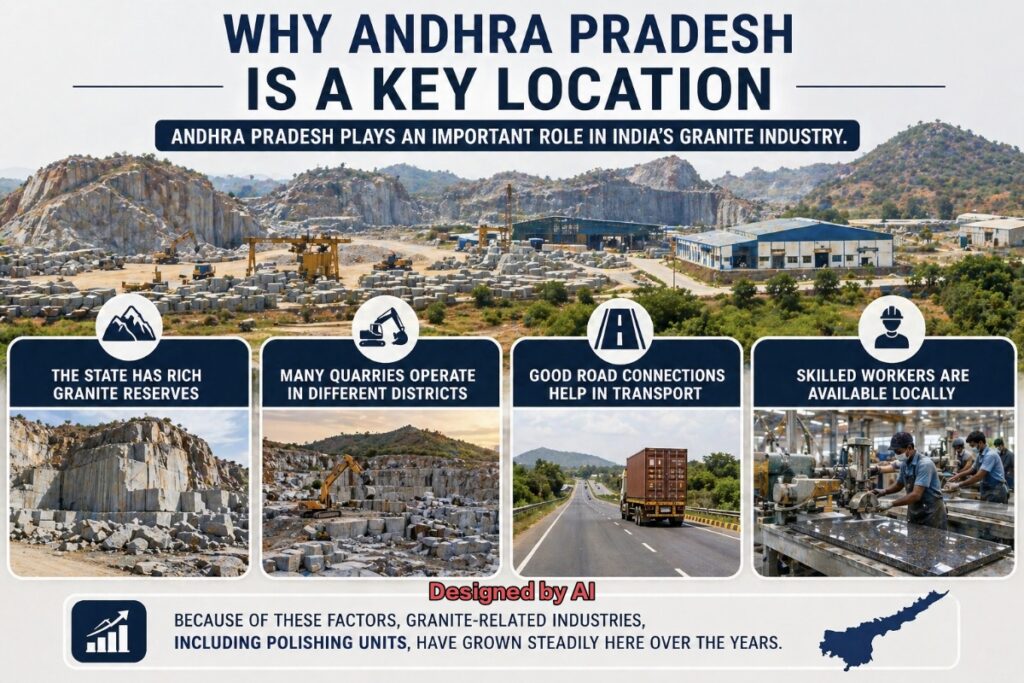
- The state has rich granite reserves
- Many quarries operate in different districts
- Good road connections help in transport
- Skilled workers are available locally
Because of these factors, granite-related industries, including polishing units, have grown steadily here over the years.
Types of Granite Found in Andhra Pradesh
Not all granite looks the same. In fact, Andhra Pradesh is known for some unique and high-quality varieties.
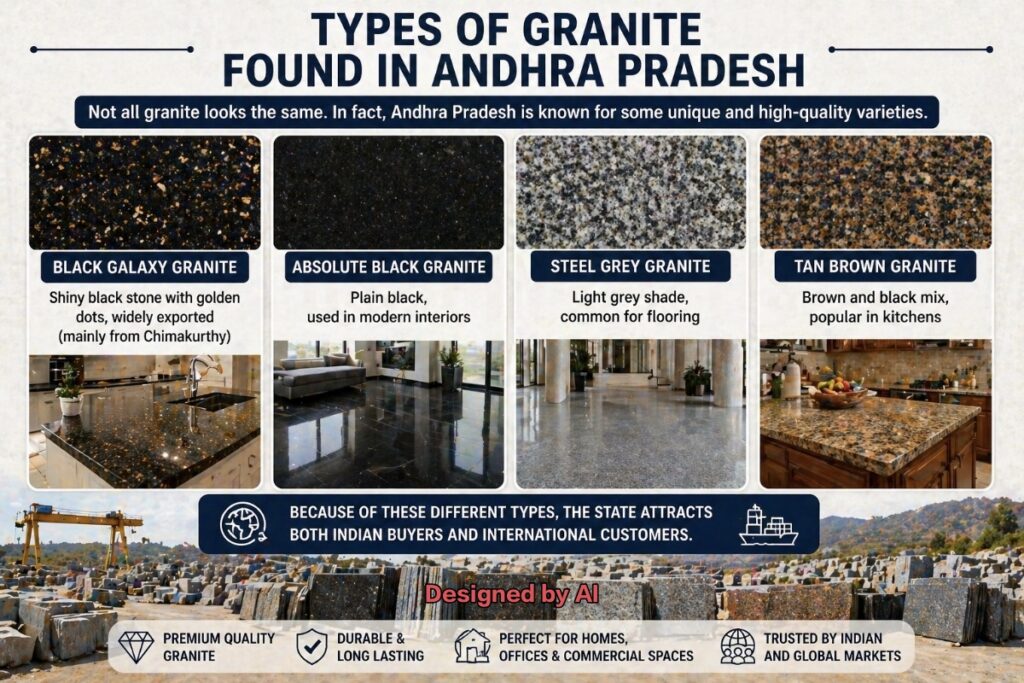
- Black Galaxy Granite – Shiny black stone with golden dots, widely exported (mainly from Chimakurthy)
- Absolute Black Granite – Plain black, used in modern interiors
- Steel Grey Granite – Light grey shade, common for flooring
- Tan Brown Granite – Brown and black mix, popular in kitchens
Because of these different types, the state attracts both Indian buyers and international customers.
Key Areas for Granite Polishing in Andhra Pradesh
You will find polishing units mostly in small towns and industrial belts.
Ongole (Andhra Pradesh)
Ongole is one of the well-known centers for granite activity.
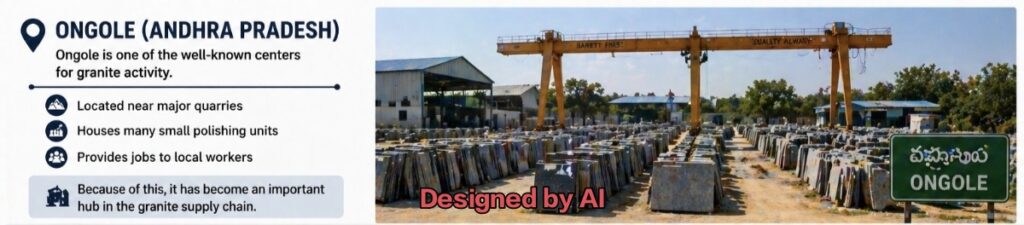
- Located near major quarries
- Houses many small polishing units
- Provides jobs to local workers
Because of this, it has become an important hub in the granite supply chain.
Chimakurthy (Andhra Pradesh)
Chimakurthy is especially famous in the granite world.
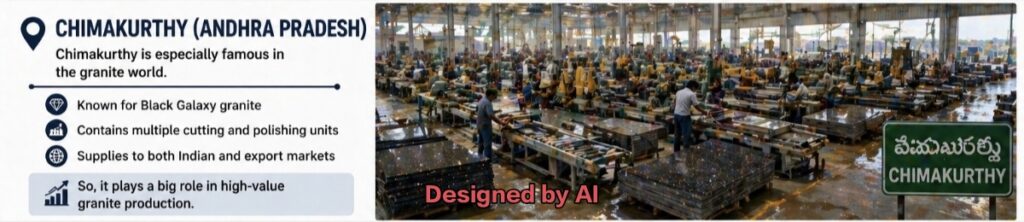
- Known for Black Galaxy granite
- Contains multiple cutting and polishing units
- Supplies to both Indian and export markets
So, it plays a big role in high-value granite production.
Kurnool (Andhra Pradesh)
Kurnool also contributes to this sector.
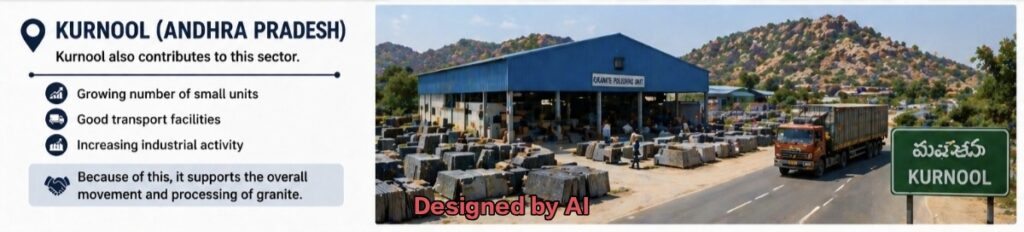
- Growing number of small units
- Good transport facilities
- Increasing industrial activity
Because of this, it supports the overall movement and processing of granite.
How Granite Polishing Works
Now let’s understand how the polishing process actually happens.
Step-by-step process:
- Large granite blocks are cut into slabs
- Slabs are transported to polishing units
- Machines grind the surface to remove roughness
- Workers polish using special tools to add shine
- Final slabs are cleaned and inspected
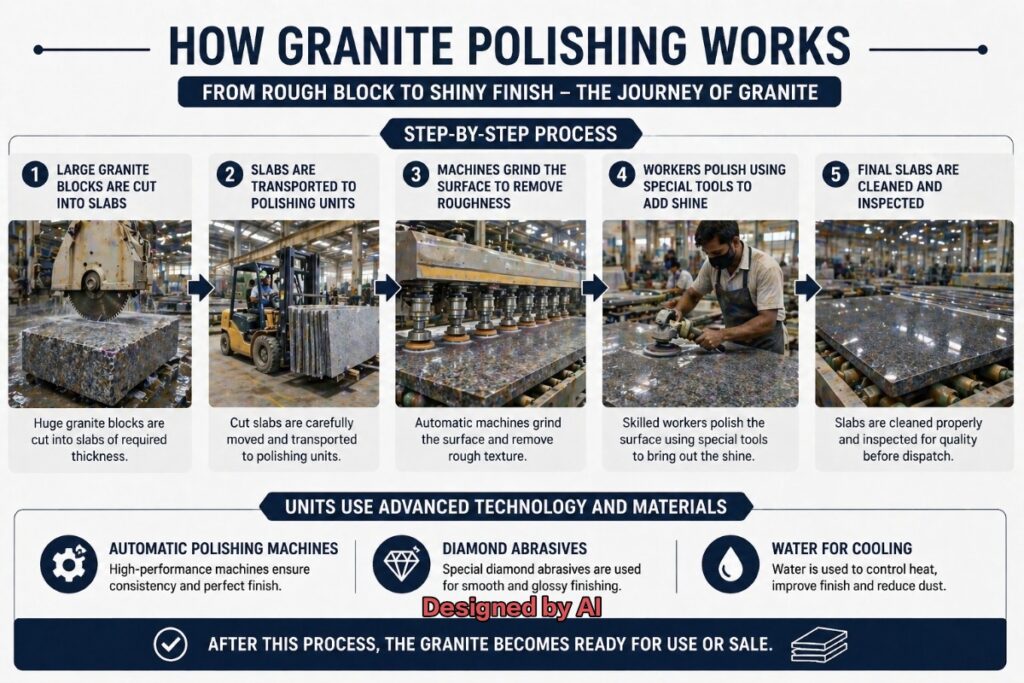
Along with this, units use:
- Automatic polishing machines
- Diamond abrasives for smooth finishing
- Water to control heat and reduce dust
After this process, the granite becomes ready for use or sale.
People Behind the Industry
This industry depends heavily on workers who handle different tasks.
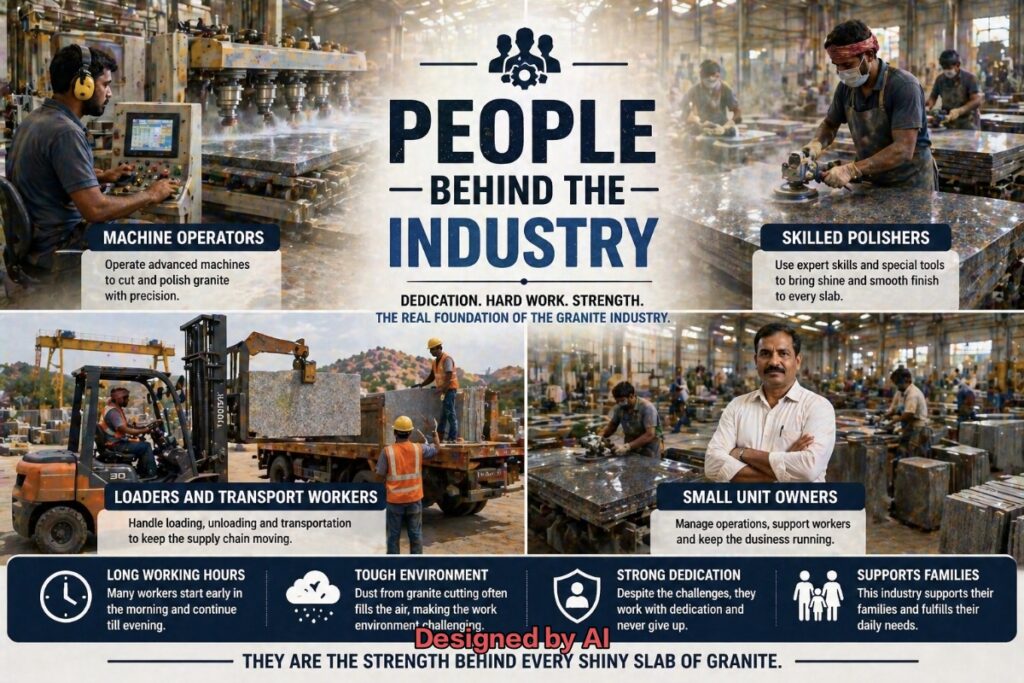
- Machine operators
- Skilled polishers
- Loaders and transport workers
- Small unit owners
Many workers start early in the morning and continue till evening. Dust from granite cutting often fills the air, and the work environment can be tough. Even then, they continue because this industry supports their families and daily needs.
Supply Chain of Granite Polishing
The journey of granite does not stop at polishing. It connects to a larger system.
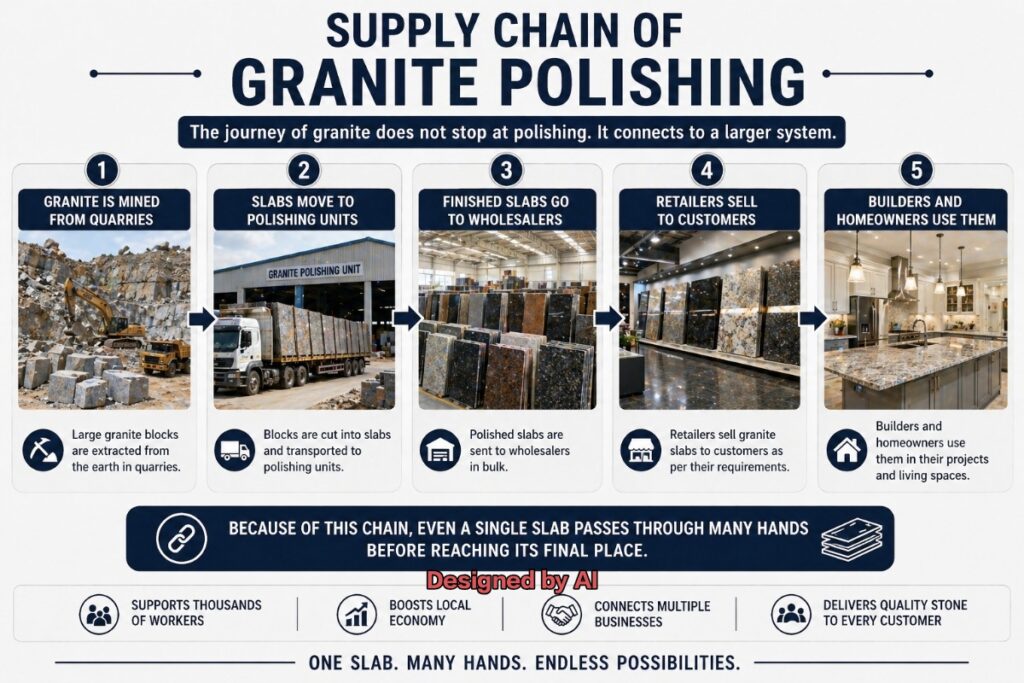
- Granite is mined from quarries
- Slabs move to polishing units
- Finished slabs go to wholesalers
- Retailers sell to customers
- Builders and homeowners use them
Because of this chain, even a single slab passes through many hands before reaching its final place.
Granite Export from Andhra Pradesh
A large portion of polished granite does not stay within India. In fact, many slabs are exported to other countries.
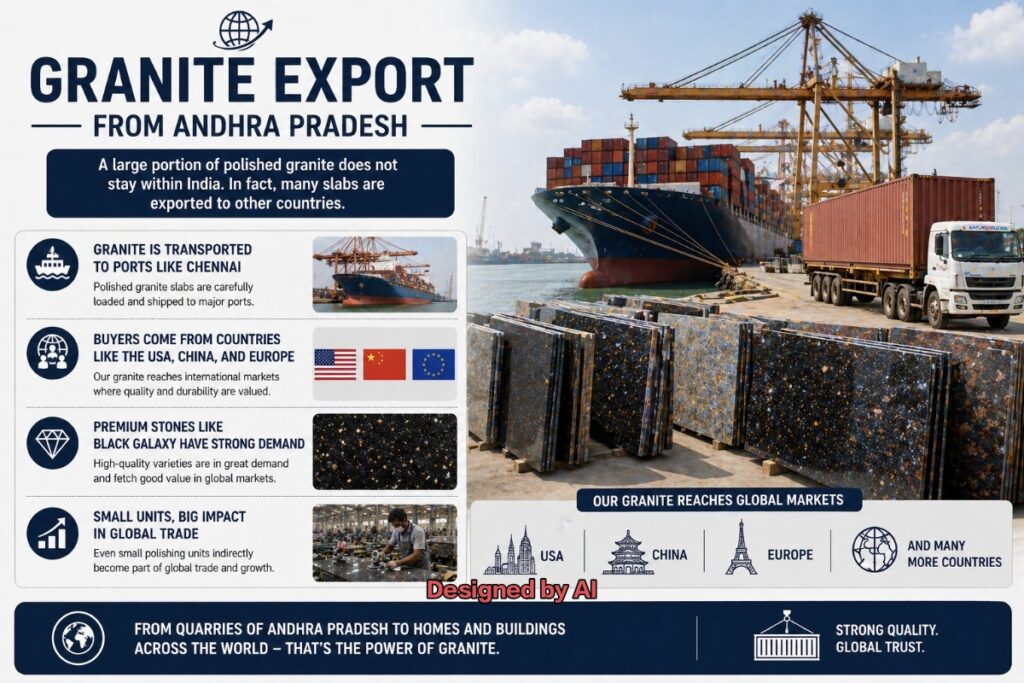
- Granite is transported to ports like Chennai
- Buyers come from countries like the USA, China, and Europe
- Premium stones like Black Galaxy have strong demand
Because of this, even small polishing units indirectly become part of global trade.
Where Polished Granite Is Used
After polishing, granite becomes useful in many areas.
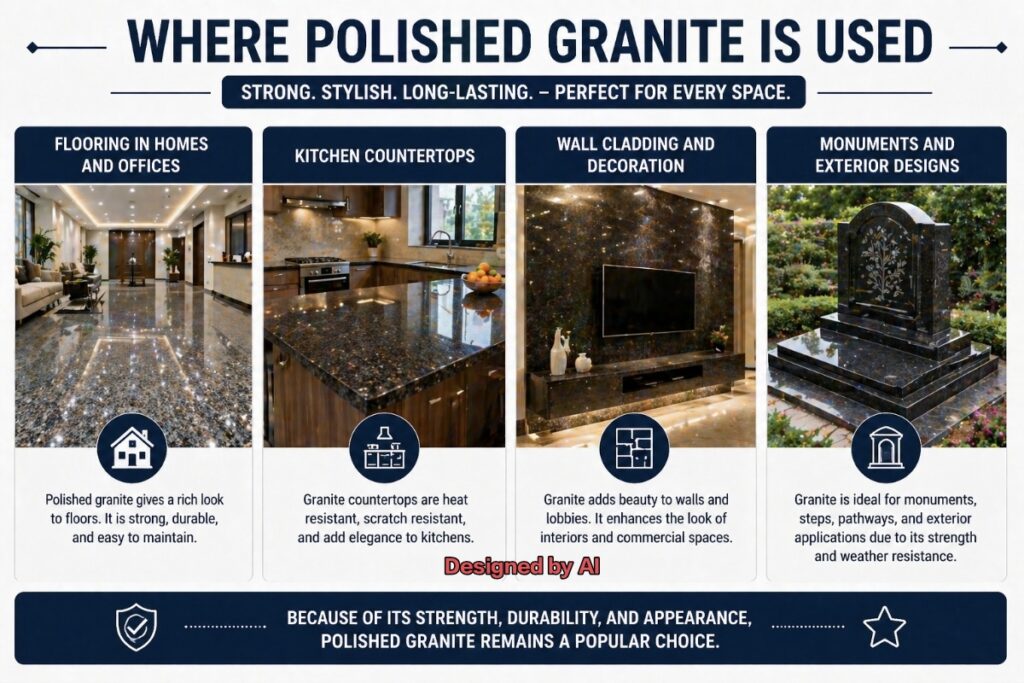
- Flooring in homes and offices
- Kitchen countertops
- Wall cladding and decoration
- Monuments and exterior designs
Because of its strength and appearance, granite remains a popular choice.
Impact on Local Economy
Granite polishing units do more than just process stone. They support entire local economies.
- Transport services earn regular income
- Small shops and food stalls depend on workers
- Machine repair and maintenance services grow nearby
Because of this, even a small unit can create a chain of economic activity in the area.
Challenges Faced by Polishing Units
Even though the industry is active, it faces several problems.
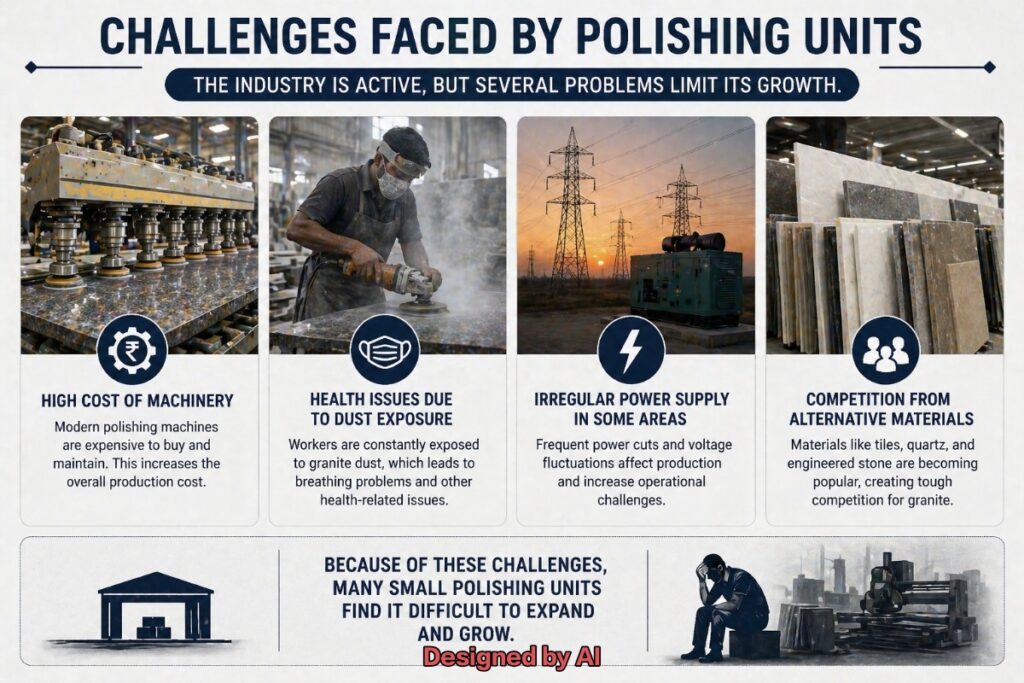
- High cost of machinery
- Health issues due to dust exposure
- Irregular power supply in some areas
- Competition from alternative materials
Because of this, many small units find it difficult to expand.
Opportunities for Growth
At the same time, there are strong opportunities ahead.
- Growing demand in construction sector
- Export potential for premium granite
- Better machines improving efficiency
- Government support for small industries
So, with proper planning and support, this sector can grow further.
Why This Industry Matters
Granite polishing units may not always be visible, but their importance is clear.
- They add value to raw stone
- They create jobs in small towns
- They support construction and infrastructure
- They contribute to exports
Because of this, they play a quiet but strong role in the economy.
Future of Granite Polishing in Andhra Pradesh
Looking ahead, the industry has good potential.
- Modern machines can improve quality
- Better safety measures can protect workers
- Stronger market links can increase demand
So, small polishing units can grow into larger and more organized businesses over time.
Conclusion
When we see polished granite in our homes or buildings, we usually notice its shine and smooth finish. However, behind that final look lies a long process and the effort of many people.
In places like Andhra Pradesh, especially in towns like Ongole and Chimakurthy, this work happens every single day. Workers take rough stone and turn it into something useful and valuable.
At the same time, this industry supports local businesses, creates jobs, and connects small towns to global markets. Even though it does not always get attention, its impact is clearly visible around us.
So next time you see granite in a building, remember that it is not just a stone. It represents effort, skill, and a hidden industry that works quietly in the background.



Nice information
👍